

 English
 русский
 Español
 عربى

A specification lands on the desk with 0.8 mm sheet called out as "1100 aluminum" for gutters, valley flashing and ridge trim, while two pages later the roof panels are specified in an aluminum-magnesium-manganese alloy. Same colour, same finish system, a price per kilogram that differs by less than 10 percent. Yet one of those sheets dents under a ladder foot and the other does not.
That gap is the practical meaning of the 1000 series. These grades are at least 99.00 percent aluminium, which gives them the best corrosion resistance, the highest conductivity and the most forgiving forming behaviour in the wrought family. They are also the weakest. Specify them where metal is folded, spun, soldered or expected to stay bright, and think carefully before putting them into a panel that has to resist wind uplift.
The short version
- 1xxx means 99.00 percent minimum aluminium; the last two digits say how much more (1050 = 99.50%, 1060 = 99.60%), with 1100 reading as 99.00%.
- Strength comes only from cold work: roughly 90 MPa tensile in O temper, about 165 MPa in H18, against 215–230 MPa for 5052-H32.
- Corrosion resistance and conductivity lead the family; alkalis, wet copper and trapped chlorides are the real threats.
- Architectural role: gutters, downspouts, flashing, trim, soffit and light corrugated sheet, not the load-bearing weather skin of a high-uplift roof.
Content
- 1 How to Read a 1000 Series Grade Number
- 2 Property Profile: What This Family Gives and Takes
- 3 Comparing Grades Used in Roofing, Flashing and Drainage
- 4 The Cost Indicator That Quotations Leave Out
- 5 Where the 1000 Series Actually Lands on a Project
- 6 From Drawing to Purchase Order: Five Checks
- 7 Drainage Details Where Pure Aluminium Earns Its Place
- 8 Maintenance, Compliance and Sourcing Risk
How to Read a 1000 Series Grade Number
The first digit identifies the family, and in this family it also sets a floor: 99.00 percent minimum aluminium by weight, with silicon and iron as the controlled impurities. The last two digits carry the rest of the information, expressing the minimum aluminium content above 99 percent. So 1050 is 99.50 percent, 1060 is 99.60 percent, 1070 is 99.70 percent. Grade 1100 is the long-standing exception, where "00" reads as 99.00 percent rather than 99.00 plus zero, and it remains the most widely stocked pure grade because it balances purity against price.
Grade 1350 deserves separate attention. It is the electrical conductor grade, 99.5 percent minimum with tight limits on silicon and iron, and its conductivity of about 61 percent IACS is the reason it ends up in busbar and cable rather than in rainwater goods.
Temper usually matters more than the alloy
The 1xxx family cannot be strengthened by heat treatment. Everything comes from strain hardening or annealing, which makes the temper suffix the real specification. 1100-O is annealed: about 90 MPa tensile with elongation above 30 percent, the grade for deep drawing, spinning or a complicated folded flashing. 1100-H14 roughly doubles strength to about 125 MPa and gives up ductility to get there; H18 reaches about 165 MPa. A purchase order that says "1100" and forgets the temper can legally arrive as fully soft sheet, and soft sheet dents during handling and installation.
Property Profile: What This Family Gives and Takes
Corrosion resistance
With almost no copper or manganese in solution, there are no second-phase particles to set up galvanic micro-cells at the surface. That is why pure grades hold up in marine and industrial atmospheres. The failure modes are chemical rather than structural: fresh mortar and concrete above roughly pH 9, strong alkaline cleaners, and chloride trapped under debris or inside a crevice.
Conductivity
1100 conducts heat at about 222 W/m·K and electricity at roughly 59 percent IACS; 1350 lifts the electrical figure to about 61 percent. Irrelevant to a roof panel, but a useful reminder of how little alloying it takes to change behaviour.
Formability
Elongation above 30 percent in O temper means tight bend radii, spun gutter ends, soldered joints and hemmed edges without cracking. Roll-formed pure aluminium also takes a bright, uniform anodised finish more evenly than alloys carrying coarse intermetallics.
Strength ceiling
At 0.9 mm, an Al-Mn or Al-Mg panel carries uplift loads that 1100 cannot match at the same gauge. There is no temper trick around it: accept thicker sheet, or change family.
Comparing Grades Used in Roofing, Flashing and Drainage
The Cost Indicator That Quotations Leave Out
Price per kilogram makes the pure grades look like the economical choice, and on scrap value alone they are. What disappears from the comparison is installed weight. Purity buys corrosion resistance and formability; it does not buy load capacity.
The arithmetic is unforgiving. At a density of 2.70 g/cm³, 0.7 mm sheet weighs 1.89 kg/m² and 0.9 mm sheet weighs 2.43 kg/m². One gauge step adds about 28 percent mass, and with it 28 percent more coated surface, the same fastener spacing carrying more load, and more weight on the purlins. A saving per kilogram evaporates the moment the gauge has to move up, which is why the honest metric is cost per square metre of installed, code-compliant roof.
Where the 1000 Series Actually Lands on a Project
Globally, most 1xxx output never reaches a building at all; it becomes foil, packaging and conductor. The architectural share is real, but it is narrow and specific.
- Foil and packaging — about 30%
- Electrical conductors — about 22%
- Heat transfer and HVAC — about 15%
- Architectural sheet, trim and gutter — about 13%
- Other industrial uses — about 20%
That architectural slice breaks down into gutters, downspouts, drip edges, valleys, counter-flashing, soffit and fascia panels, ridge capping, and light corrugated sheet in dry, low-wind regions. None of these parts spans a wide bay as the primary weather skin, and most are folded rather than seamed, which is exactly the work a soft, corrosion-resistant, solderable sheet does best.
The moment a panel becomes part of the envelope and takes uplift, the family changes. Pressed profiles and standing seams are produced in aluminum-magnesium-manganese because the seam has to be mechanically locked and stay locked; our aluminum-magnesium-manganese roofing range is built around that requirement, and a flat pressed profile is a good example of the logic in practice.
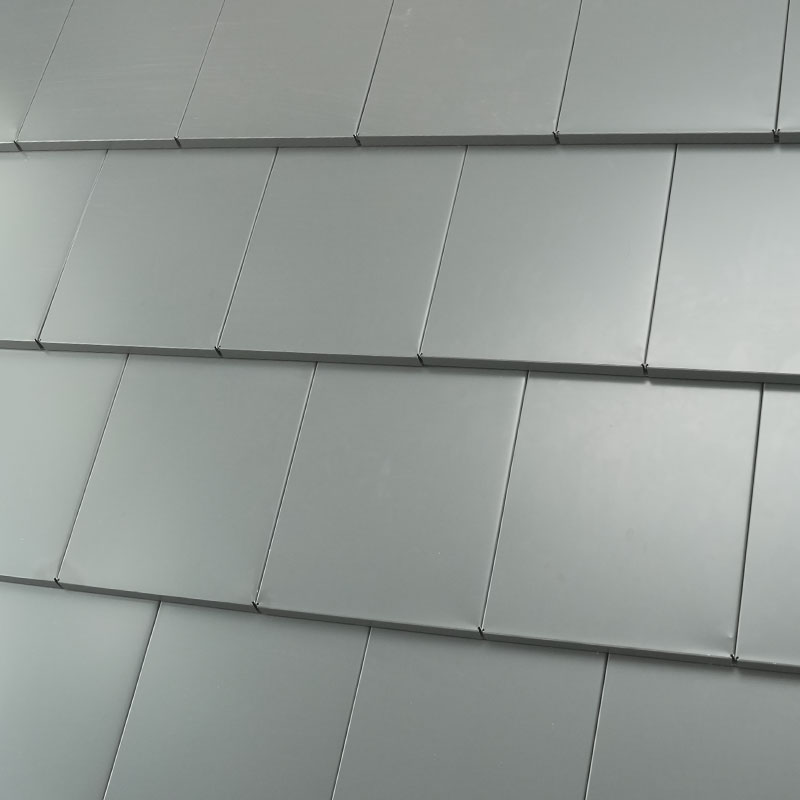
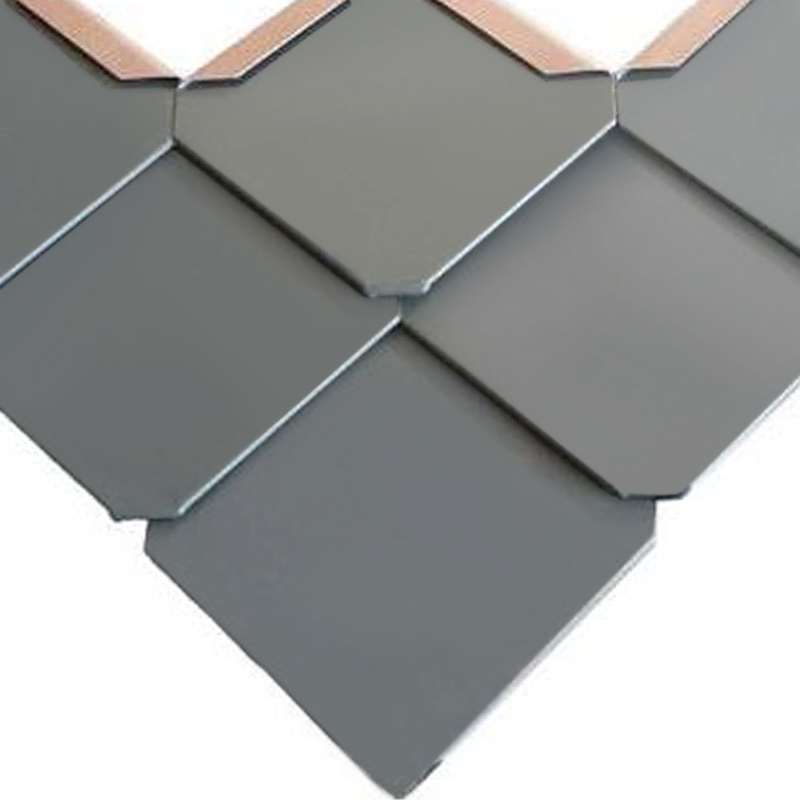
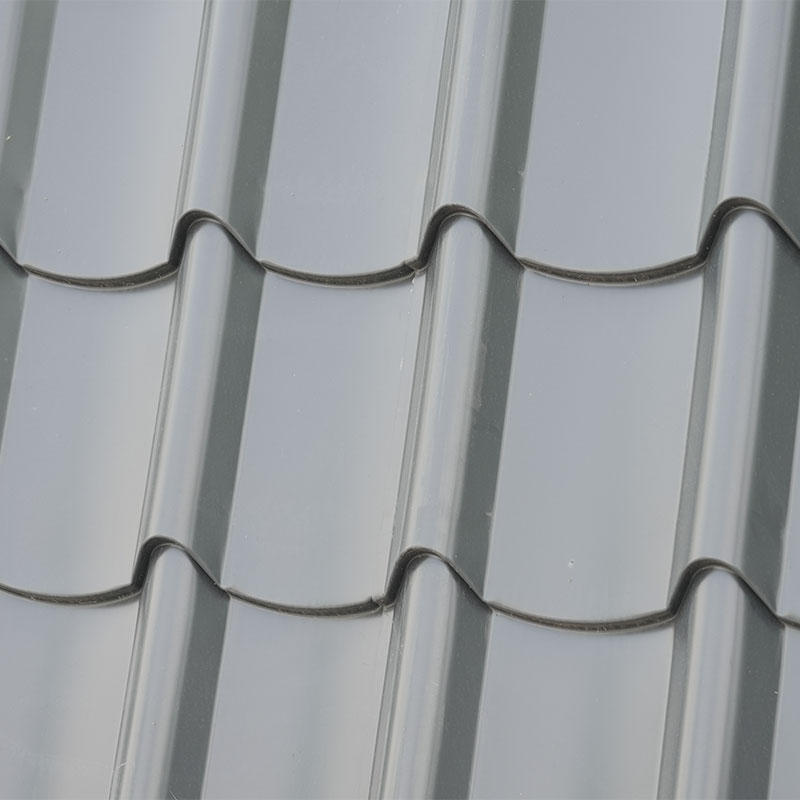
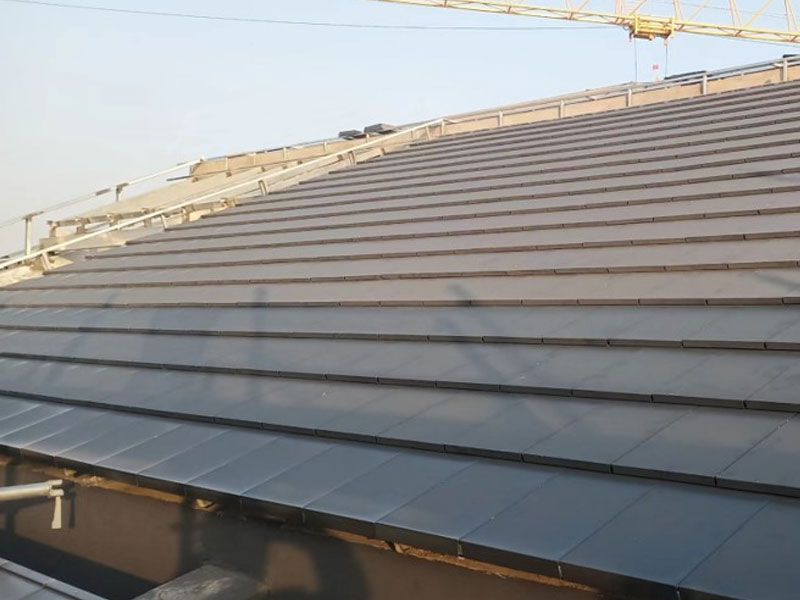 Aluminum-Magnesium-Manganese Flat Metal Roofing TileThis aluminum-magnesium-manganese flat roofing tile is the pressed-profile example in the range, relevant when the panel becomes part of the uplift-bearing envelope.View Product →
From Drawing to Purchase Order: Five Checks
Fix the load case before the alloy
Wind uplift from the project's code and building height, plus snow and maintenance access, sets the gauge. It should not be inherited from a previous job.
Choose alloy and temper together
Complex folds and soldered details point to O temper or H14; visible flat panels that must resist handling damage point to H14 or H24. Never leave the temper off a callout.
Wrap the finish system around the substrate
A 70 percent PVDF system in two or three coats at 20–25 µm dry film thickness, applied over a proper conversion coating. On pure aluminium the oxide is soft, and pretreatment is where adhesion is won or lost.
Agree certificates and tolerances in writing
ASTM B209 or EN 485-2 for mechanical properties, thickness checked at several points per sheet, colour difference and cross-hatch adhesion limits, and a stated weathering test regime.
Approve a physical first article
Bend it at the drawing radius, run a seam trial, and check flatness after profiling. Paper approval never reveals cracking at a tight hem.
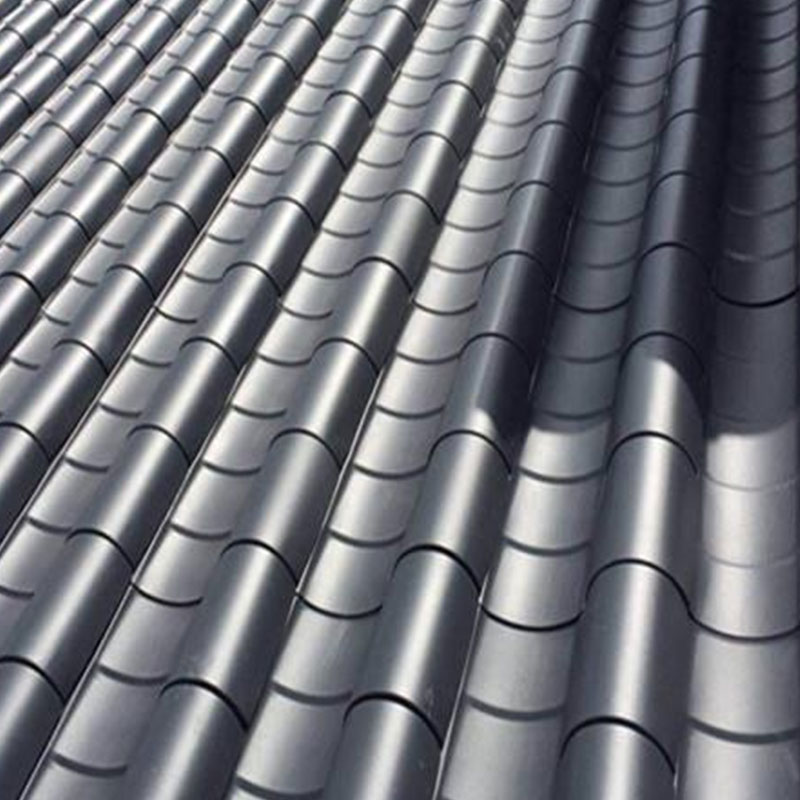
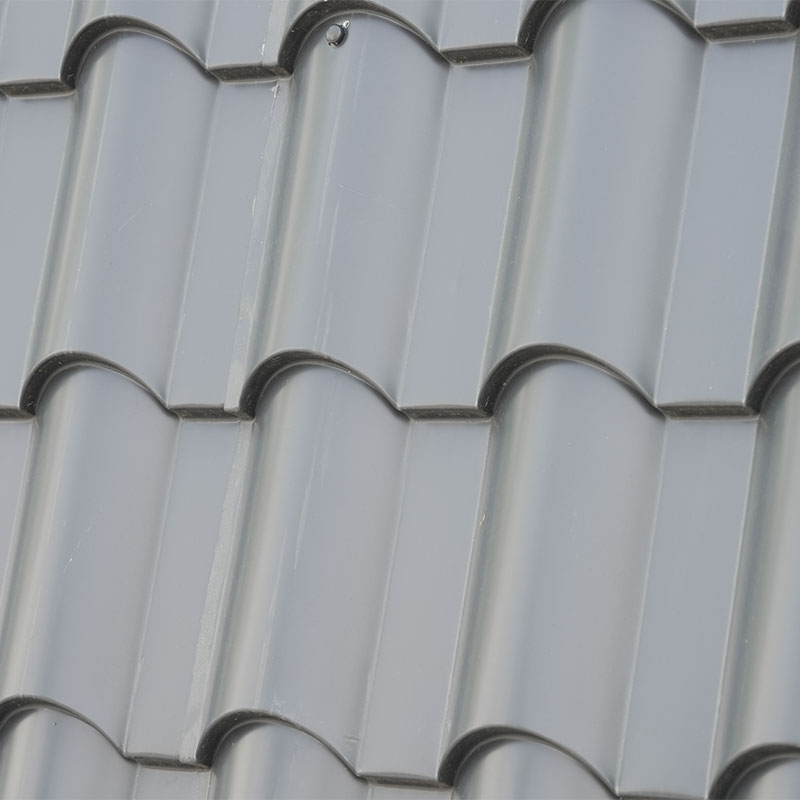
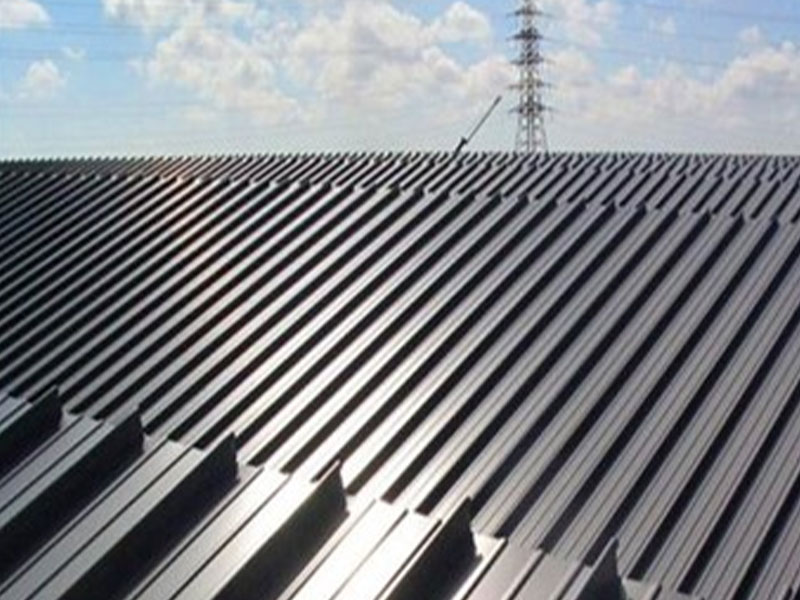 Aluminum-Magnesium-Manganese Standing Seam Metal Roofing TileThis standing-seam AMM roof tile uses an upright edge lock to limit gaps and water penetration; its seam performance should be checked by profiling trials.View Product →
Drainage Details Where Pure Aluminium Earns Its Place
Gutters are the natural home of the 1000 series. They are folded, sealed or soldered, they see standing water, and they are usually coated after forming. Two numbers govern the detailing. Thermal expansion for 1100 is about 23.6 × 10⁻⁶ per kelvin, so a 3 m run moving through a 40 K swing grows by roughly 2.8 mm; a slip joint or expansion element every few metres is not optional. Hanger spacing near 600 mm keeps the profile from sagging between brackets once the gutter is running full.
Keep dissimilar metals apart. Copper outlets, brass fittings and galvanised brackets in contact with aluminium create a small, patient battery in every rainstorm; use aluminium or stainless fixings with isolating washers and brush copper debris off the roof after flashing work. A usable sizing rule for outlets is 1 cm² of downspout cross-section per 1 m² of roof plan area, adjusted upward where rainfall intensity is high. For a fuller background on how the material competes, this note on aluminium roofing versus steel and copper is a useful reference.
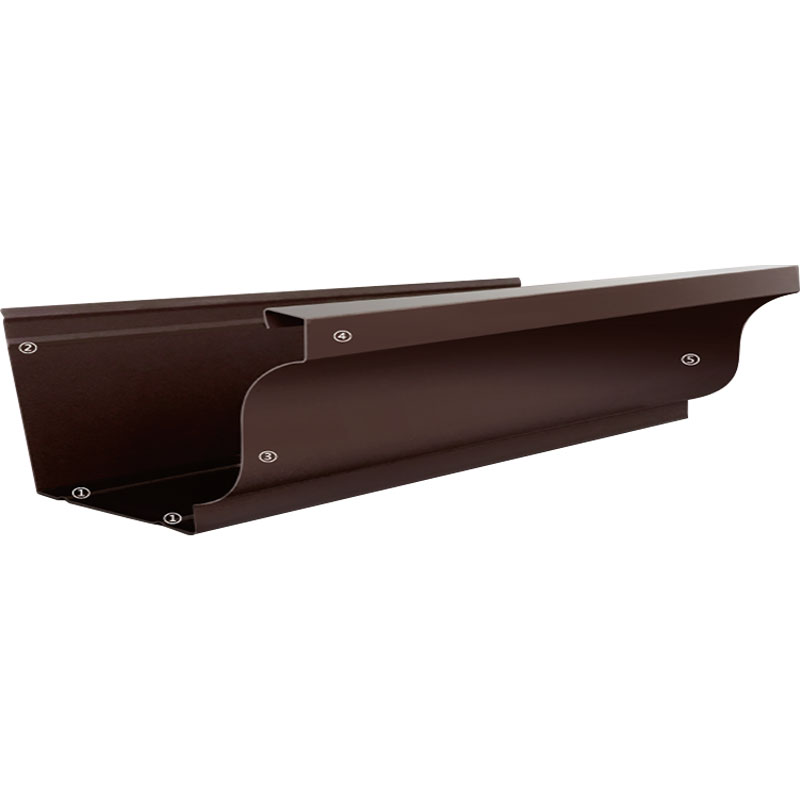
 Manganese Aluminum Alloy Roof Gutter3003H24 manganese-aluminum gutter for roof drainage and eave decoration, with double water-stop detailing and coating protection for folded parts exposed to standing water.View Product →
Maintenance, Compliance and Sourcing Risk
- Wash the surface every 6–12 months in coastal or industrial settings and every 12–24 months inland. Rinse downwards; abrasive pads and alkaline degreasers attack both the coating and, on pure aluminium, the metal beneath it.
- Clear leaf litter from gutters and valleys before the wet season. Trapped debris holds chloride and moisture in permanent contact with the sheet, the one condition this alloy cannot shrug off.
- Touch up cut edges and fastener heads with the specified repair coating. Cut edges are thin and sacrificial, but they are not self-healing.
- Verify what arrives: a mill certificate showing aluminium content plus silicon and iron limits, temper confirmed by hardness or tensile test rather than by the word "pure", and thickness measured at several points per sheet. Gauge tolerance affects uplift performance far more than a 0.1 percent difference in purity.
- Plan the end of life. Pure aluminium is among the easiest construction metals to recycle and carries a high scrap value, which is a real argument in a whole-life cost comparison.
The 1000 series is not a cheaper version of a roofing alloy. It is a different tool, and it performs beautifully when the job is folding, drainage, conductivity and long atmospheric exposure at low stress. Read the grade number, read the temper, and match both to the load the part will actually see.