

 English
 русский
 Español
 عربى

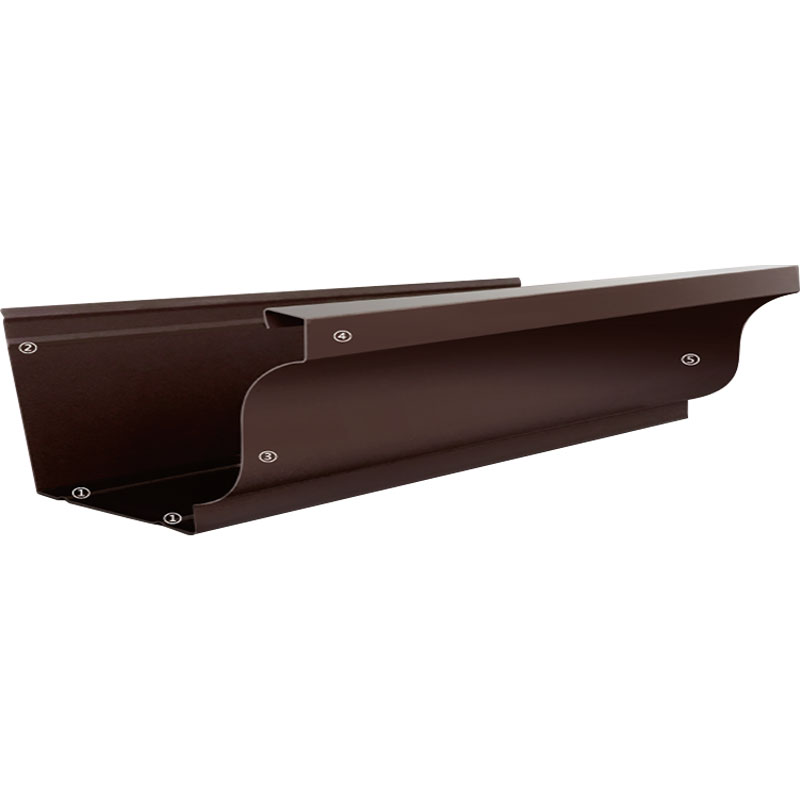
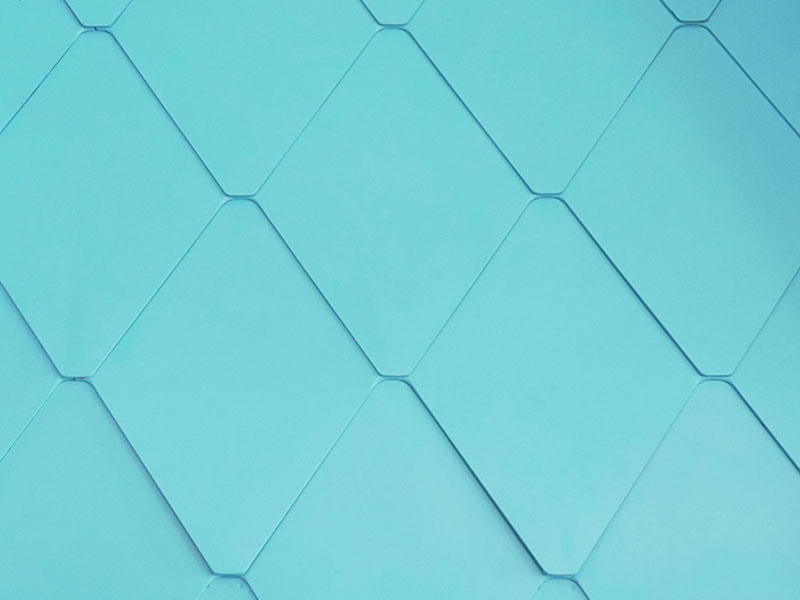
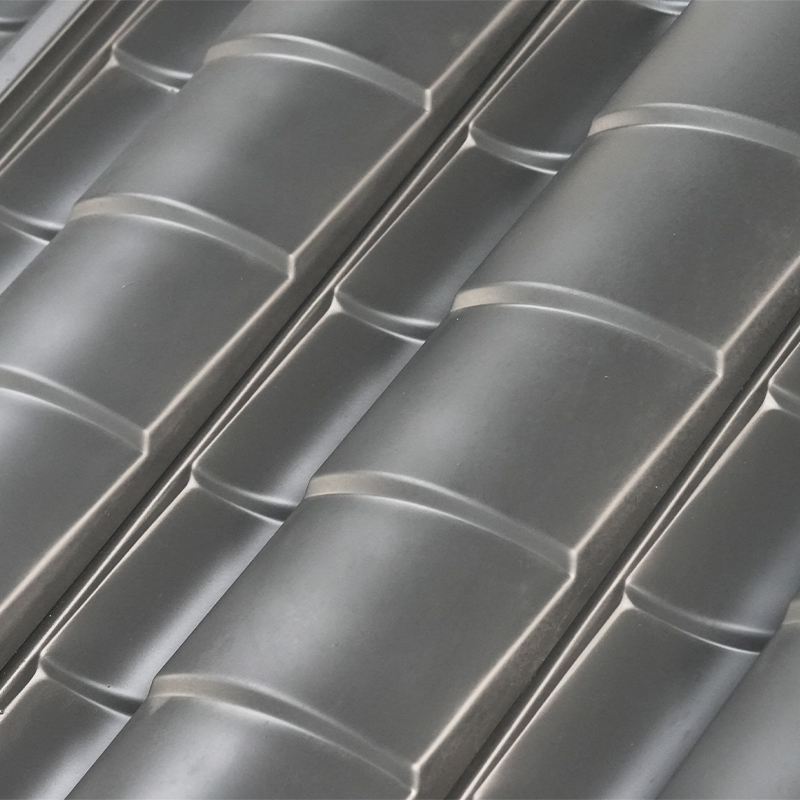
A contractor walks a temple restoration site, taps a 0.9 mm aluminium roof tile with a knuckle, and asks the supplier the straightforward question: how hard is this material? The answer comes in two parts. Commercial-purity aluminium sits at roughly 2.75 on the Mohs scale, softer than a copper coin and positioned between a fingernail at 2.5 and calcite at 3. Indentation testing puts it at about 160–350 MPa Vickers and 160–550 MPa Brinell. Those published figures, however, describe annealed metal with almost no alloying elements in it.
What actually lands on a roof is an alloy in a defined temper, and its hardness runs two to six times higher than the pure metal. The useful answer for anyone specifying or buying roofing sheet is therefore this: stop asking about "aluminium" and start asking about grade and temper. A 3003-H14 tile and a 6061-T6 extrusion are both aluminium, yet they behave completely differently under a hailstone, a bending brake and a seam crimper.
Content
- 1 Hardness by Scale: Why One Number Never Tells the Whole Story
- 2 Alloy and Temper Move Hardness More Than the Base Metal Does
- 3 What Hardness Actually Buys You on a Roof
- 4 Hidden Variables: Coating, Anodising and How the Test Is Run
- 5 Where Aluminium Demand Splits and Why Roofing Sits in the Big Slice
- 6 Specification and ROI: Choosing a Temper in Five Steps
- 7 Maintenance and Compliance: What to Write into the Specification
The short answer, up front
- Pure aluminium: Mohs 2.75; Vickers 160–350 MPa (roughly 16–36 HV); Brinell 160–550 MPa (roughly 16–56 HB).
- Roofing alloys in strain-hardened temper (3003-H14, 5052-H32): typically 40–60 HV, about twice as hard as annealed sheet.
- Heat-treatable alloys (6061-T6, 7075-T6): 95–175 HV, but formability is too poor for folded or crimped roof profiles.
- A PVDF coating on a finished tile reads 2H–3H by pencil test — that is film hardness, not metal hardness, and the two are often confused in project submittals.
Hardness by Scale: Why One Number Never Tells the Whole Story
Mohs is an ordinal scratch ranking, not a linear measurement. The jump from 2 to 3 is not equivalent to the jump from 8 to 9, and the scale was built for mineral identification rather than for metals. When a mill certificate or a structural calculation refers to aluminium hardness, it almost always means an indentation value. Knowing which scale a number came from prevents most procurement arguments before they start.
Mohs 2.75
Scratch resistance. A steel nail (about 5.5) or window glass will mark pure aluminium easily. Useful for comparing against stone or tile, unreliable for quality control of sheet.
Vickers (HV)
Diamond pyramid indentation that works on thin sections at low loads. This is the value most aluminium sheet producers report, and the one to demand on a mill certificate.
Brinell (HB)
A hardened ball pressed into the surface. The familiar 160–550 MPa band reflects different purities and tempers, not a single material state.
Rockwell (HRB / HR15T)
Fast and common in factories. The 15T and 30T variants exist specifically because standard HRB is not reliable on thin roofing sheet.
Conversion tables between HV, HB and HRB are empirical fits, valid only inside their stated ranges. A micro-hardness reading taken with a 10 g load on a coated surface cannot be compared with a Brinell reading from a 2.5 mm ball. Always check the load and the method before comparing two aluminium grades side by side.
Alloy and Temper Move Hardness More Than the Base Metal Does
Three mechanisms change how hard an aluminium sheet is. Strain hardening (the H tempers) rolls the metal cold and locks in dislocations. Annealing (O temper) releases them and gives the softest, most formable state. Solution treatment plus ageing (the T tempers) precipitates fine particles and produces the highest strengths, at the cost of ductility. For roofing, where a tile must be folded, crimped and walked on, the H tempers of the 3000 and 5000 series are the practical middle ground.
Aluminium-magnesium-manganese sheet, the 3003/3004 family from which most metal tiles and standing-seam pans are rolled, typically delivers 40–55 HV in H14 or H24. That is hard enough to shrug off ladders and light hail while still folding tight at the pan edge and locking cleanly at the seam. Move to a full-hard H18 and the sheet becomes noticeably stiffer, but bend radii must grow and cracking risk rises at every fold.
What Hardness Actually Buys You on a Roof
Hardness is a proxy, never a performance guarantee. It translates into roofing value through four mechanisms. Hail resistance is the first: impact tests such as UL 2218 Class 4 and FM 4473 measure denting and cracking rather than HV, but a sheet at 40 HV visibly outperforms one at 25 HV under the same stone. Foot traffic is the second: a pan that deforms permanently under a maintenance technician's boot usually sits below 30 HV or below 0.7 mm thickness.
Wind uplift is the third, and here hardness is often oversold. Uplift resistance is governed mainly by sheet thickness, pan width, clip spacing and seam height, not by temper. A hard, thin panel can still lift at the clips. The relationship between gauge, profile and pull-out strength is covered in more detail in this analysis of how sheet thickness and profile design affect load-bearing capacity and wind uplift. Flatness is the fourth: harder tempers hold residual stress differently, so a high-HV sheet with poor levelling will show oil canning more sharply on a sunlit elevation.
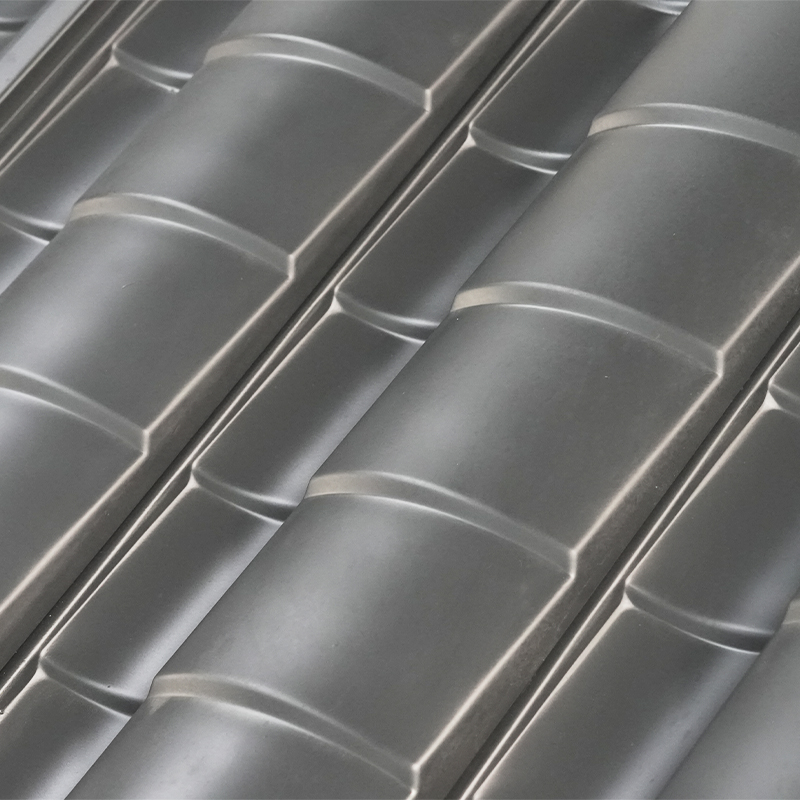
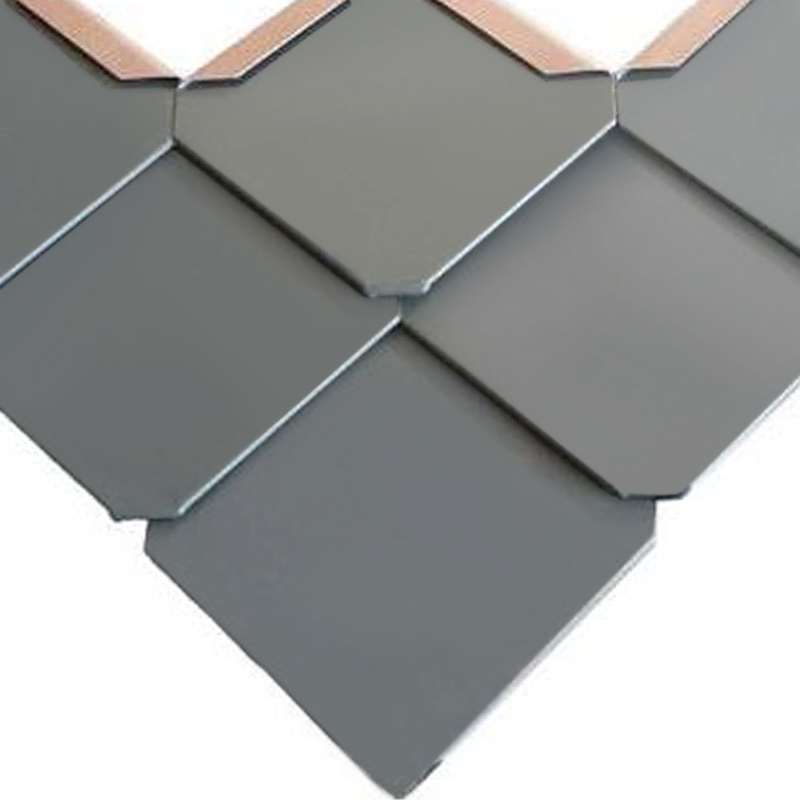
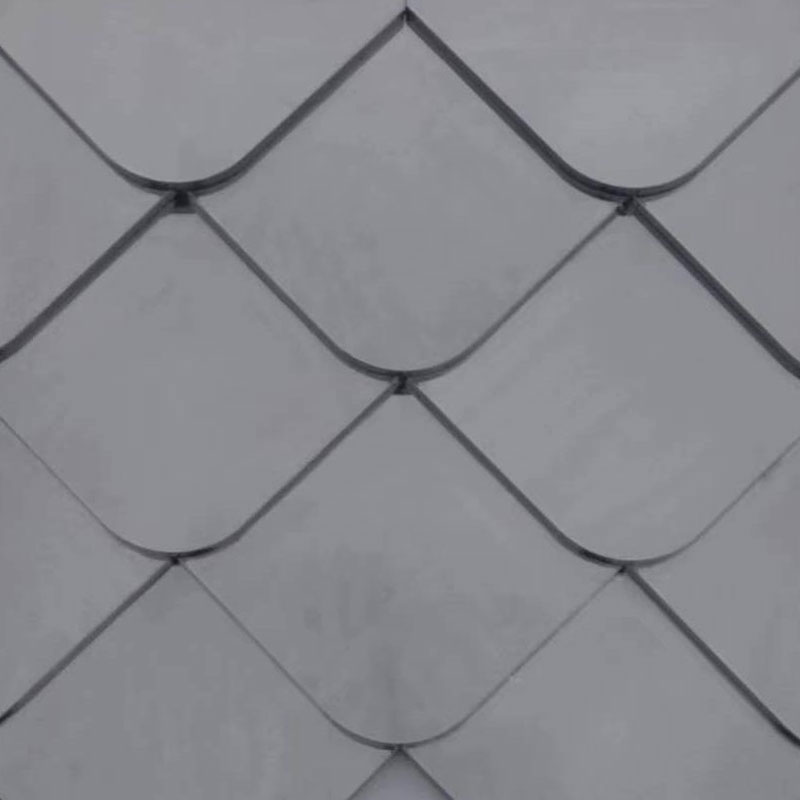
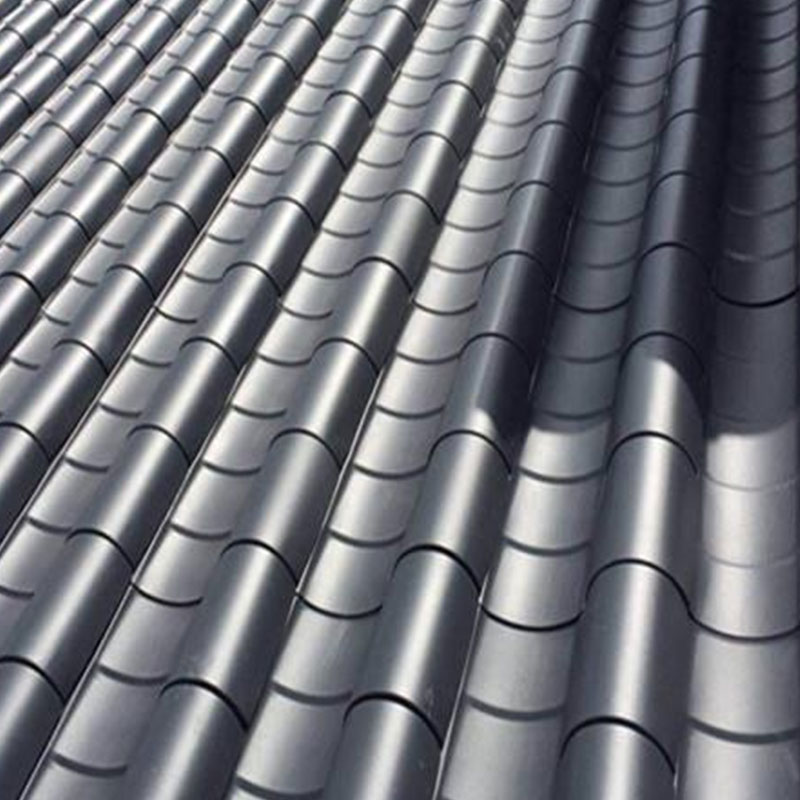
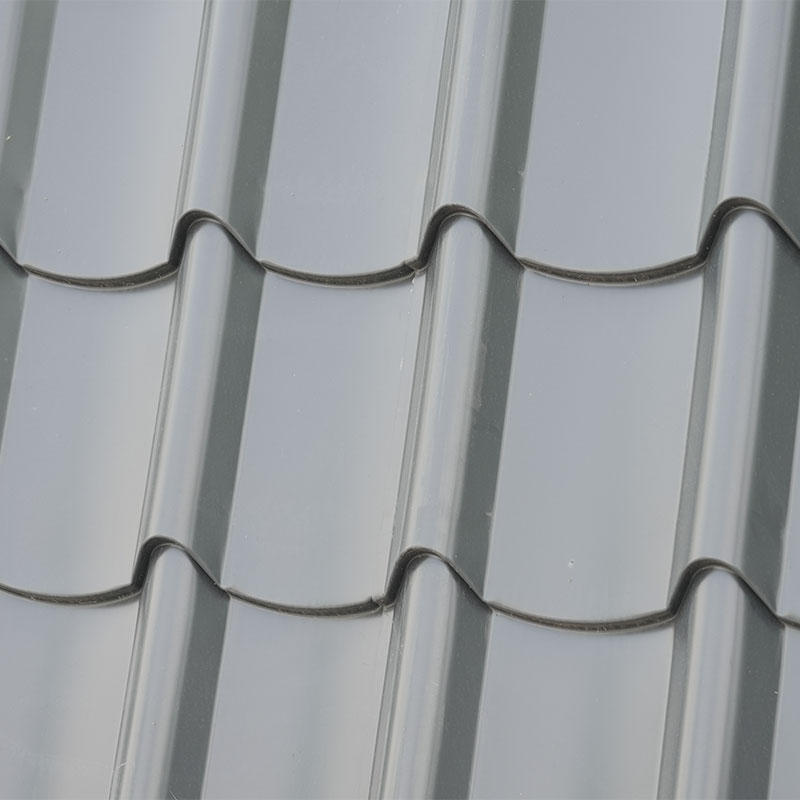
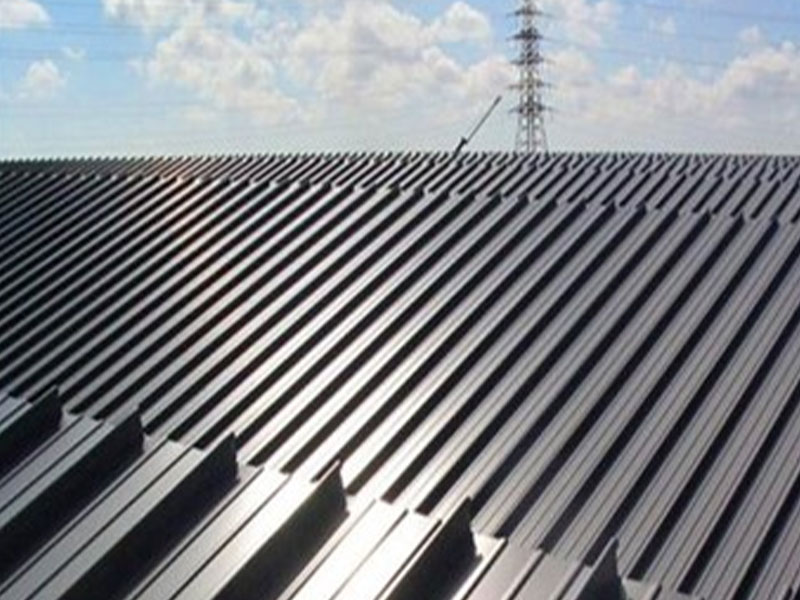 Aluminum Magnesium Manganese Standing Seam Metal Roof TileView this standing-seam alloy tile for residential roofs, with edge-locked waterproofing, corrosion-resistant coatings and formable panels suited to varied architectural profiles.View Product →
The unavoidable trade-off is forming. Every increase in temper raises the minimum bend radius. A 3003-H14 sheet will take a near-zero-radius hem at the pan without cracking; an H18 of the same alloy may fail at the same radius after a few months of thermal cycling. If a design calls for tight folds, deep draws or hand-crimped details, the harder grade is not the better grade.
Hidden Variables: Coating, Anodising and How the Test Is Run
Two surfaces are frequently confused with the metal beneath them. A fluorocarbon (PVDF) finish on a metal tile is roughly 25 µm thick and reads 2H–3H on a pencil hardness test to ASTM D3363; that number tells you about cure and film integrity, not about dent resistance. An anodised layer is aluminium oxide, near 9 on the Mohs scale, but it is only 15–25 µm deep — a scratch through the film exposes soft metal underneath, and the coating does not add structural stiffness.
Test method is the other hidden variable. Brinell testing assumes the specimen is thick relative to the indentation depth — commonly at least eight times the depth of the impression. On a 0.9 mm tile, a standard 2.5 mm ball produces a reading dominated by the anvil beneath the sheet. Thin material should be evaluated by micro-Vickers on a mounted cross-section or by Rockwell 15T, and portable Leeb readings in the field should be treated as relative comparisons only.
Typical Vickers hardness across aluminium grades
Bar heights are proportional to typical Vickers hardness in HV; the roofing-relevant grades sit in the middle of the range.
Where Aluminium Demand Splits and Why Roofing Sits in the Big Slice
Roughly a third of flat-rolled aluminium goes into building and construction, which is why the hardness grades used on roofs are shaped by building codes, warranty terms and insurer requirements rather than by mill preference alone. That structural fact matters when negotiating: a roofing spec has more leverage over temper choice than most buyers realise.
- Building and construction: about 33%
- Transport: about 24%
- Packaging: about 20%
- Consumer durables: about 11%
- Machinery and other: about 12%
Approximate split of flat-rolled aluminium consumption by end-use sector.
Within that slice, aluminium competes on weight and corrosion resistance rather than on hardness alone; the broader case is set out in this comparison of aluminium roofing sheets versus steel and copper, where hardness sits alongside workability and maintenance cost.
Specification and ROI: Choosing a Temper in Five Steps
Step 1 — Define the exposure
Hail zone, coastal salt load, industrial atmosphere, foot traffic frequency. Each one sets a different minimum surface hardness.
Step 2 — Set grade and temper
3003-H14 or 5052-H32 covers most roofs; reserve softer O tempers for flashings and harder T tempers for extrusions.
Step 3 — Verify on paper
Ask for the mill certificate with tensile and hardness data, plus the temper designation. A verbal "H14" is not a specification.
Step 4 — Match the forming route
Confirm bend radius, crimp profile and hem width against the chosen temper before releasing the order. Cracking appears in the first weeks, not the first hours.
Step 5 — Check the coating after forming
Pencil hardness and adhesion are tested on the finished part, not the flat coil. A forming operation that crazes the film voids the corrosion warranty.
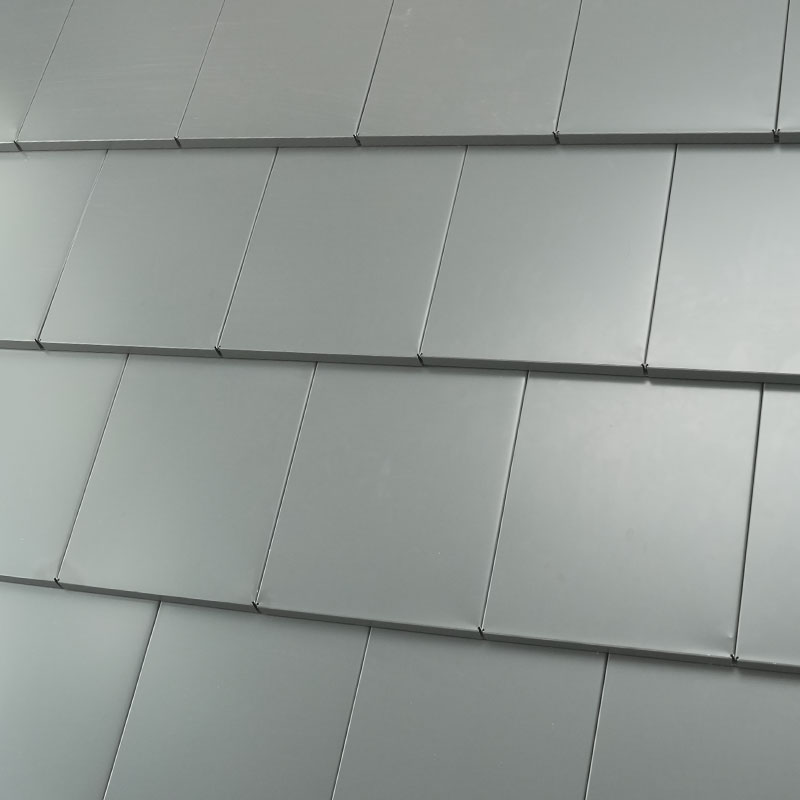
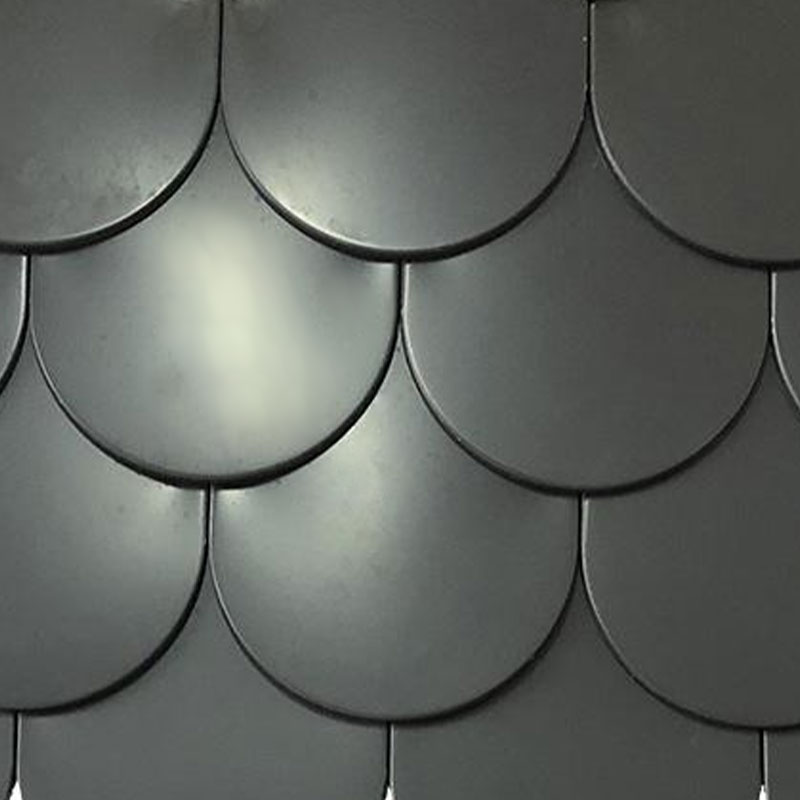
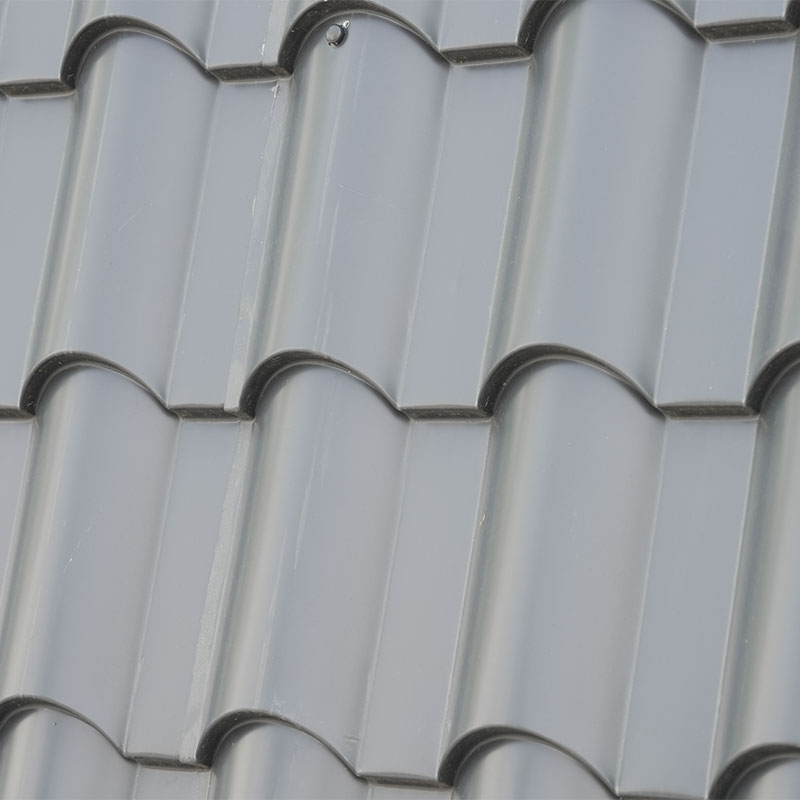
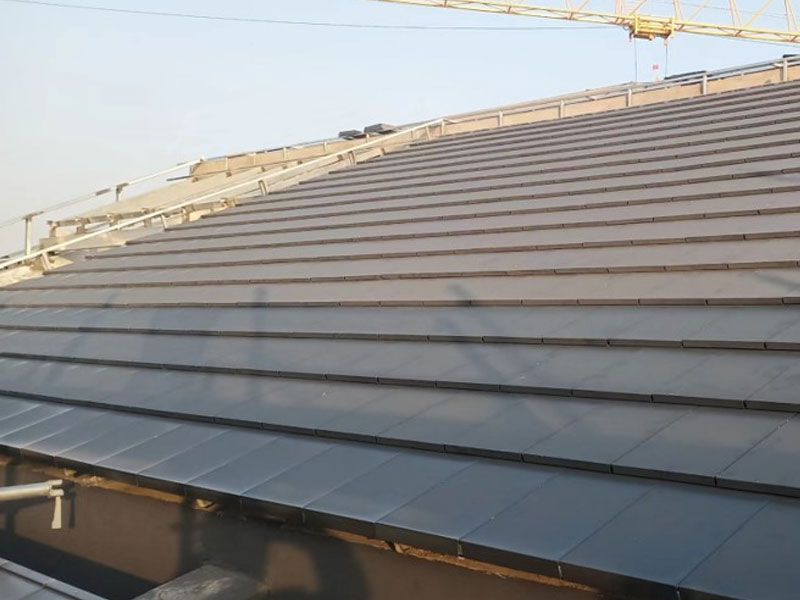 Aluminum Magnesium Manganese Flat Metal Roofing TileInspect this flat alloy roof tile for residential and restoration work, combining a fluorocarbon finish with lightweight panels that resist corrosion, cracking and deformation.View Product →
On cost, moving from a soft H12 to an H14 sheet is a marginal change in the purchase price — a few percent on the tonne. The return comes from avoided dent claims and callbacks. Repairing hail damage across a standing-seam roof typically costs several times that price difference per square metre, and it rarely matches the original finish once panels are replaced.
Maintenance and Compliance: What to Write into the Specification
Hardness claims are only enforceable when tied to a standard and a test method. A workable specification cites the sheet standard, the temper designation system and the coating performance regime together, so that a substitution cannot slip through review.
- Sheet: ASTM B209 or EN 485-2, with alloy and temper stated explicitly.
- Temper designation: ANSI H35.1 or EN 515, so H14 and H24 are not treated as interchangeable.
- Coating: AAMA 2605 for PVDF, with pencil hardness to ASTM D3363 recorded on the finished panel.
- Impact: UL 2218 Class 4 or FM 4473 where hail is a design load.
- Corrosion: salt-spray testing to ASTM B117, with the hours stated rather than implied.
Maintenance follows from the same logic. Avoid abrasive pads on a coated surface; the film is softer than the abrasive and will chalk long before the metal wears. Walk on the flat of the pan between ribs rather than on the seam, keep gutters clear so standing water does not sit against cut edges, and touch up drilling swarf promptly. Anodised and mill-finish surfaces tolerate more aggressive cleaning than thin PVDF films, but neither benefits from acidic descalers.
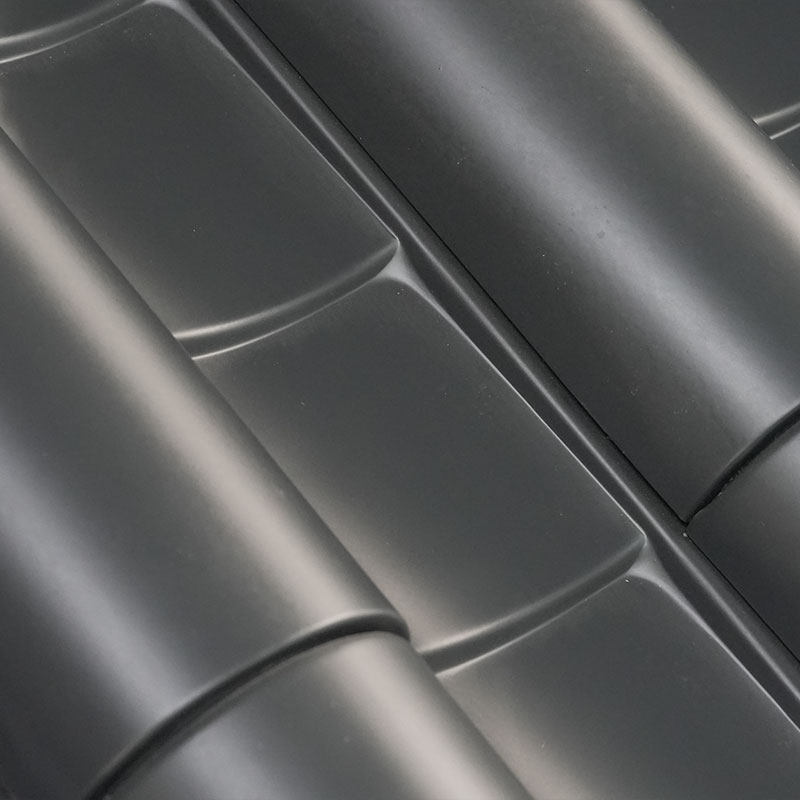
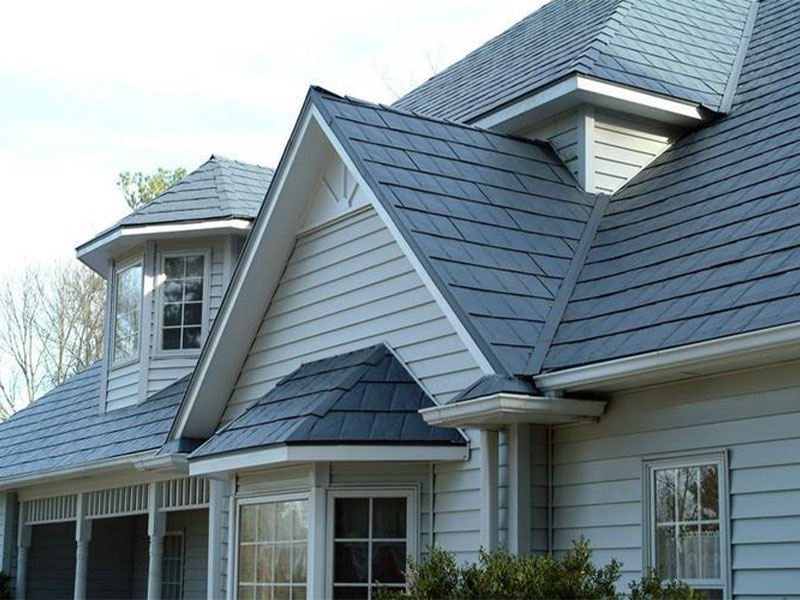 Aluminum Magnesium Manganese Composite Rectangular Metal Roofing TileReview this aluminum-manganese and modified-asphalt composite roof tile for complex curved roofs, offering flexible forming and reduced roof load in residential or commercial projects.View Product →
The full answer to "what is the hardness of aluminum" is therefore a two-line reply: about 2.75 Mohs and 160–350 MPa Vickers for the pure metal, and a number that depends entirely on alloy and temper for anything installed on a building. For a roofing decision, the operative figure is the 40–60 HV band typical of 3003-H14 and 5052-H32 — hard enough to resist handling and moderate hail, ductile enough to fold and crimp without cracking. Specify that range, ask for the certificate, and the question of hardness stops being a conversation and becomes a line item.