

 English
 русский
 Español
 عربى


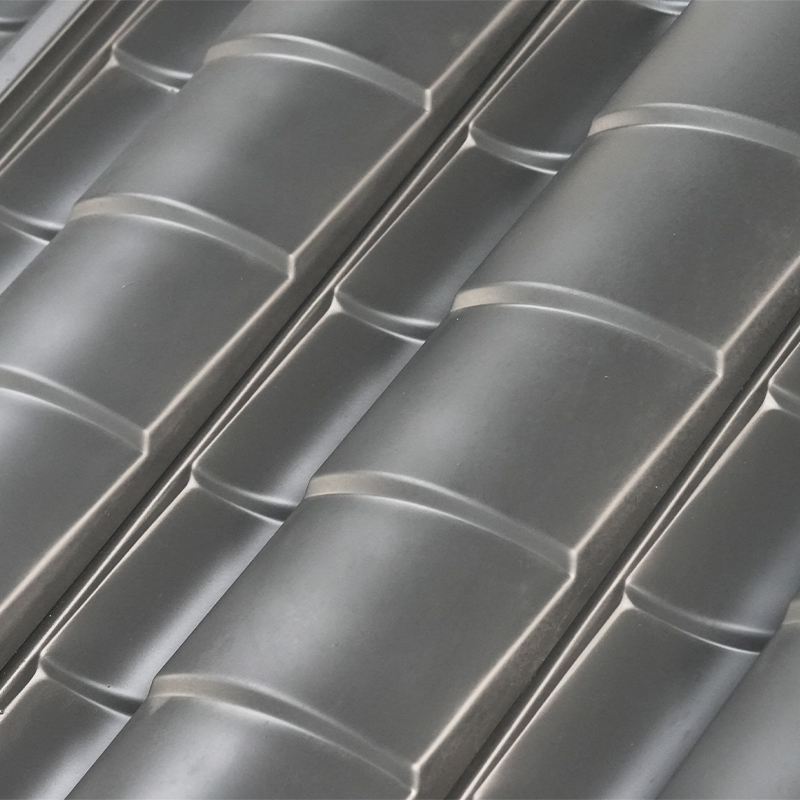
A contractor sends a roofing package for a heritage-style project: 0.8 mm 1100 aluminum coil for gutters, 0.9 mm Al-Mg-Mn panels for the main roof, and color-coated flashings for dormers. The quote looks simple, but the 1100 item is where most technical questions land.
Buy 1100 aluminum coil for corrosion resistance, formability, and conductivity—not for primary wind-uplift roof panels. It is a strong fit for gutters, flashings, trim, and decorative profiles; for exposed roof panels, specify a stronger Al-Mg-Mn alloy and confirm uplift load.
That conclusion matters because 1100 is often marketed as “pure aluminum,” which sounds premium but says little about structural capacity. It contains at least 99.0% aluminum, is non-heat-treatable, and is available in tempers from soft O to strain-hardened H18. In a roofing package, those properties translate into easy roll forming and bending, excellent atmospheric corrosion resistance, and low bearing strength.
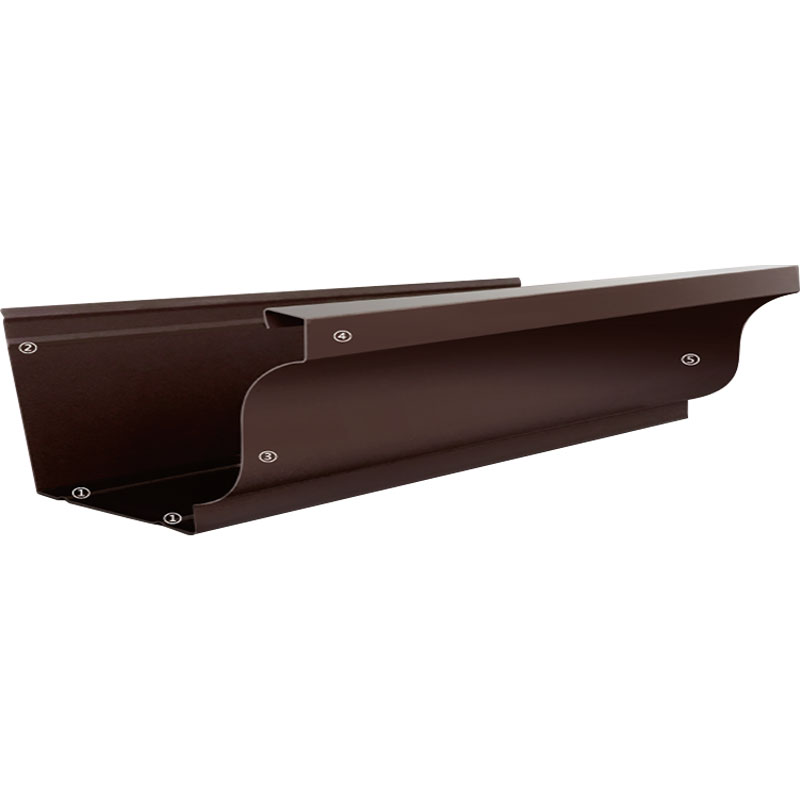
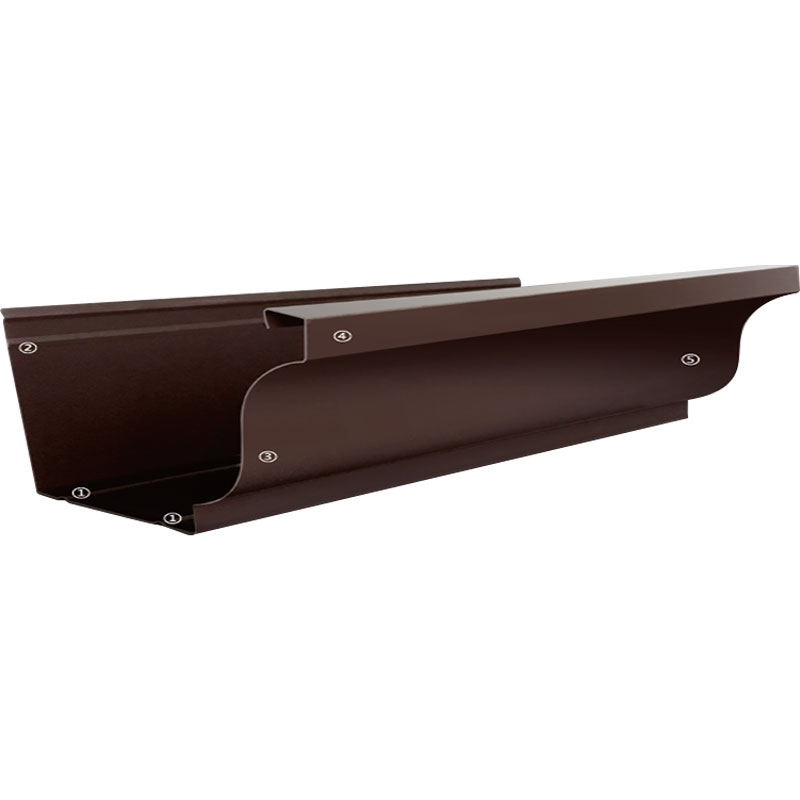 Colored Aluminum Rain Gutter SystemComplete gutter system with 3003H24 manganese-aluminum channels and matching accessories, powder-coated for corrosion resistance and coordinated rainwater drainage.View Product →
For gutter runs, downspouts, and rainwater accessories, a dedicated colored aluminum rain gutter system is a practical reference point. The same material logic applies: the coil must resist standing water, UV exposure, and handling damage, while the gauge and temper must suit the fixing method.
Content
- 1 What 1100 Aluminum Coil Actually Is
- 2 Where 1100 Coil Fits—and Where It Does Not
- 3 Data Comparison: 1100 vs Common Roofing Coil Alloys
- 4 Hidden Metrics: What a Coil Certificate Does Not Tell You
- 5 A Practical Selection and Purchasing Path
- 6 ROI and Whole-Life Cost: Where 1100 Wins and Loses
- 7 Maintenance and Compliance Notes
What 1100 Aluminum Coil Actually Is
1100 is a 1000-series commercially pure aluminum. The “1100” designation is not a temper, coating, or thickness; it is the alloy family. The temper—O, H12, H14, H16, or H18—does more to determine handling stiffness than most buyers expect. A 0.7 mm H14 coil will feel very different from a 0.7 mm O-temper coil on a folder or roll former.
Composition and temper
Aluminum ≥99.0%, with small amounts of silicon, iron, and copper. It is non-heat-treatable, so strength comes from strain hardening rather than heat treatment.
Corrosion and finish
Excellent atmospheric corrosion resistance in normal roofing environments. It takes paint and anodizing well, but mill finish can show handling marks and scratches.
Formability and joining
Very good bending, spinning, and roll-forming behavior. Soft tempers suit complex flashings; harder tempers give better stiffness but less stretch.
Strength boundary
Typical tensile strength is roughly 75–105 MPa in O temper and 110–145 MPa in H14. That is lower than 3003, 3105, and 5052, so long spans need engineering.
That strength boundary is the reason a 1100 coil should not be substituted one-for-one for a 3003, 3105, or Al-Mg-Mn roof panel without recalculation. A thinner 1100 sheet can corrode well for decades and still fail a wind-uplift test if the gauge, profile, clip spacing, and fastener pattern are not engineered together. For a broader baseline on sheet behavior, the guide to aluminum roofing sheet features and applications is useful, but keep 1100’s lower strength in view.
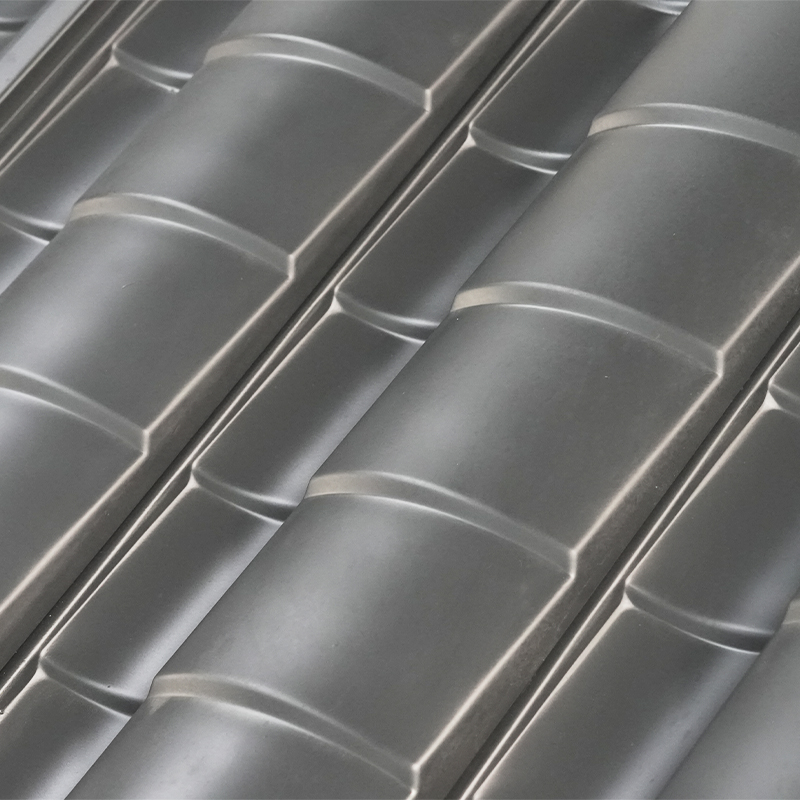
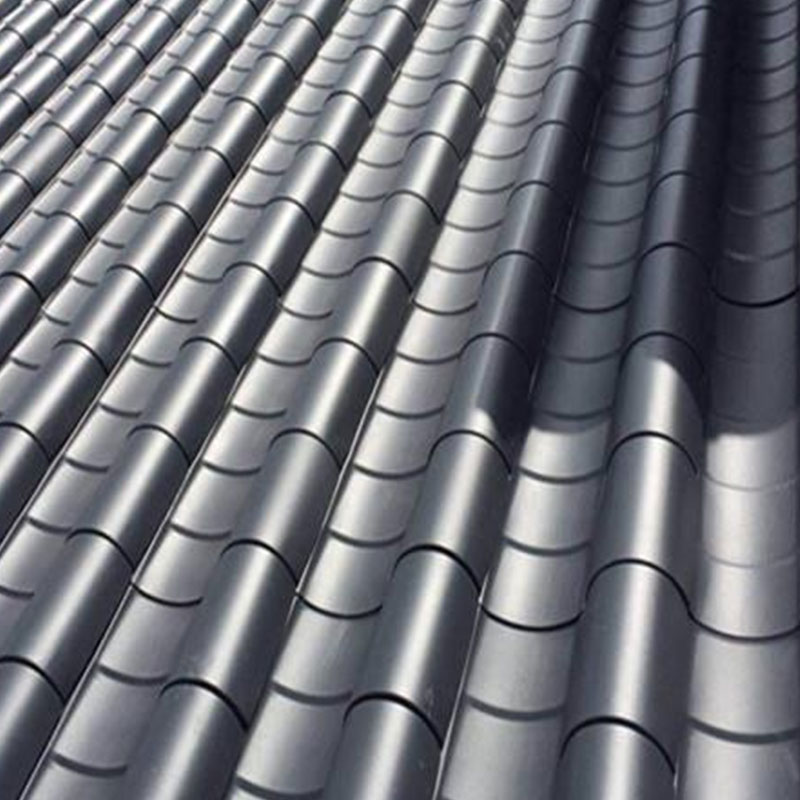
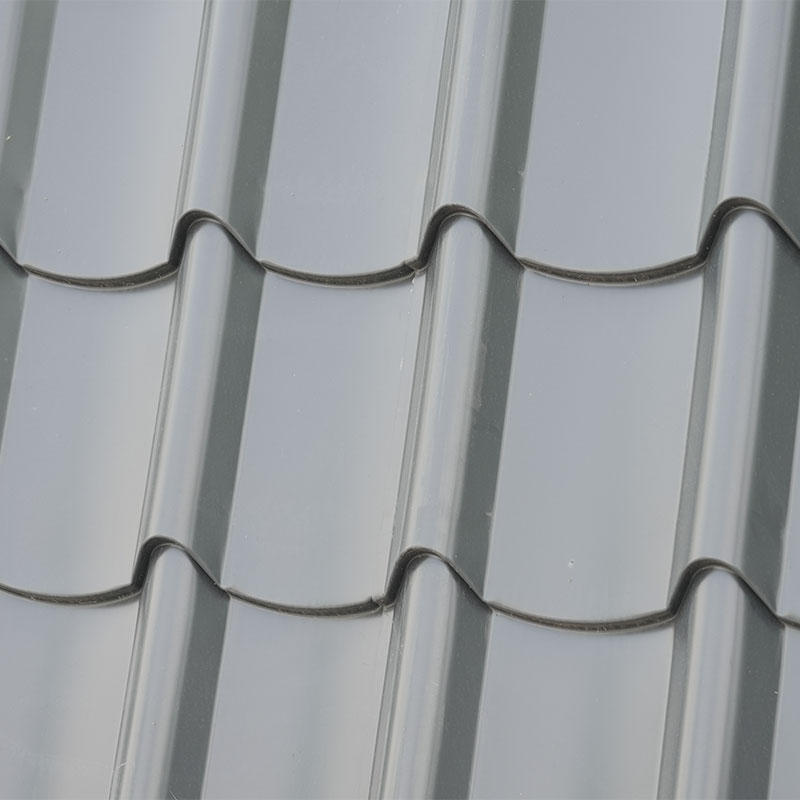
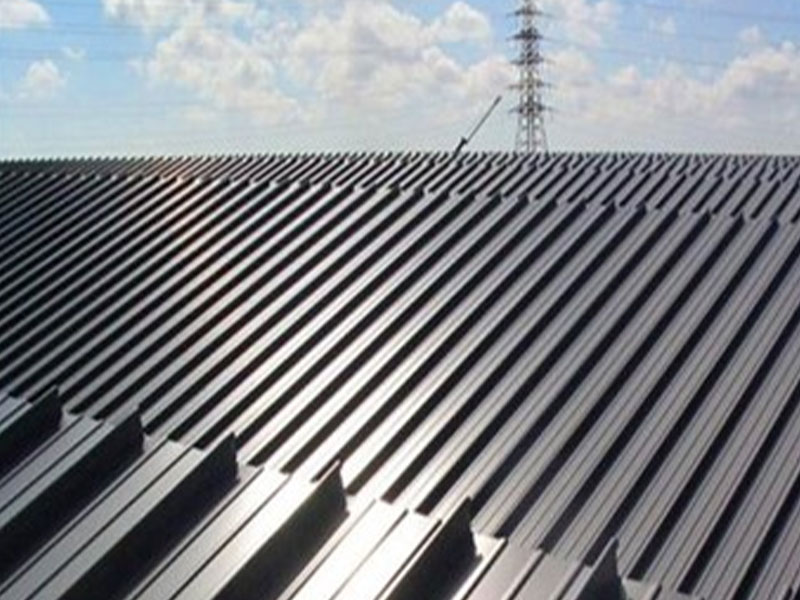 Aluminum Magnesium Manganese Standing Seam Roof TileVertical edge-locked aluminum roof tile for low-pitch, coastal, humid or high-temperature roofs, with fluorocarbon or polyester coating and standing-seam drainage.View Product →
Where a project needs a formed standing-seam roof panel rather than trim coil, the standing seam metal roof tile is the more relevant product family. It should be specified from a stronger alloy and checked against the project’s wind pressure, roof pitch, and fixing zone.
Where 1100 Coil Fits—and Where It Does Not
The most common specification mistake is treating “roofing” as one product category. A roof system includes panels, gutters, downspouts, flashings, ridge caps, vents, and trim. 1100 coil earns its place in the second group far more often than the first.
Use 1100 for complex flashings, gutter liners, trim, and decorative profiles where conformability matters more than span strength. Keep it out of primary roof panels in high-wind zones, walkable roofs, and long-span applications unless an engineer confirms the assembly.
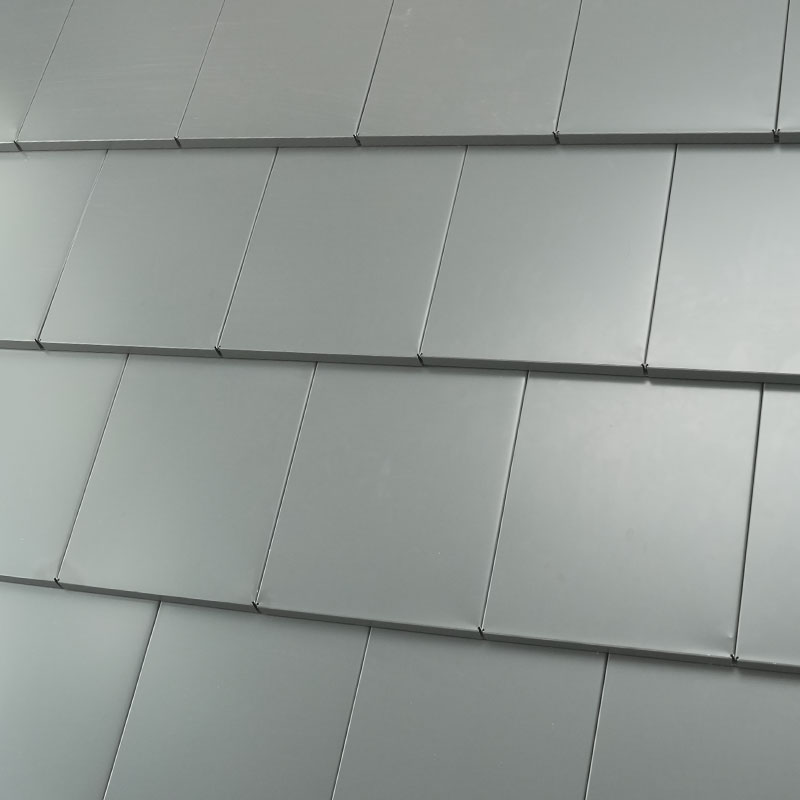
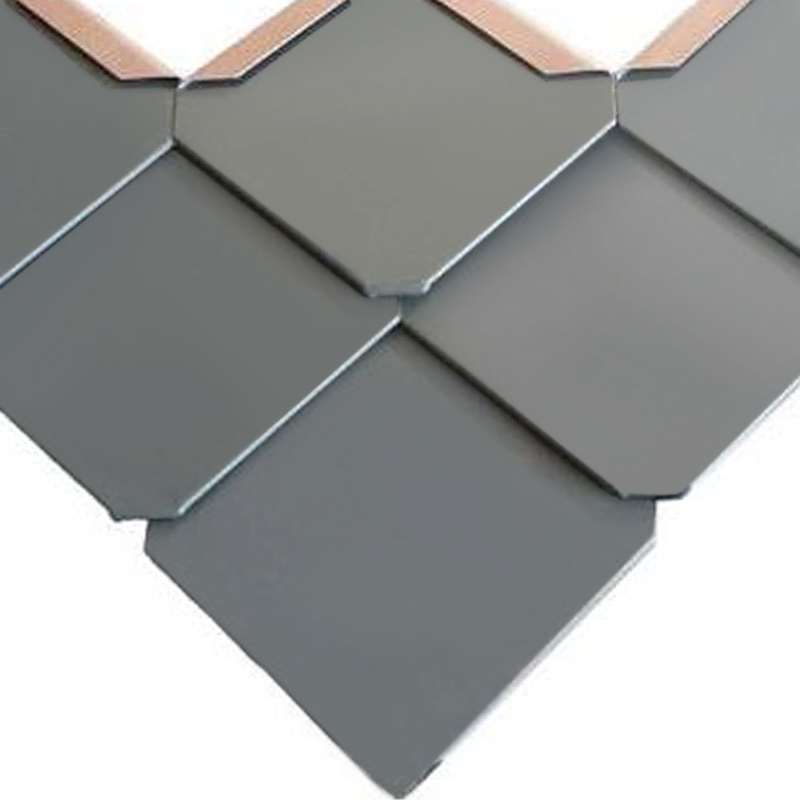
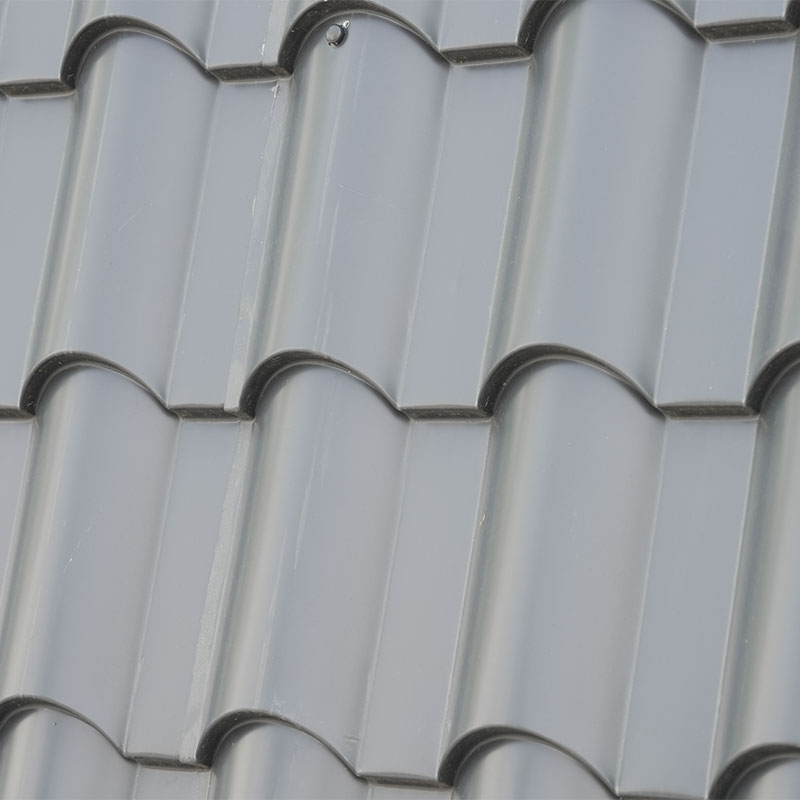
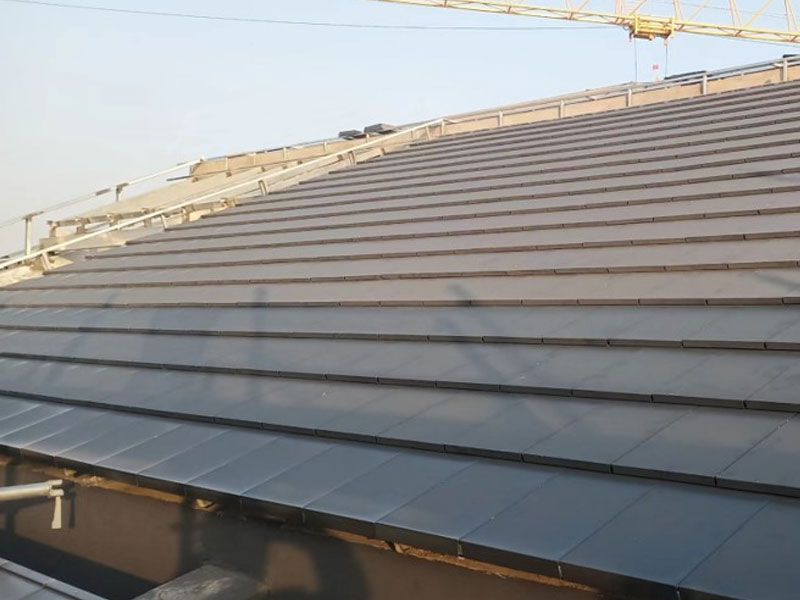 Aluminum Magnesium Manganese Flat Metal Roofing TileLightweight aluminum-magnesium-manganese roofing tile for residential, commercial and restoration projects, with fluorocarbon finish and flat, uniform appearance.View Product →
For flat decorative tile profiles that need a stronger alloy, flat metal roofing tile is a better starting point than a pure-aluminum trim coil.
Data Comparison: 1100 vs Common Roofing Coil Alloys
The comparison below is indicative, not a substitute for a mill certificate or project-specific structural calculation. Use it to frame questions, not to approve a substitution.
Hidden Metrics: What a Coil Certificate Does Not Tell You
Two coils can both say “1100-H14, 0.8 mm” and behave differently on the same roll former. The gaps usually sit in five places: thickness tolerance, temper consistency, coil set, surface oil, and edge burr.
Thickness tolerance is the first commercial lever. At 0.8 mm, a ±0.03 mm band is under 4% of nominal, yet it changes stiffness, fastener grip, and the risk of oil canning. State the tolerance and measuring method on the purchase order.
Temper consistency matters more than the temper code alone. Ask for a target yield range, not just “H14.” Coil set causes cross-wave; excess surface oil can weaken coating adhesion; a heavy edge burr creates handling and coating defects.
A Practical Selection and Purchasing Path
A reliable purchasing path is less about brand claims and more about closing five specification gaps before the coil is slit.
Define service: exposed roof, gutter, or flashing; wind, rain, coastal, or industrial exposure.
Set alloy and temper: 1100 for formability; H14/H16 for stiffness; O temper for complex bends.
Fix gauge by function: gutters often 0.6–1.0 mm; flashings 0.5–0.8 mm; roof panels require engineering.
Specify finish: mill, stucco embossed, anodized, or color-coated with an exterior-grade system.
Require coil data: mill certificate, thickness tolerance, ID/OD, coil weight, and surface condition.
Trial roll form: run a sample length through your own equipment before releasing the full coil.
Inspect and store: protect edges, keep coils dry, and avoid point loads that dent the wrap.
ROI and Whole-Life Cost: Where 1100 Wins and Loses
First cost is the wrong comparison point. A 1100 coil usually wins on fabrication yield and coating simplicity; it loses when low strength forces a thicker gauge, closer clips, or extra stiffeners. The business case should be built on installed cost, not coil price per tonne.
- Wins: lower forming force, less tool wear, fewer cracks in complex flashings, and high recyclability.
- Loses: matching stiffness may require 10–25% thicker gauge than 3003 or 3105, plus more fasteners and oil-canning control.
- Break-even: complex geometry and short runs favor 1100; long-span exposed panels usually favor a stronger alloy on installed cost.
Maintenance and Compliance Notes
1100 coil is low-maintenance, not maintenance-free. Wash gutters and flashings annually in coastal or industrial areas; remove debris; inspect cut edges and fasteners.
- Use ASTM B209 or EN 485-2 for sheet and coil, and EN 573-3 for composition where applicable.
- For color-coated coil, require exterior-grade adhesion and impact performance; confirm the coating system in writing.
- Check fire classification for the complete roof assembly, not the coil alone.
- Isolate 1100 from copper, brass, and bare steel with suitable barriers to reduce galvanic risk.
- Allow thermal movement in long gutter runs, and do not substitute 1100 for an engineered roof panel without a stamped calculation.
If your team is buying 1100 aluminum coil for gutters, flashings, or trim, treat it as a fabrication material with excellent corrosion resistance and clear strength limits. Ask for temper, gauge tolerance, and coil condition on the purchase order; trial the coil on your own equipment; and keep 1100 away from primary roof panels unless an engineer has checked wind uplift and fixings.