


 English
 русский
 Español
 عربى


A contractor sent us a submittal for a riverside pavilion: 0.8 mm aluminum gutter, 0.6 mm valley flashing, both 3003-H24 with a fluorocarbon finish. The note attached asked one question that decides the whole package — will 3003 hold its shape under snow load and still fold 90 degrees at a corner without cracking?
Short answer: yes, if temper and thickness are specified together, and no if the buyer treats “3003” as a complete specification. The alloy grade tells you the chemistry. The temper tells you the strength, and the spread between 3003-O and 3003-H18 is wider than the spread between 3003 and several neighbouring alloys.
Content
- 1 What 3003 Is: Manganese, Not Magnesium
- 2 Mechanical Properties Across the Tempers You Actually Buy
- 3 Hidden Trade-offs: Strength Against Everything Else
- 4 3003 Against 1100, 3004 and 5052
- 5 Where the Tonnage Actually Goes
- 6 Specifying 3003 for a Roof or Gutter Package
- 7 Maintenance and Compliance Notes Worth Writing Into the Spec
The short version
- Chemistry: aluminium-manganese, 1.0–1.5% Mn, non-heat-treatable, with a small copper addition of 0.05–0.20%.
- Strength: roughly 110 MPa tensile in the annealed O temper up to about 200 MPa in H18; H14 and H24 cover most building work.
- Corrosion: excellent in normal atmosphere, fresh water and many food environments; the weak spots are strong alkalis and aggressive chloride splash zones.
- Forming and joining: bends, draws, welds and brazes cleanly, and takes coating or anodising predictably.
- Buying rule: lock the temper first, then thickness, then the surface system — in that order.
What 3003 Is: Manganese, Not Magnesium
3003 sits in the 3xxx family, where manganese is the main alloying element at 1.0–1.5%. Iron is capped around 0.70% and silicon around 0.60%, with zinc and other residuals held very low. Manganese in solid solution, plus fine dispersed particles, lifts strength by roughly 20% over 1100 while keeping most of its ductility — which is why 3003 has largely displaced 1100 in sheet-metal work involving bending, spinning and drawing.
The copper range of 0.05–0.20% is deliberately narrow. Pushing copper higher gains very little strength and costs corrosion resistance, so mills hold it tight. Because the alloy is non-heat-treatable, strength comes only from cold work and optional partial annealing; there is no ageing route. That has one practical consequence worth repeating on site: welding or brazing a strain-hardened sheet softens the heat-affected zone back toward the O condition, so joint design at gutter outlets and flashing laps should not rely on the parent-metal strength.
Mechanical Properties Across the Tempers You Actually Buy
The table below uses typical published minimums for sheet and strip; exact values vary by mill, thickness and test direction, so always work from the specific mill certificate rather than a generic data sheet.
Hidden Trade-offs: Strength Against Everything Else
Tensile strength alone misleads buyers. The chart below puts 3003 in context: it loses decisively on raw strength but wins on the combination of formability, corrosion behaviour and cost that most architectural metalwork actually depends on.
The practical reading is that 3003-H24 sits in a sweet spot for anything formed by hand or on a simple folder. Move to 5052 and you gain fatigue and chloride resistance but need roughly twice the bend radius and more machine force; stay at 1100 and you gain nothing except a slightly softer sheet that dents at the gutter lip. If you want the broader comparison of how aluminum roofing sheets compare with steel and copper, that material choice is usually decided by weight and maintenance, not by tensile numbers.
3003 Against 1100, 3004 and 5052
Where the Tonnage Actually Goes
3003 is one of the highest-volume wrought alloys in the world, and the split below reflects roughly how rolled sheet is consumed. Roofing and rainwater goods are a smaller slice than HVAC, but they are the slice where surface finish and long-term appearance matter most.
- 35% roofing sheet, gutter, flashing and trim
- 25% HVAC ductwork and heat exchangers
- 15% cookware, food processing and storage
- 15% transport, chemical and process equipment
- 10% signage, lithographic sheet and other uses
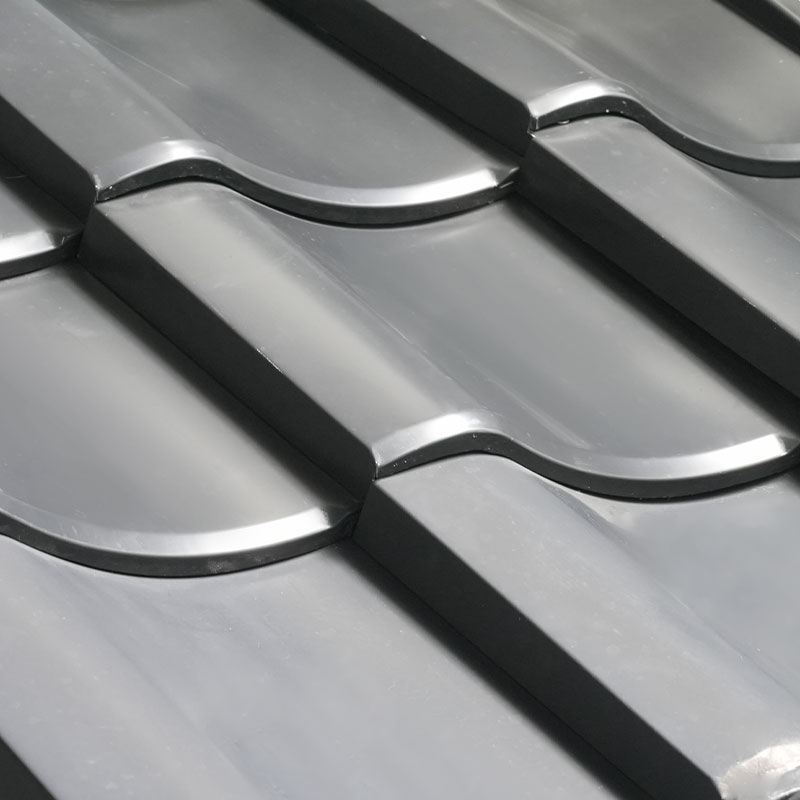
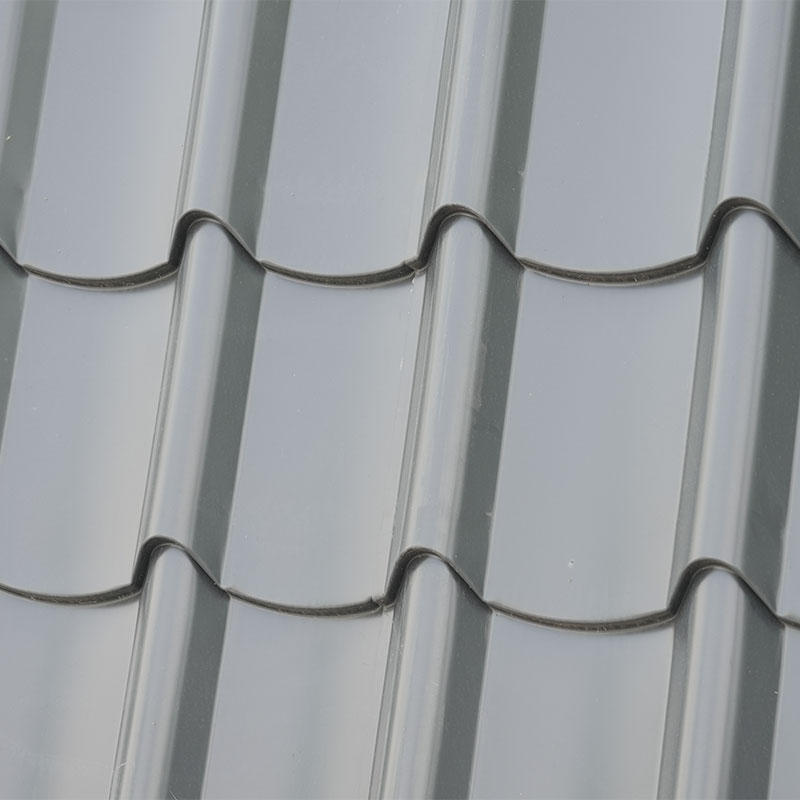
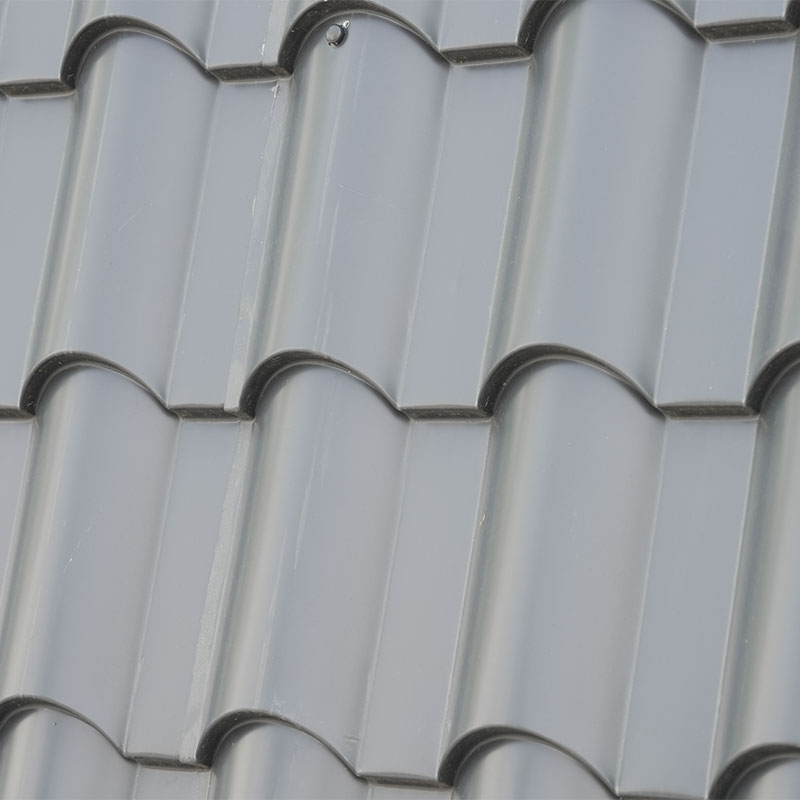
On the building side, 3003 is the natural choice for gutters, downpipes, valleys, cappings and short roof panels where the sheet is folded rather than roll-formed into a long structural profile. When a roof needs deep ribs, long unsupported spans or high wind-uplift resistance, the magnesium-bearing grades take over — which is why our own aluminum-magnesium-manganese roofing tiles are built on the stronger side of the 3xxx family while the drainage components stay closer to 3003 territory.
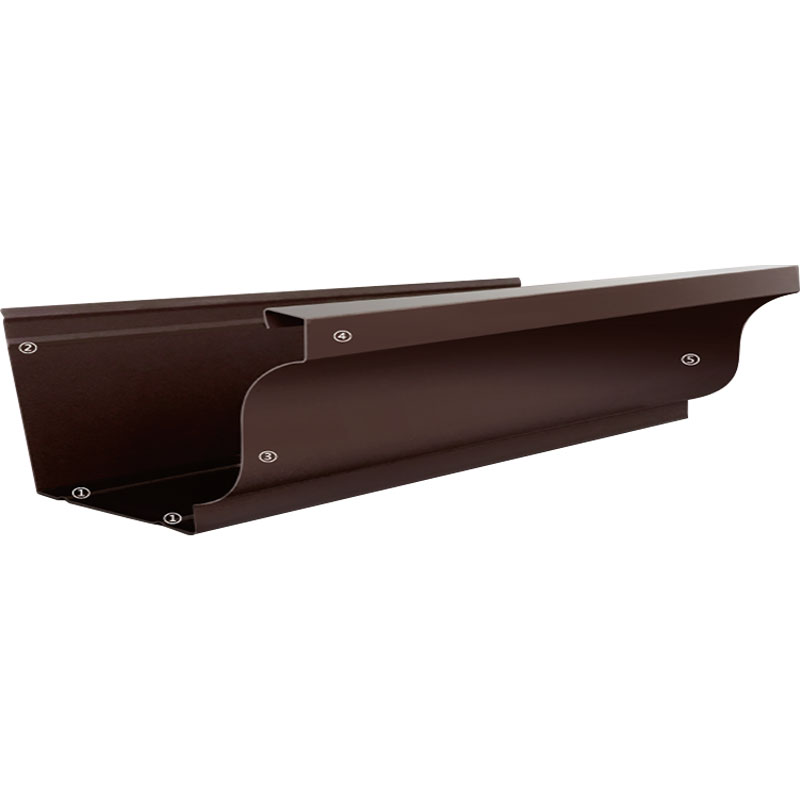
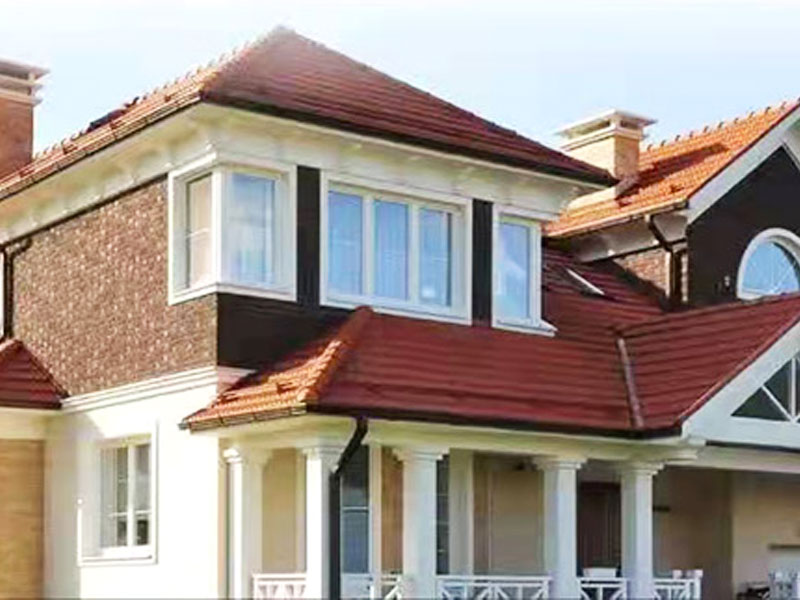 Manganese Aluminum Alloy Roof Gutter for Rainwater DrainageA 3003H24 manganese-aluminum gutter with double water-stop design and decorative S-line profile, suited to folded drainage components where corrosion resistance and eave appearance matter.View Product →
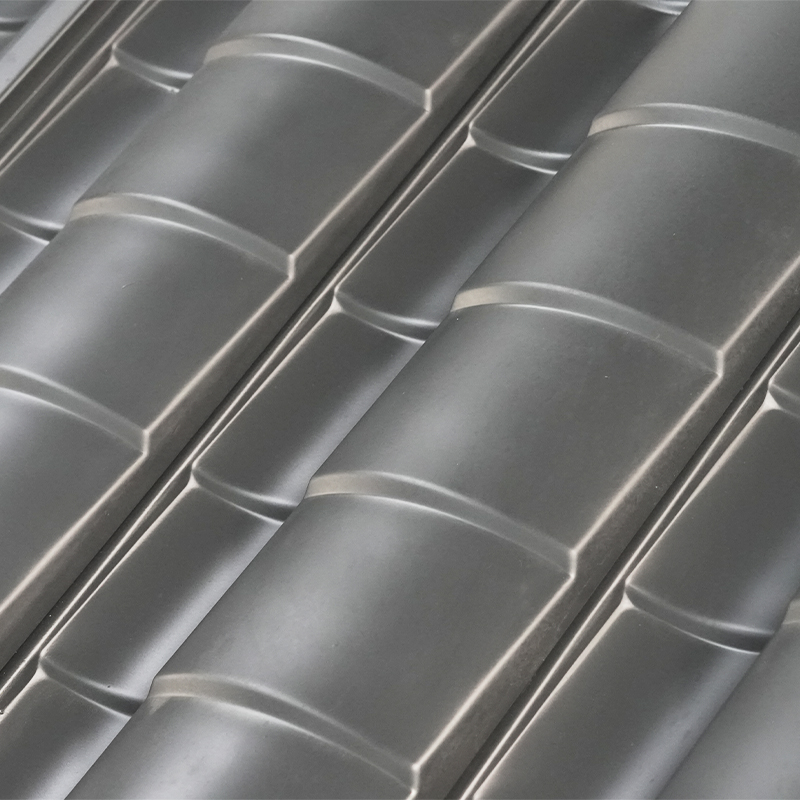
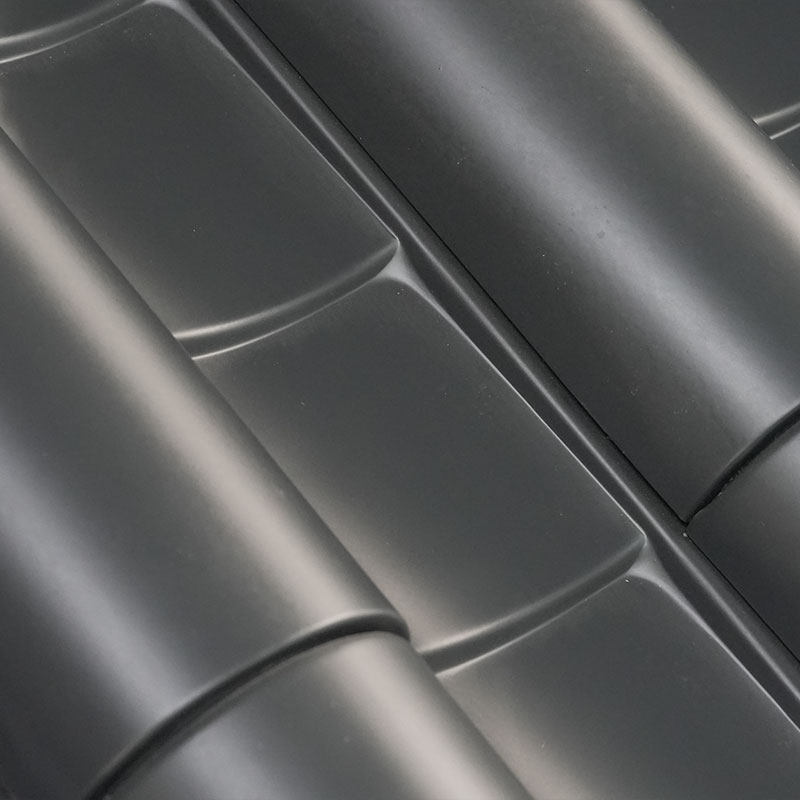
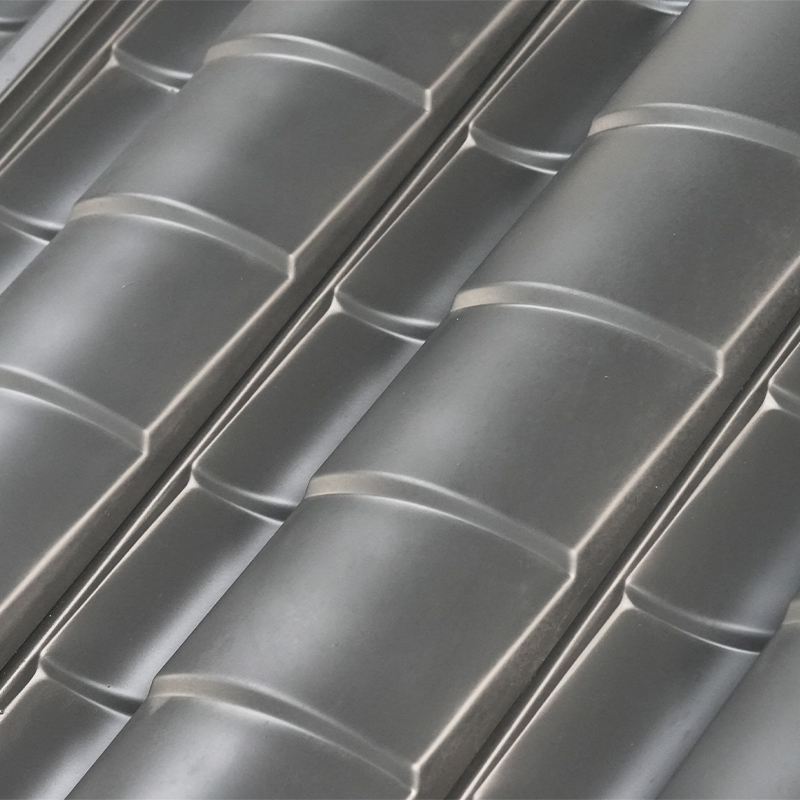
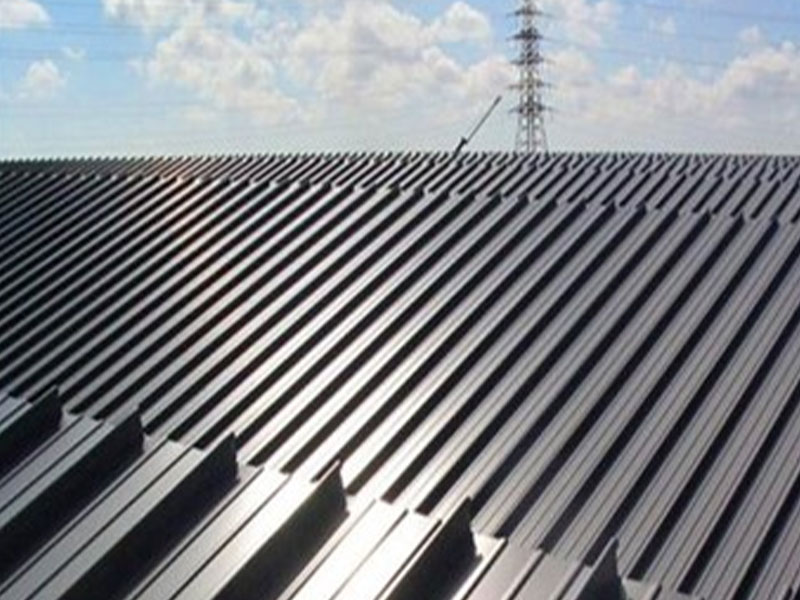 Aluminum Magnesium Manganese Standing Seam Metal Roof TileA standing-seam roofing tile in aluminum-magnesium-manganese alloy, combining waterproofing, corrosion resistance and flexible forming for modern residential roofs and low-pitched drainage.View Product →
Specifying 3003 for a Roof or Gutter Package
The order of decisions matters more than the individual numbers. Work through these five steps and the submittal usually passes on the first review.
- Fix the temper to the forming method. Hand-folded details and gutter sections: H24. Machine-folded flat sheet: H14. Purely flat infill panels: H18 is acceptable but leaves no room for site adjustment.
- Set thickness from span and fixing spacing, not habit. A 0.8 mm gutter on 600 mm bracket centres behaves very differently from 0.6 mm on 900 mm centres; oil-canning shows up long before yield is reached.
- Respect the minimum bend radius. As a working rule, allow about one sheet thickness in the O temper and roughly twice that in H24; sharper than that and you need a different temper, not a different argument.
- Decide the finish before the edge details. A multi-layer fluorocarbon system adds measurable film build that affects hemming and touch-up; coil-coated and post-coated sheets also tolerate different amounts of site cutting.
- Separate dissimilar metals. Aluminium against copper or bare steel needs an isolating washer or gasket at every fixing, or the fastener becomes the anode of a small corrosion cell.
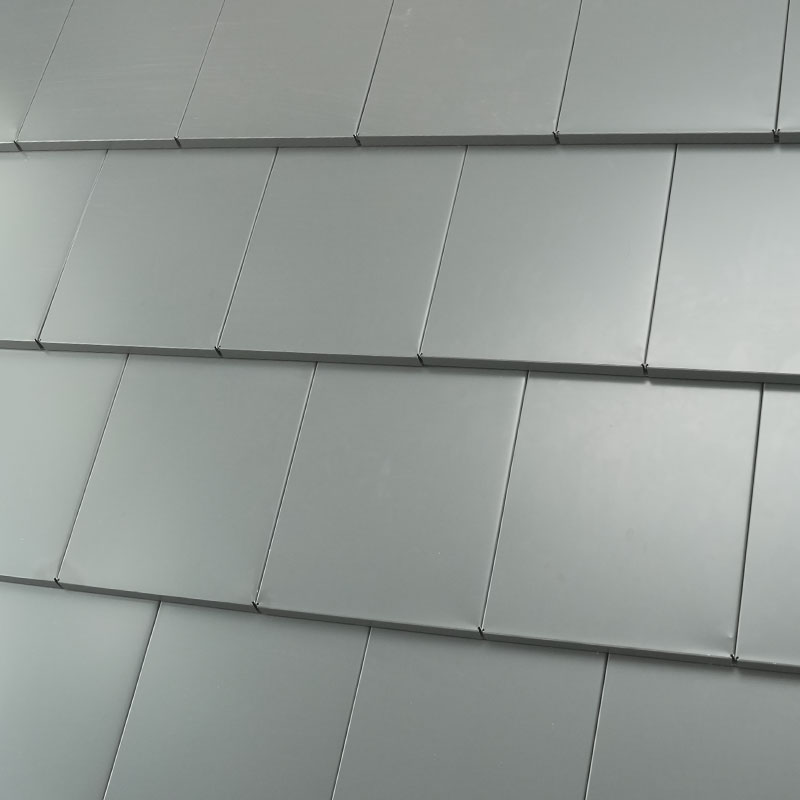
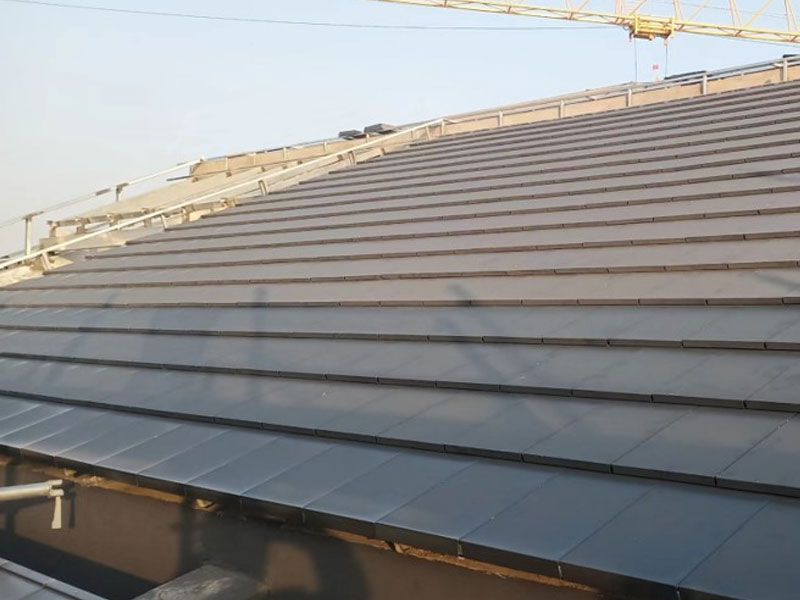 Aluminum Magnesium Manganese Flat Metal Roofing TileA lightweight flat roofing tile with fluorocarbon-sprayed aluminum-magnesium-manganese surface, offering corrosion, UV and weather resistance with minimal maintenance for varied projects.View Product →
Maintenance and Compliance Notes Worth Writing Into the Spec
3003 is a low-maintenance material, but “low” is not “none”, and the clauses that protect a warranty are usually the ones omitted from the bill of quantities.
- Wash intervals matter more than coating brand. In coastal or industrial atmospheres, an annual rinse of the gutter invert and panel laps removes the chloride and sulphate deposits that drive pitting.
- Keep the drainage path clear. Standing water is the single most common cause of premature failure in aluminium rainwater goods, and no alloy temper compensates for a blocked outlet.
- Match declared performance to a standard. Alloy and temper designations should be traceable to a recognised designation system, with mill certificates retained for the project file rather than summarised as “3000 series aluminium”.
- Protect cut edges. Field cuts expose bare metal; a compatible touch-up on visible edges prevents the filiform corrosion that starts at a sheared edge and spreads under the coating.
- Record recyclability early. Aluminium scrap value is a genuine line item at end of life; keeping the alloy families separate during demolition preserves it.
Treat 3003 as a system rather than a grade name. The chemistry gives you corrosion resistance and easy forming, the temper decides whether the sheet survives the brake press, and the finish decides how it looks in year fifteen. Buyers who specify all three — aluminium-manganese sheet, a temper matched to the folding method, and a coating system with a documented build-up — rarely have to revisit a roof or a gutter run for reasons that were visible on the drawing at tender stage.
If a supplier cannot state the temper, the minimum bend radius and the coating thickness in the same document, the number after the alloy name is decoration rather than specification.