

 English
 русский
 Español
 عربى

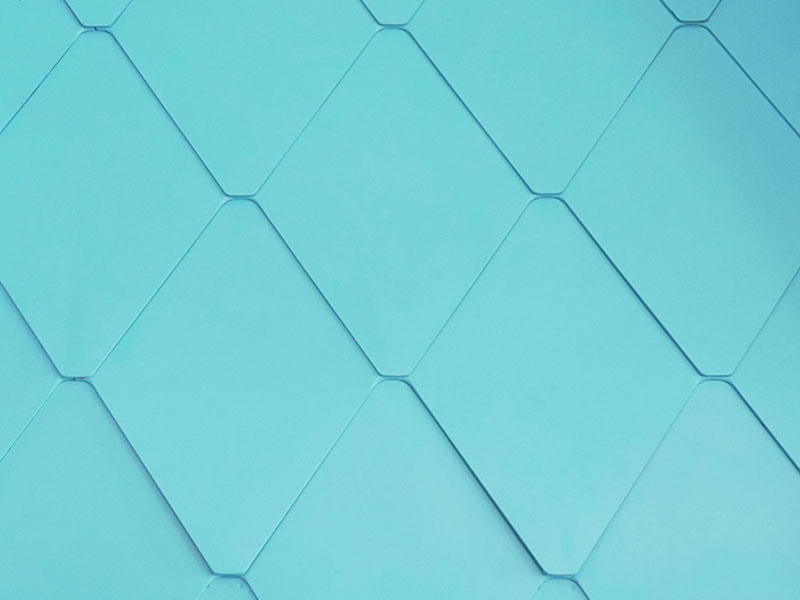
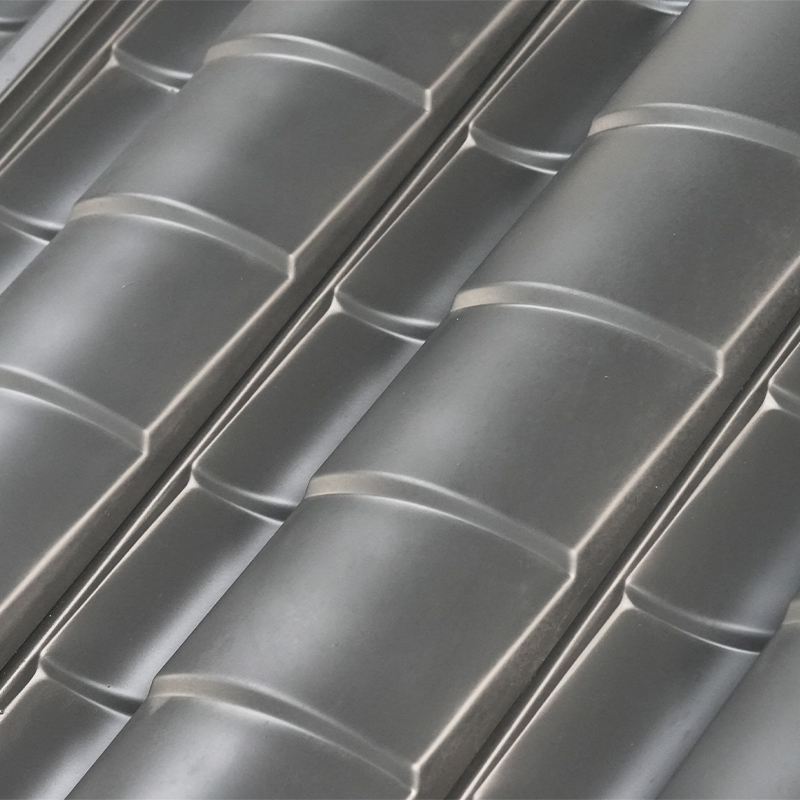
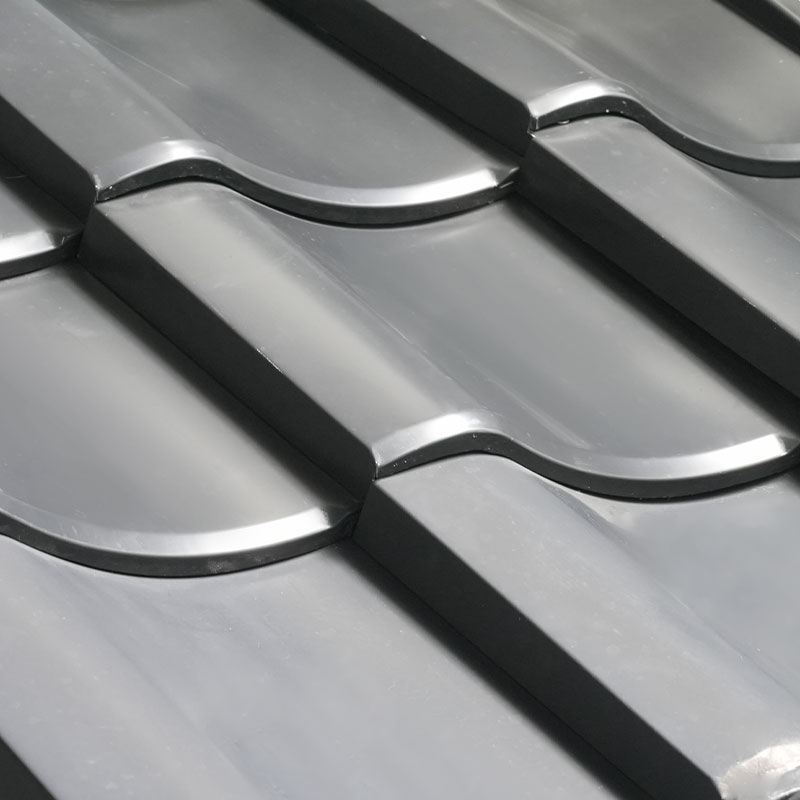
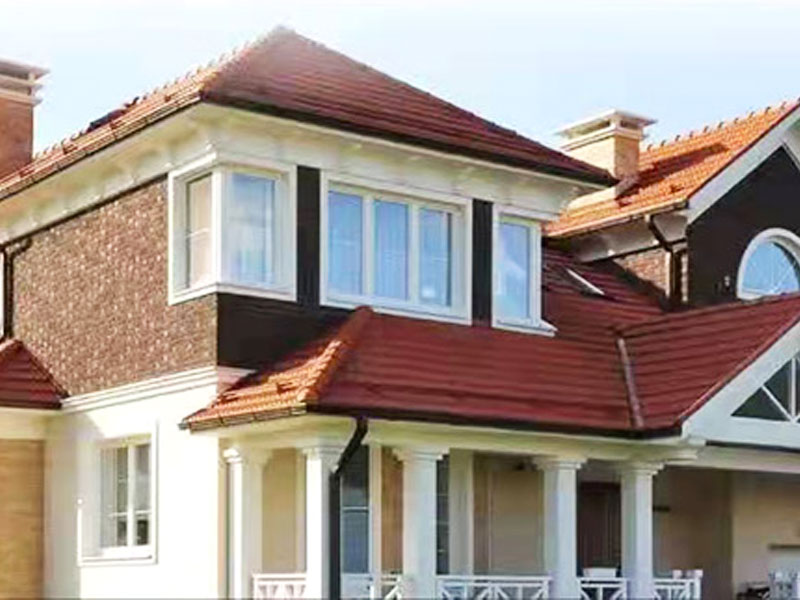
Three winters after a Hui-style roof was handed over, the indigo tiles on the south elevation had gone chalky and flat while the north slope still looked new. The coils came from one order, the colour code matched, and the dry film thickness checked out at 24 µm. What differed was the pretreatment line: one batch was pickled and conversion coated after a fresh bath change, the other on a Friday shift when the dissolved aluminium in the pickle tank had climbed to three times its normal level.
That is the practical reality of aluminium coil coating and pickling treatment. The coating is measurable and appears on the certificate; the pickling is invisible and usually is not.
The short answer
- Pickling removes oxide, rolling oil residue and smut; it decides whether the paint actually bonds.
- Coil coating lays down primer and topcoat in a single continuous pass; it decides how long colour and gloss survive.
- Neither step rescues the other. Premium PVDF over a poorly pickled surface fails by delamination; a perfect pickle under 15 µm of polyester still chalks.
Content
- 1 Pickling Is the Adhesion Foundation, Not a Cleaning Step
- 2 What Happens Between Uncoiling and Re-coiling
- 3 Coating Chemistries and What They Cost per Square Metre
- 4 The Hidden Variable: Where Coating Failures Actually Start
- 5 Where Coated Coil Ends Up
- 6 A Six-Step Qualification Sequence
- 7 Maintenance, Compliance and the Paperwork That Protects a Warranty
Pickling Is the Adhesion Foundation, Not a Cleaning Step
Coil leaving the rolling mill carries a thin but stubborn oxide film, a layer of rolling lubricant, fine aluminium fines and, on 5xxx alloys, a smut layer rich in magnesium oxide. Paint does not bond to oxide. It bonds to a chemically active, uniform metal surface, and pickling is what creates that surface by dissolving one to three micrometres of aluminium along with everything sitting on top of it.
Acid pickling
Sulphuric, nitric or phosphoric blends strip oxide quickly with low metal loss, which matters on 0.5–0.9 mm gauge. Nitric additions handle smut; chloride must stay out of the bath or pitting appears.
Alkaline etch
Removes two to five micrometres and leaves a uniform matte. Good for hiding rolling marks, but it consumes more metal and generates a heavier hydroxide sludge load.
Conversion coating
A chrome-free titanium or zirconium layer of roughly 20–80 mg/m² applied no-rinse after pickling. Too little and adhesion suffers; too much and the film turns powdery under the primer.
Three bath parameters do most of the damage when they drift: dissolved aluminium, free acid concentration and final rinse conductivity. Once aluminium builds past roughly 15–20 g/l, pickling becomes uneven across the strip width, and the coil can pass every coating test at the head end while the tail end delaminates. Rinse water above about 10 µS/cm leaves salts that later blister under a humid service environment.
What Happens Between Uncoiling and Re-coiling
A modern coil line runs at 30–120 m/min and completes the whole sequence without stopping the strip. Missing any stage by even a few seconds changes the result:
- Degreasing. Alkaline or neutral cleaner removes rolling oil so the pickle can reach the oxide. Skipping this leaves the acid working on oil, not metal.
- Rinsing. Carry-over from cleaner into the pickle tank neutralises acid and shortens bath life.
- Pickling or etching. Temperature, dwell time and bath chemistry decide surface topography and how uniform the conversion layer will be.
- Conversion coating and drying. Applied wet, dried in place, no rinse; the strip is dry before primer.
- Primer. Usually 5–7 µm, chosen for adhesion to the conversion layer and for flexibility during profiling.
- Topcoat and cure. Peak metal temperature is the number to record: 224–249 °C for PVDF, roughly 200–230 °C for polyester.
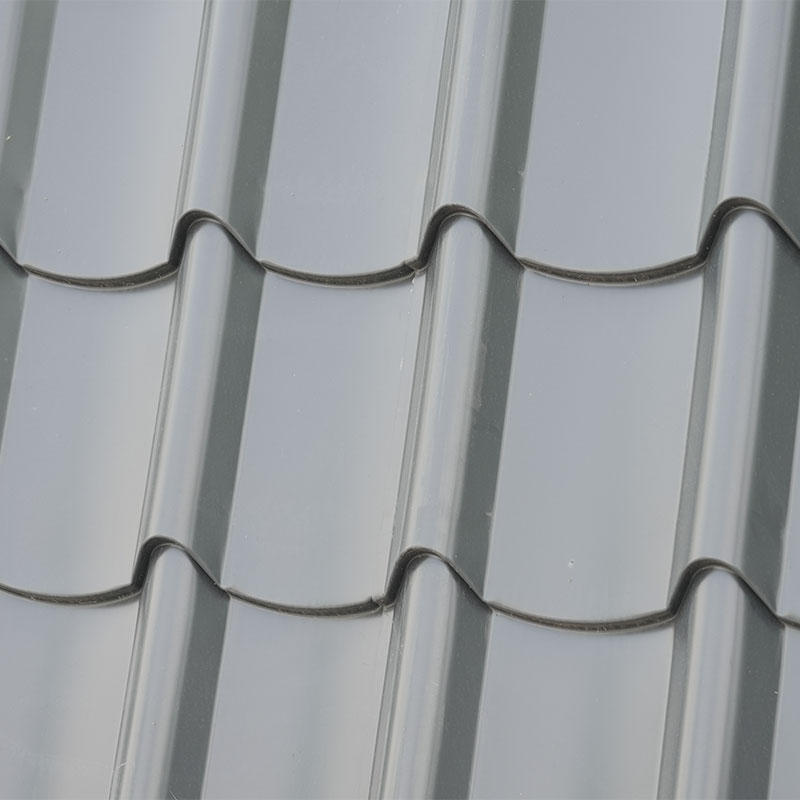
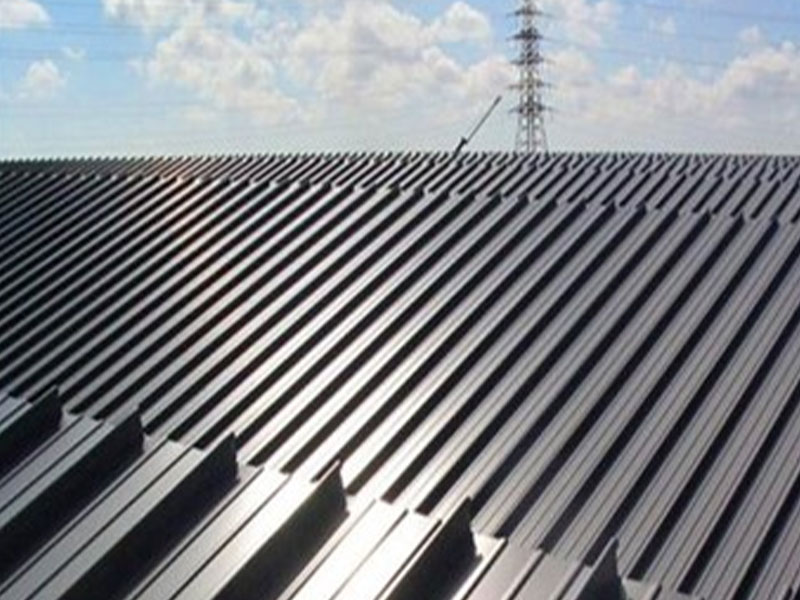 Aluminium Magnesium Manganese Standing Seam Roof TileStanding-seam roof tile in aluminium-magnesium-manganese, relevant here for its edge-locked waterproofing and alloy weather resistance.View Product →
Coating Chemistries and What They Cost per Square Metre
The resin system, not the colour, sets the service life. The comparison below reflects typical European and Chinese coil supplies; individual suppliers vary, so treat it as a screening tool rather than a specification.
A useful cross-check when comparing suppliers is the range of coating and finish options they can actually run on their line. A supplier offering four resin systems usually has better bath discipline than one offering a single generic "fluorocarbon".
The Hidden Variable: Where Coating Failures Actually Start
Field audits of premature roof coating failures keep landing in the same order. Pretreatment problems outrank resin choice, and cure shortfalls outrank film thickness.
Cure is the quiet one. Running 5–10 °C below the target peak metal temperature can drop MEK double rubs from above 100 to under 30, yet the panel still looks perfect on the rack. Six months later the same panel blushes at a fold line during installation.
Where Coated Coil Ends Up
In building materials, most colour-coated aluminium is consumed by the visible envelope, which is also the part that cannot be easily recoated after handover.
- 44% roof and wall cladding
- 17% gutters, downpipes and rainwater systems
- 16% antique profiles, ridges and decorative trim
- 13% ceilings, soffits and facade panels
- 10% other industrial uses
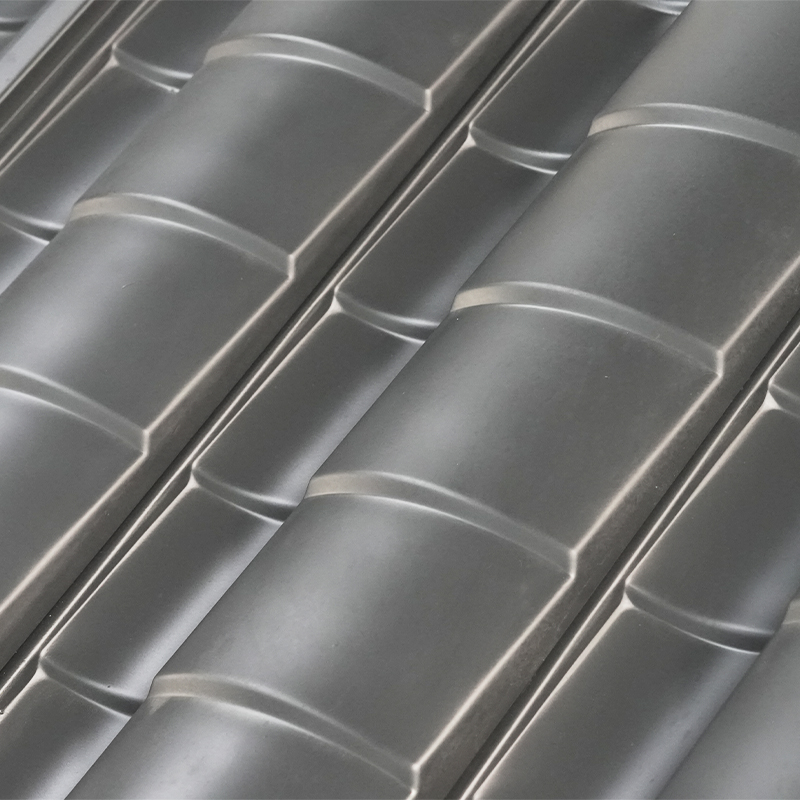
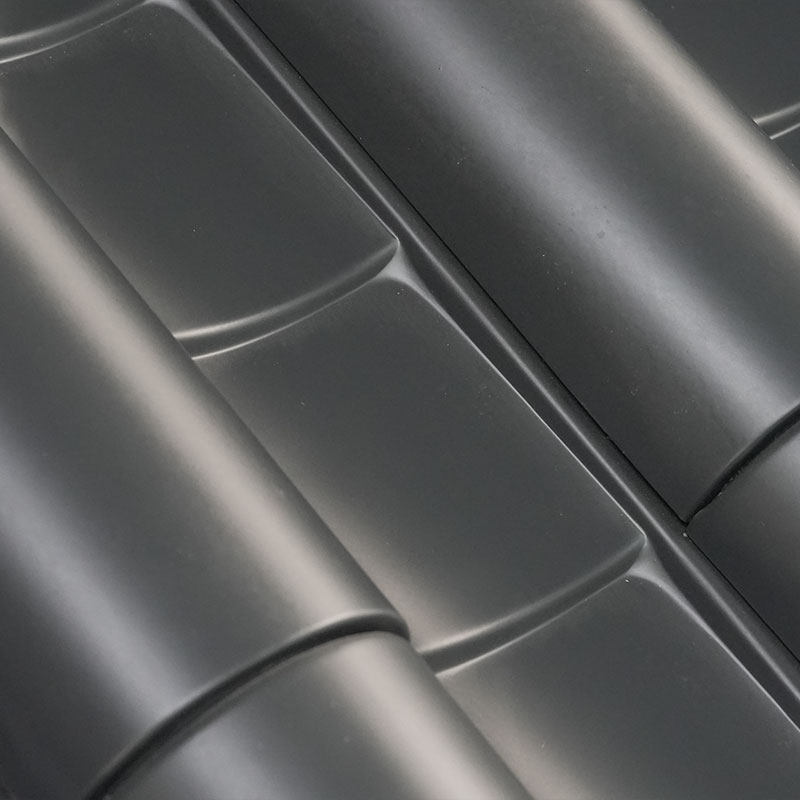
Each of those categories puts different demands on the pretreatment line. Roof cladding is profiled hard after coating and needs T-bend flexibility; gutters are formed, soldered or riveted and need edge coverage; antique profiles in bamboo-joint or cylinder shapes need coating that survives deep drawing without cracking at the crest.
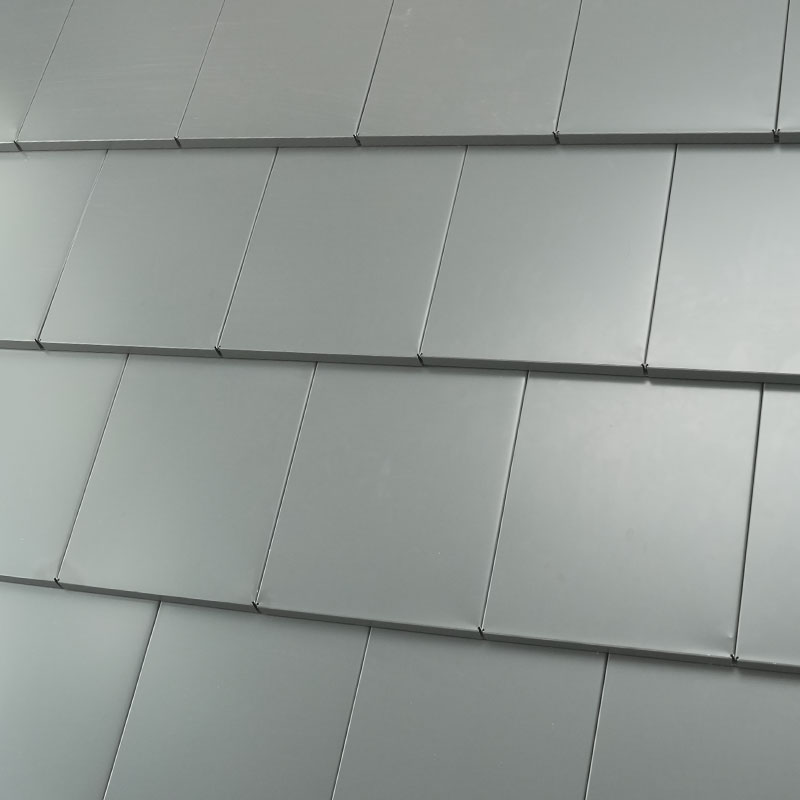
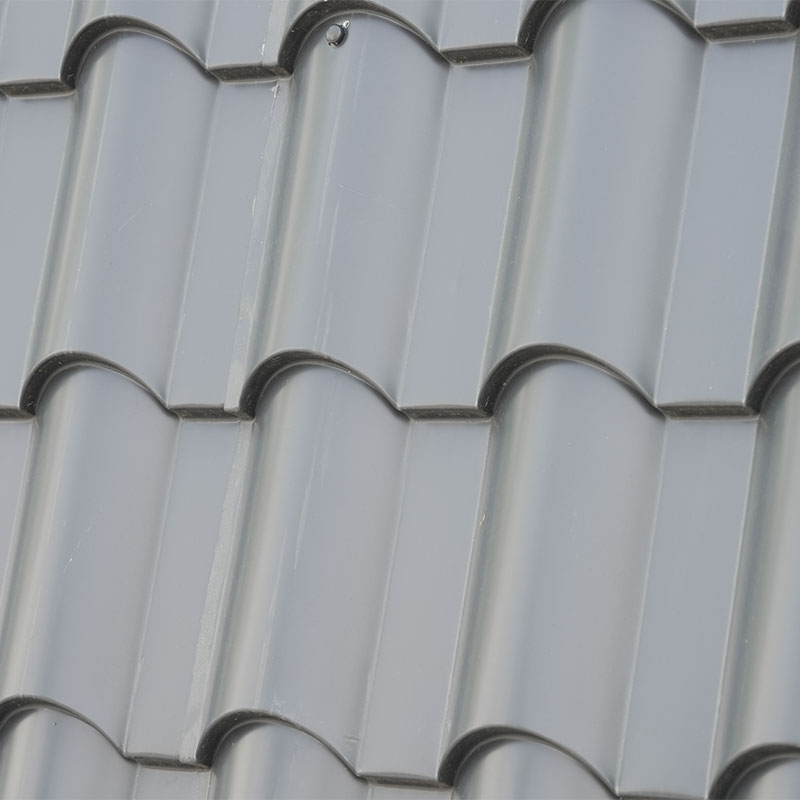
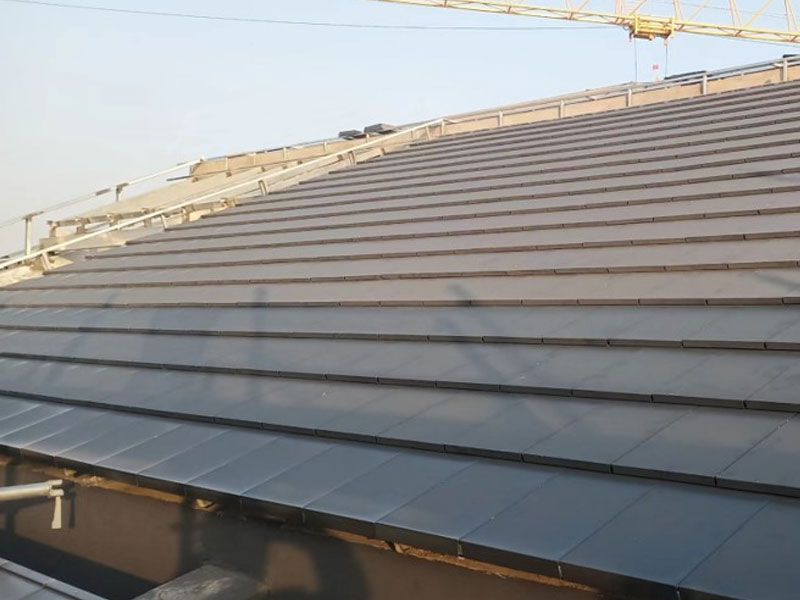 Aluminium Magnesium Manganese Flat Metal Roofing TileFlat metal roofing tile with aluminium-magnesium-manganese alloy and fluorocarbon finish, relevant for roofing projects needing corrosion and UV resistance.View Product →
A Six-Step Qualification Sequence
Buyers who get this right tend to follow the same order, and they document every step rather than trusting the datasheet.
- Fix the exposure class. Use ISO 9223 categories — C3 for inland urban, C4 for industrial, C5-M for coastal and salt-laden sites — before choosing a resin.
- Pin the alloy and temper. AA3004 or 3005 H24/H26 for standing seam at 0.7–1.0 mm; 3105 or 3003 for profiled tiles; 5052 where strength matters more than formability.
- Name the pretreatment route. Alkaline etch plus chrome-free conversion, with a stated coating weight range, not simply "pretreated".
- State the full coating build. Primer and topcoat thickness separately, reverse-side coating, and colour measured as ΔE against an approved panel.
- Ask for cure records. Peak metal temperature logs per coil, plus MEK rub and T-bend results from that same coil.
- Verify with ageing data. Salt spray to EN 13523-8 or ASTM B117 and QUV gloss retention are more informative than a nominal 20-year warranty.
On cost, moving from polyester to 70% PVDF typically adds 15–25% to the coil price. Spread across the life of a roof that cannot be re-coated without scaffolding, that premium is usually the cheapest line in the budget — provided the pickling underneath is sound.
Maintenance, Compliance and the Paperwork That Protects a Warranty
Pickling brings environmental obligations that often get overlooked in procurement. Spent acid, rinse water and the hydroxide sludge from alkaline etching are regulated streams; coil-coating plants in the United States fall under the effluent guidelines of 40 CFR Part 465, and in Europe chromium-free pretreatment is now the default because hexavalent chromium requires authorisation under REACH. A supplier who cannot describe how the pickle bath is regenerated and how rinse water is treated is a supplier with a hidden cost.
The case for chrome-free chemistry is not only regulatory; it also simplifies end-of-life handling of the scrap coil. That argument is set out in more detail in this note on the environmental side of fluorocarbon coating.
On site, three habits preserve what the line achieved. Store coils indoors, wrapped, off concrete and away from condensation; remove protective film within about three months of exposure or the adhesive migrates into the coating; and clean rainwater goods twice a year with a neutral detergent rather than an abrasive pad. Downpipes and gutters take the most aggressive wetting and the least attention, which is why the coating on those profiles needs the same pickle-and-conversion discipline as the roof above them.
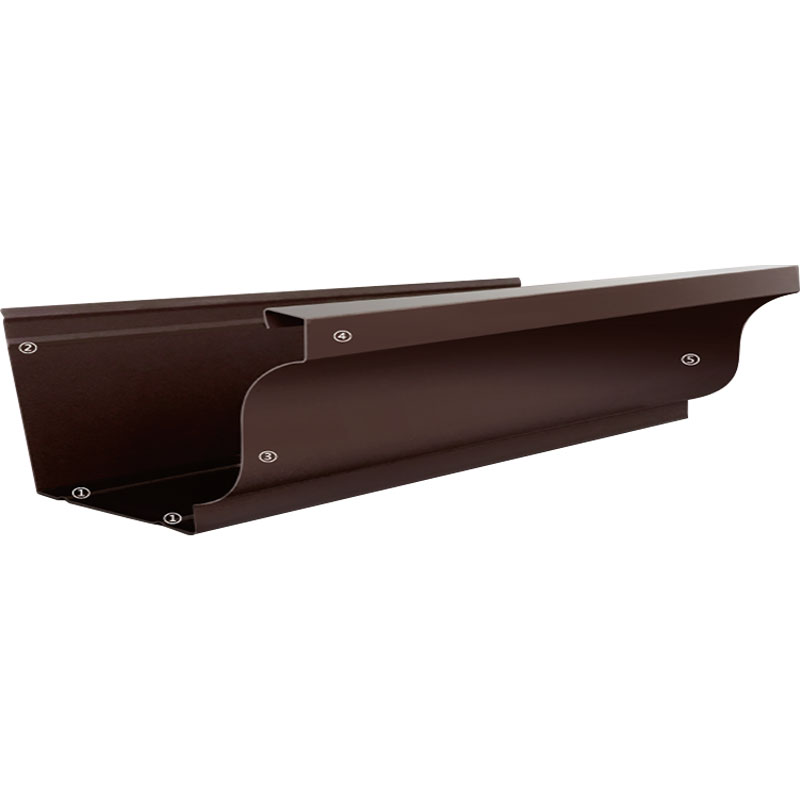
 Manganese Aluminium Alloy Roof GutterCoated manganese-aluminium roof gutter with double water-stop design, relevant for eaves drainage where corrosion and salt exposure matter.View Product →
None of this is exotic. It comes down to two things buyers can insist on: a pickle bath that is monitored and dumped before it drifts, and a cure record that travels with the coil. Ask for the pretreatment route, the conversion coating weight and the peak metal temperature log in the same document as the colour certificate — a supplier who hesitates on any of the three has told you something useful about the other two.