

 English
 русский
 Español
 عربى
عربى
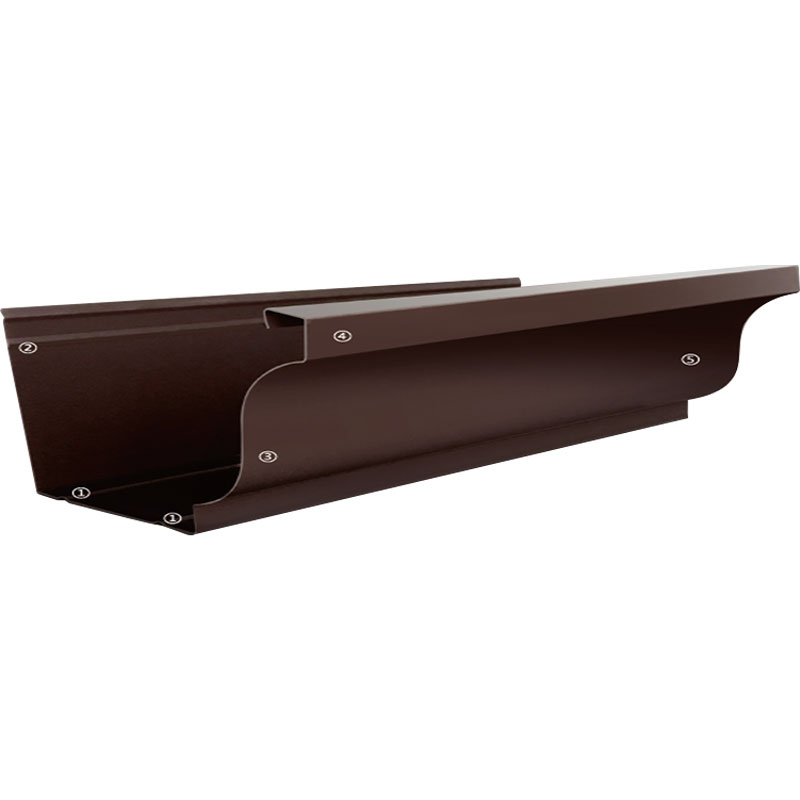
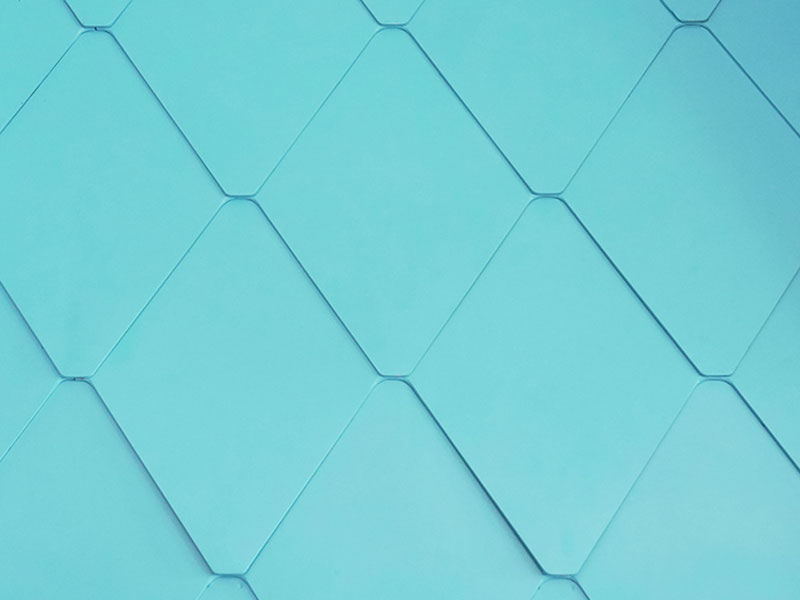
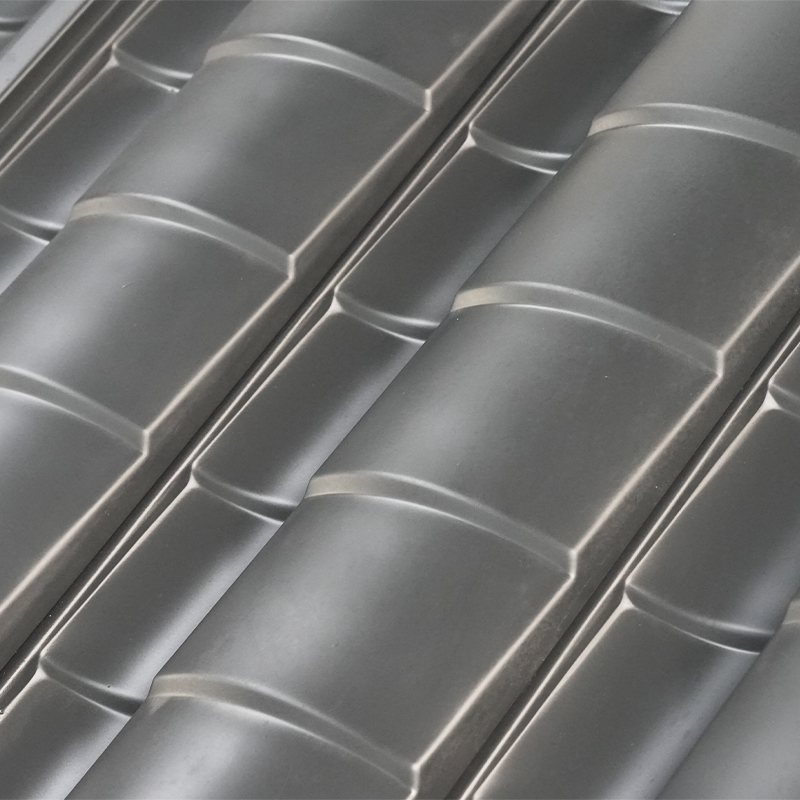
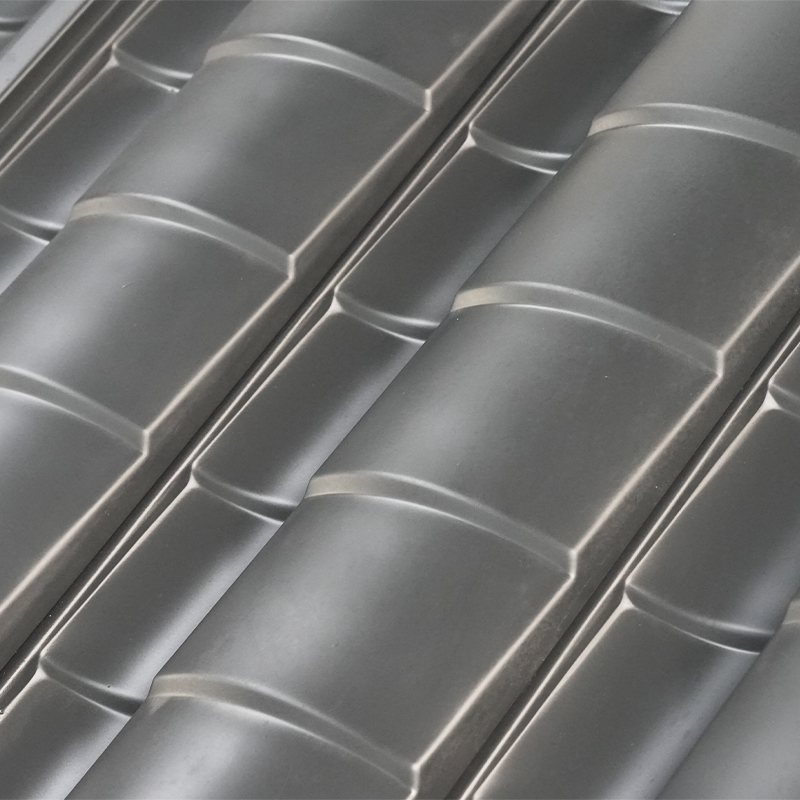
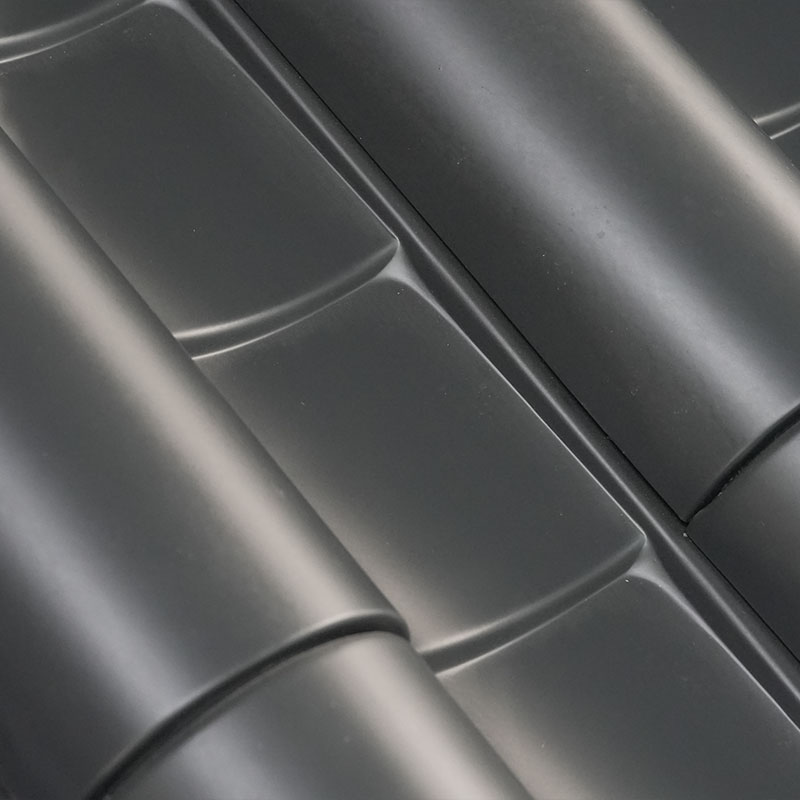
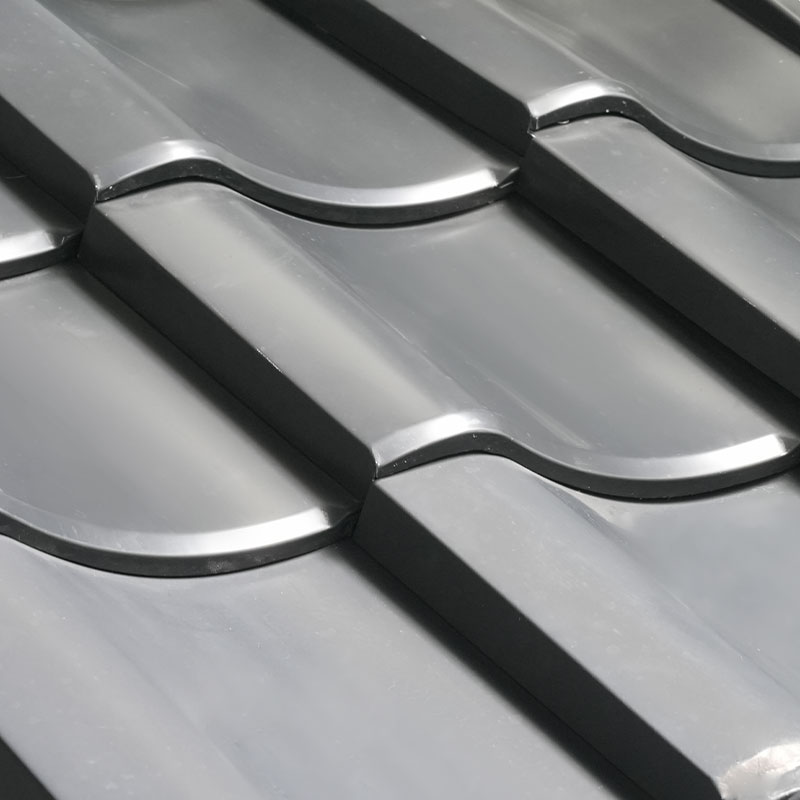
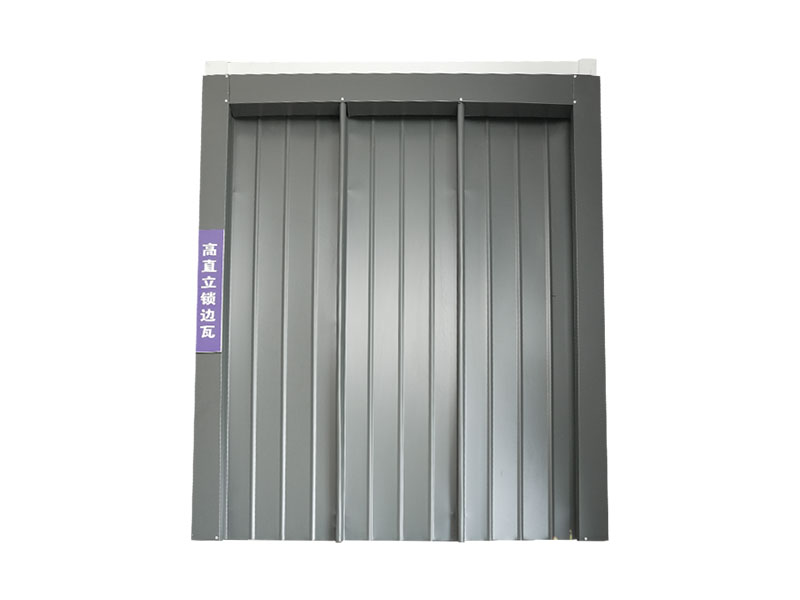
Aluminium roof tiles — whether insulated panels, diamond-pattern tiles, or square flat formats — are among the most durable, lightweight, and weather-resistant roofing materials available for both residential and commercial applications. They outperform traditional clay, concrete, and asphalt alternatives in weight-to-strength ratio, corrosion resistance, and long-term maintenance cost. Insulated aluminium roof tiles add a bonded thermal layer that makes them especially effective in climates with extreme temperature swings, while aluminium diamond roofing tiles and square flat aluminium roof tiles offer distinct aesthetic profiles suited to heritage restoration, contemporary architecture, and industrial roofing respectively. For most projects where longevity, low weight, and design flexibility are priorities, aluminium tile systems are the technically superior choice.
Content
- 1 Why Aluminium Is Used for Roof Tiles
- 2 Insulated Aluminium Roof Tiles: Construction and Thermal Performance
- 3 Aluminium Diamond Roofing Tiles: Heritage Aesthetics and Technical Details
- 4 Square Flat Aluminium Roof Tiles: Contemporary Applications and Technical Specifications
- 5 Aluminium Alloys Used in Roofing Tiles
- 6 Comparing Aluminium Roof Tiles to Other Roofing Materials
- 7 Installation Requirements for Aluminium Roof Tiles
- 8 Planning and Building Regulations Considerations
- 9 Maintenance and Long-Term Performance of Aluminium Roof Tiles
Why Aluminium Is Used for Roof Tiles
Aluminium's suitability as a roofing tile material stems from a combination of physical properties that no other common roofing material fully replicates. Understanding these properties explains both why aluminium tile systems command a premium and why their total cost of ownership frequently justifies that premium over a 30–50 year building lifespan.
Weight Advantage Over Traditional Materials
Aluminium has a density of approximately 2.7 g/cm³ — roughly one-third the density of steel (7.8 g/cm³) and less than half that of concrete (2.3–2.5 g/cm³ for concrete tiles). In practice, this means aluminium roof tiles typically weigh 3–7 kg/m², compared to 40–55 kg/m² for concrete tiles and 30–45 kg/m² for clay tiles. This dramatic weight reduction has structural implications: lighter roof loads reduce the required size and cost of rafters, purlins, and wall structures — a particularly significant benefit in renovations where the existing structure cannot support heavy replacement roofing without reinforcement.
Natural Corrosion Resistance
Aluminium forms a self-healing passive oxide layer on its surface when exposed to oxygen — a natural process called passivation. This layer prevents further oxidation of the metal beneath, unlike steel which continues to corrode once the surface is compromised. In roofing applications, this means aluminium tiles do not rust even in coastal environments with salt-laden air, in industrial zones with acidic atmospheric pollution, or in consistently wet climates where ferrous metals would require ongoing protective coating maintenance. Most aluminium roofing systems carry warranty periods of 30–50 years based on this inherent corrosion resistance.
Thermal and Acoustic Properties
Bare aluminium is an excellent thermal conductor and reflector. A polished or light-coloured aluminium surface reflects up to 95% of solar radiation, significantly reducing solar heat gain through the roof in warm climates. However, aluminium's high thermal conductivity (approximately 237 W/m·K) also means heat transfers rapidly through uninsulated tiles — which is why insulated aluminium tile systems are engineered to add thermal resistance through bonded insulation layers. Acoustically, thin metal roofing has historically produced noise during rain — a characteristic that insulated aluminium systems address effectively through the mass and damping effect of the bonded insulation layer.
Recyclability and Sustainability
Aluminium is 100% recyclable without loss of quality, and recycling aluminium requires only approximately 5% of the energy needed to produce primary aluminium from bauxite ore. At end of roof life, aluminium tiles retain significant scrap value — typically $0.50–$1.50 per kg at current scrap prices — meaning the material is recovered and reprocessed rather than going to landfill. This circular material lifecycle makes aluminium roofing a genuinely sustainable specification for green building projects, supporting credits under LEED, BREEAM, and similar environmental assessment frameworks.
Insulated Aluminium Roof Tiles: Construction and Thermal Performance
Insulated aluminium roof tiles are composite panel systems consisting of an aluminium outer skin bonded to a thermal insulation core, typically with an aluminium or foil-laminated inner face. This sandwich construction transforms the tile from a simple weather barrier into a fully functional thermal envelope component — combining weatherproofing, structure, and insulation in a single installed element.
Insulation Core Materials
The insulation core material determines the tile's thermal performance (U-value), fire rating, acoustic performance, and weight. The three most common core materials are:
- Polyisocyanurate (PIR) foam: The most thermally efficient rigid foam insulation, with a thermal conductivity of approximately 0.022–0.025 W/m·K. PIR-cored insulated aluminium tiles achieve low U-values at thinner overall panel depths than other core materials. PIR has a closed-cell structure that resists moisture absorption and maintains its thermal performance over time. It achieves a fire classification of Euroclass B or better in most formulations, making it suitable for most building types. PIR-cored panels are the most widely used in premium insulated aluminium roofing systems.
- Expanded Polystyrene (EPS): Lower cost than PIR, with thermal conductivity of 0.032–0.038 W/m·K. EPS panels require greater thickness to achieve the same U-value as PIR. They have good compressive strength and moisture resistance but generally achieve a lower fire classification (Euroclass E or F for standard EPS, improved with fire-retardant grades). Used in cost-sensitive applications where overall panel depth is not constrained.
- Mineral wool (rockwool / glasswool): Non-combustible, achieving Euroclass A1 or A2 fire classification — the highest available. Thermal conductivity of approximately 0.034–0.040 W/m·K requires greater thickness than PIR for equivalent U-values, but mineral wool panels are specified where non-combustibility is mandatory — schools, hospitals, high-rise buildings, and structures in high fire-risk zones. Also provides superior acoustic insulation due to mineral wool's sound-absorbing properties.
U-Value Performance by Panel Thickness
| Core Type | 60 mm Panel | 80 mm Panel | 100 mm Panel | 120 mm Panel | Fire Class |
|---|---|---|---|---|---|
| PIR | ~0.38 W/m²K | ~0.28 W/m²K | ~0.22 W/m²K | ~0.18 W/m²K | Euroclass B |
| EPS | ~0.55 W/m²K | ~0.42 W/m²K | ~0.33 W/m²K | ~0.28 W/m²K | Euroclass E/F |
| Mineral Wool | ~0.62 W/m²K | ~0.47 W/m²K | ~0.37 W/m²K | ~0.31 W/m²K | Euroclass A1/A2 |
UK Building Regulations Part L (2021) requires new roofs to achieve a U-value of 0.16 W/m²K or better for most building types. To meet this standard with a PIR-cored insulated aluminium tile, a panel thickness of approximately 120–150 mm is typically required. Where the roof structure provides additional thermal mass or where warm roof construction is used, a slightly thinner panel may be combined with supplementary insulation to achieve compliance.
Acoustic Benefits of Insulated Aluminium Tiles
One of the most practical advantages of insulated aluminium tiles over standard metal roofing is their significantly improved acoustic performance. Bare metal roofing transmits rain impact noise directly into the building — often cited as the main objection to metal roofing in residential applications. PIR-cored insulated panels achieve a sound reduction index (Rw) of 20–30 dB, and mineral wool-cored panels achieve 35–45 dB, making rain noise inaudible or near-inaudible in the occupied space below. This makes insulated aluminium tiles genuinely suitable for bedrooms, offices, and other noise-sensitive spaces without additional acoustic ceiling treatment.
Aluminium Diamond Roofing Tiles: Heritage Aesthetics and Technical Details
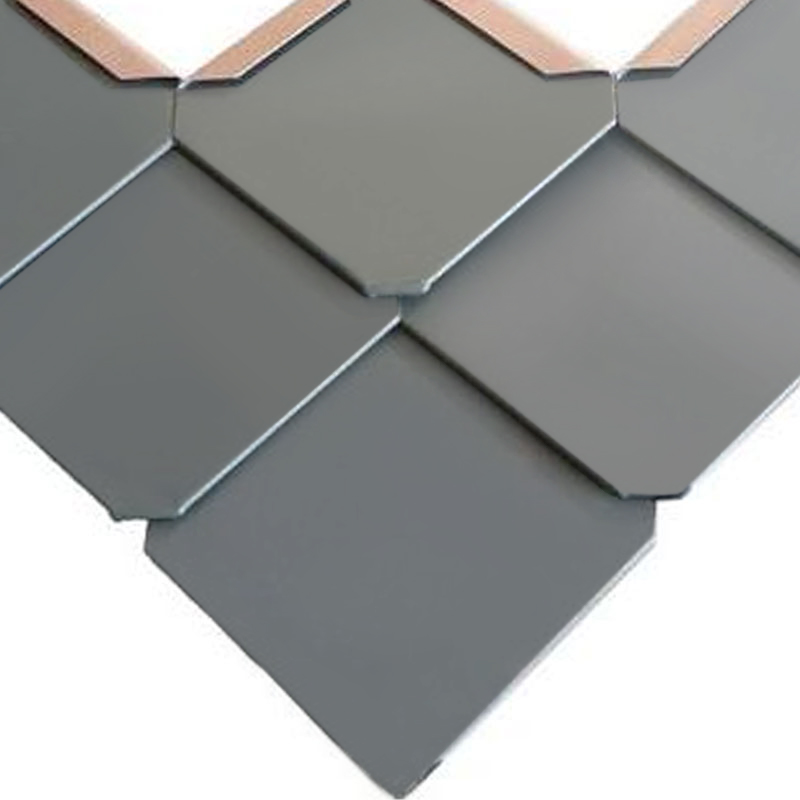
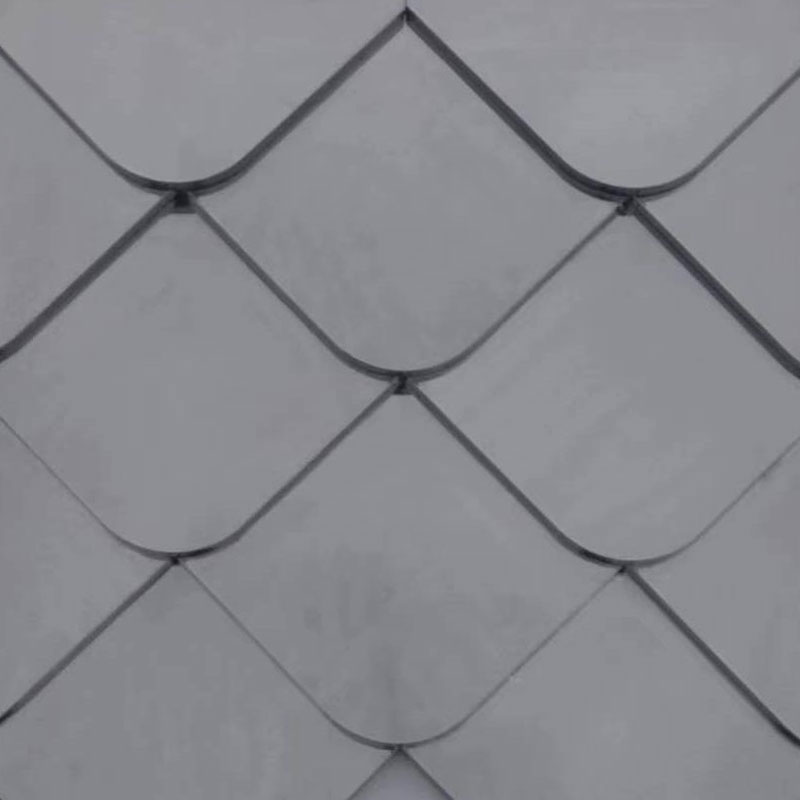
Aluminium diamond roofing tiles — also known as lozenge tiles or diamond-shaped metal tiles — are a classic European roofing form with origins in the traditional zinc and lead tiling used on Gothic and Baroque ecclesiastical and civic architecture. The diamond (rhombus) shape interlock pattern creates a visually distinctive, scale-like surface that has been continuously used on high-status buildings for over 400 years. In aluminium, this format combines the aesthetic of traditional metal tiling with the practical advantages of modern aluminium alloys.
Diamond Tile Geometry and Layout
Diamond aluminium tiles are typically manufactured in a rhombus format with their longer diagonal oriented vertically on the roof surface. Common sizes include 300 × 300 mm, 400 × 400 mm, and 500 × 500 mm (measured corner-to-corner), with each tile folded at its edges to create the interlocking seam system. The folded edges — a standing seam detail applied to an individual tile rather than a continuous panel — lock adjacent tiles together both horizontally and vertically without visible fasteners from below, creating a clean, unbroken surface interrupted only by the tile joint pattern.
When installed, adjacent diamond tiles offset by half a unit in each direction, producing the characteristic overlapping scale pattern. This offset interlock is structurally important: it means there is no continuous joint line running across the roof slope — every horizontal joint is interrupted by the tile above and below it, creating a naturally weather-resistant lapping system that prevents water infiltration even on relatively shallow pitches.
Minimum Roof Pitch for Diamond Aluminium Tiles
The interlocking nature of diamond tiles makes them suitable for lower pitches than many tile formats. Most aluminium diamond roofing tile systems can be installed from a minimum pitch of 15–17.5° (approximately 1:4 rise:run) depending on the tile size and the level of exposure. Below this pitch, the overlap depth between adjacent tiles becomes insufficient to resist wind-driven rain entering the joint. In exposed coastal or upland locations, manufacturers typically recommend a minimum pitch of 20–25° for diamond tiles to ensure long-term weather resistance.
Surface Finishes for Diamond Aluminium Tiles
Diamond aluminium roofing tiles are available in a range of surface finishes that significantly affect appearance, weathering behavior, and maintenance requirements:
- Mill finish (natural): The bare aluminium surface develops a natural patina over time, initially bright silver progressing to a matte grey-white. Provides the most historically authentic appearance for restoration projects replacing zinc or lead tiling.
- Pre-weathered (pre-patinated): Factory-applied chemical treatment accelerates the natural weathering process, delivering a consistent, mature grey appearance immediately on installation. Used when visual uniformity from day one is required rather than waiting years for natural patination.
- PVDF (polyvinylidene fluoride) coated: A factory-applied fluoropolymer coating in a wide range of colours — RAL standard palette, NCS colours, or custom specifications. PVDF coatings provide 30+ year colour stability with minimal fade and chalk resistance. Used in contemporary architectural projects and where planning requirements specify colour matching to adjacent materials.
- Anodised: An electrolytic surface treatment that thickens and hardens the natural oxide layer. Available in clear (silver), bronze, and champagne tones. Anodising provides a hard, abrasion-resistant surface with excellent long-term colour stability in architectural-grade (Class 25 or Class 20) specification.
Applications for Diamond Aluminium Tiles
The diamond tile format is most frequently specified for:
- Heritage and conservation restoration: Replacing deteriorated zinc, lead, or copper diamond tiles on listed buildings, churches, civic buildings, and historic residences where the tile geometry is a protected or expected visual element.
- Contemporary residential roofing: Steeply pitched gable roofs, turrets, bay window roofs, and dormer cheeks where the diamond tile pattern creates architectural character.
- Wall cladding: The same diamond tile system can be applied vertically to wall surfaces for a continuous visual language between roof and facade — a common approach in contemporary Scandinavian and German residential architecture.
Square Flat Aluminium Roof Tiles: Contemporary Applications and Technical Specifications
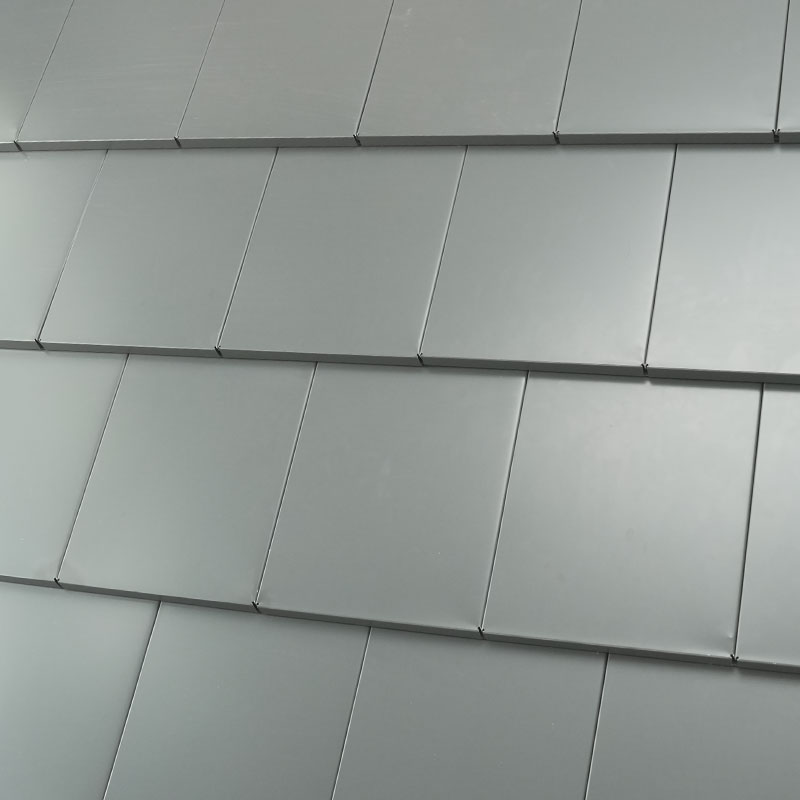
Square flat aluminium roof tiles differ from diamond tiles in their orientation and interlock geometry: they are installed with their edges parallel to the ridge and eaves, producing a regular grid pattern rather than a diagonal scale. This orthogonal layout suits contemporary minimalist architecture, flat or low-pitch roof terminations, and industrial or commercial buildings where a clean, geometric visual character is desired.
Common Sizes and Formats
Square flat aluminium tiles are manufactured in a range of standard sizes, with the most common being:
- 200 × 200 mm — fine grid, used on complex geometries and curved surfaces
- 300 × 300 mm — standard residential format, widely available
- 400 × 400 mm — medium-scale format for larger residential and light commercial
- 500 × 500 mm — large-format tile for commercial and industrial applications
- Custom sizes — many manufacturers offer bespoke dimensions for specific architectural projects
Tile thickness ranges from 0.6–1.2 mm of aluminium sheet (typically 3003 or 3105 alloy for roofing grade). Thicker gauges (1.0–1.2 mm) are specified for high-exposure applications, industrial buildings, and where foot traffic on the roof surface during maintenance is anticipated.
Interlocking Systems for Square Flat Tiles
Square flat aluminium tiles use one of two primary fixing and interlocking approaches:
- Secret fix clip systems: Each tile is retained by stainless steel or aluminium clips fixed to the substrate batten, which engage a folded return on the tile's rear face. The clips are completely concealed by the overlapping tile above, leaving no visible fasteners on the finished surface. This system provides clean aesthetics and allows for thermal expansion — the clips allow the tile to move slightly within the fixing without stress.
- Hook and batten systems: Tiles have a formed hook at the top edge that engages over a horizontal batten, with locking folds at the side edges engaging adjacent tiles. Similar in principle to traditional plain clay tile fixing but adapted for metal. This system is faster to install than clip systems and is appropriate for steeper pitches.
Thermal Movement Allowance
Aluminium has a relatively high coefficient of thermal expansion — approximately 23 × 10⁻⁶ /°C. A 500 × 500 mm aluminium tile will expand by approximately 0.5 mm in each dimension for a 40°C temperature change (typical between winter cold and summer peak temperature in many climates). Fixing systems must accommodate this movement — rigid fastening that prevents thermal expansion leads to buckling and deformation of tile surfaces. Secret fix clip systems are specifically designed to allow this movement while maintaining secure retention.
Aluminium Alloys Used in Roofing Tiles
Not all aluminium is equal in roofing applications. The alloy specification determines corrosion resistance, formability, strength, and surface finish quality. Roofing-grade aluminium tiles use alloys from the 1000 and 3000 series:
| Alloy | Series | Key Characteristic | Corrosion Resistance | Typical Use |
|---|---|---|---|---|
| 1050 / 1100 | 1000 (pure Al) | Very high ductility, excellent formability | Excellent | Complex formed tiles, anodising base |
| 3003 | 3000 (Al-Mn) | Higher strength than 1000 series; good formability | Excellent | Standard roofing tile substrate |
| 3004 | 3000 (Al-Mn-Mg) | Higher strength than 3003; good work hardening | Excellent | Heavy-gauge tiles, industrial roofing |
| 3105 | 3000 (Al-Mn-Mg) | Good formability; used in painted coil stock | Very Good | PVDF-coated tiles from pre-painted coil |
Comparing Aluminium Roof Tiles to Other Roofing Materials
| Material | Weight (kg/m²) | Expected Lifespan | Corrosion Resistance | Maintenance | Relative Cost |
|---|---|---|---|---|---|
| Aluminium tiles | 3–7 | 40–60+ years | Excellent (self-passivating) | Very Low | Medium–High |
| Concrete tiles | 40–55 | 30–50 years | Good (surface degrades) | Low–Medium | Low–Medium |
| Clay tiles | 30–45 | 50–100+ years | Excellent | Very Low | Medium–High |
| Steel (Zincalume/Colorbond) | 5–10 | 30–40 years | Good (coating dependent) | Low | Medium |
| Asphalt shingles | 8–14 | 15–30 years | Moderate | Medium | Low |
| Zinc tiles | 7–12 | 60–100+ years | Excellent (self-healing patina) | Very Low | High |
Compared to zinc — the traditional premium metal tile material — aluminium offers similar corrosion resistance at approximately 30–40% lower material cost, with slightly inferior natural patina aesthetics (aluminium weathers to grey-white rather than zinc's distinctive blue-grey). For projects where cost is a constraint but the longevity and lightweight benefits of metal tiling are required, aluminium is the practical choice over zinc.
Installation Requirements for Aluminium Roof Tiles
Successful aluminium roof tile installation depends on correct substrate preparation, appropriate underlayer specification, and attention to thermal movement — areas where installation errors frequently occur and lead to premature performance problems.
Substrate and Batten Requirements
Aluminium tiles can be installed over timber battens, steel purlins, or continuous boarding depending on the tile format and system. For diamond and square flat tiles using secret fix clip systems, continuous boarding (OSB, plywood, or timber boarding) is often preferred as it provides a consistent fixing surface for clips at any position, allows for precise tile alignment, and provides a structural diaphragm that improves the roof's resistance to racking forces. Where battens are used, spacing must match the tile fixing geometry precisely — errors in batten spacing cannot be corrected during tile installation without re-battening.
Aluminium in contact with certain metals undergoes galvanic corrosion — the electrochemical deterioration of the less noble metal when two dissimilar metals contact each other in the presence of moisture. Aluminium tiles must never be in direct contact with copper, brass, or uncoated steel. All fixings, clips, and flashings should be stainless steel, aluminium, or zinc-coated (hot-dip galvanized). Where run-off from copper elements (copper guttering, copper flashings, or a copper roof above) will flow over aluminium tiling, the copper ions dissolved in the water will cause accelerated surface corrosion of the aluminium — a design incompatibility that must be avoided at planning stage.
Underlayer (Underlay) Specification
An appropriate roofing underlay beneath aluminium tiles serves two functions: secondary weather resistance (the last line of defence if a tile is displaced or damaged) and condensation management. For insulated aluminium tile systems in warm roof construction, no separate underlay is typically required as the tile panel itself provides the continuous insulation and vapour control layer. For non-insulated aluminium tiles in cold roof construction, a vapour-permeable (breathable) membrane — classified to BS EN 13859-1 or equivalent — should be used directly over the rafters or boarding, allowing any condensation within the roof space to escape while preventing liquid water ingress from outside.
Flashings and Detailing
Abutments, verges, ridges, valleys, and penetrations require compatible flashing materials. Aluminium-compatible flashing materials include:
- Aluminium flashing: Identical material to the tiles, ensuring full galvanic compatibility and consistent weathering appearance.
- Lead-coated aluminium: Provides the workability of lead with the substrate strength of aluminium — useful at complex junctions where hand-dressing to irregular profiles is required.
- Self-adhesive butyl or EPDM tape flashings: Used for internal abutments and penetration sealing where forming a traditional metal flashing is impractical. Must be compatible with the tile's surface coating.
- Zinc flashings: Galvanically compatible with aluminium (both are closely positioned in the galvanic series) and provide similar weathering aesthetics.
Planning and Building Regulations Considerations
In many jurisdictions, replacing an existing roof covering with aluminium tiles may require planning permission or building regulations approval depending on the building type, the change in appearance, and the thermal performance specification.
- Listed buildings and conservation areas (UK): Any change to the external appearance of a listed building, or a property within a designated conservation area, requires Listed Building Consent or prior approval from the local planning authority. Aluminium tiles in natural mill finish or pre-weathered grey are generally considered appropriate replacements for zinc or lead in conservation contexts, but PVDF-coloured finishes may be refused in sensitive heritage settings.
- Building Regulations Part L (thermal performance): In England and Wales, replacing more than 50% of a roof covering triggers the requirement to upgrade the roof's overall thermal performance to current standards (U-value 0.16 W/m²K for most building types under the 2021 regulations). Insulated aluminium tile systems that incorporate sufficient PIR or mineral wool core thickness can meet this requirement in a single installation step.
- Fire performance requirements: In England, buildings above 11 metres in height are subject to restrictions on the use of combustible materials in external walls and roofs under Approved Document B (Fire safety). PIR-cored insulated tiles typically achieve the required fire classification for buildings up to 18 metres, while mineral wool-cored systems are specified for buildings above this height.
Maintenance and Long-Term Performance of Aluminium Roof Tiles
One of the defining advantages of aluminium roof tiles is their very low maintenance requirement compared to most alternative roofing materials. A correctly installed aluminium tile roof in good condition requires essentially no active maintenance other than periodic inspection and cleaning.
Inspection Schedule
Annual visual inspection — either from ground level with binoculars or from a drone — is recommended to identify any mechanically damaged tiles (from fallen branches, foot traffic, or storm debris), dislodged flashings, or blocked gutters. Aluminium tiles do not crack under freeze-thaw cycles (unlike clay and concrete), do not lift in wind uplift if correctly fixed, and do not corrode under normal atmospheric conditions. The most common maintenance issues are cosmetic surface soiling from algae or lichen in damp climates (addressable with a proprietary biocide wash) and sealant degradation at penetration flashings after 10–15 years.
Replacing Individual Damaged Tiles
A significant practical advantage of a tiled system over sheet metal roofing is that individual damaged tiles can be replaced without disturbing the surrounding area. For secret-fix clip systems, a damaged tile is removed by unfolding the interlocking edge returns (using a folding tool), sliding the tile free from its clips, and fitting a replacement tile. The entire repair can typically be completed in under 30 minutes per tile by an experienced roofer. This repairability is one of the key reasons aluminium tile systems are preferred over large-format panel systems for residential applications where occasional mechanical damage is more likely.