

 English
 русский
 Español
 عربى
عربى
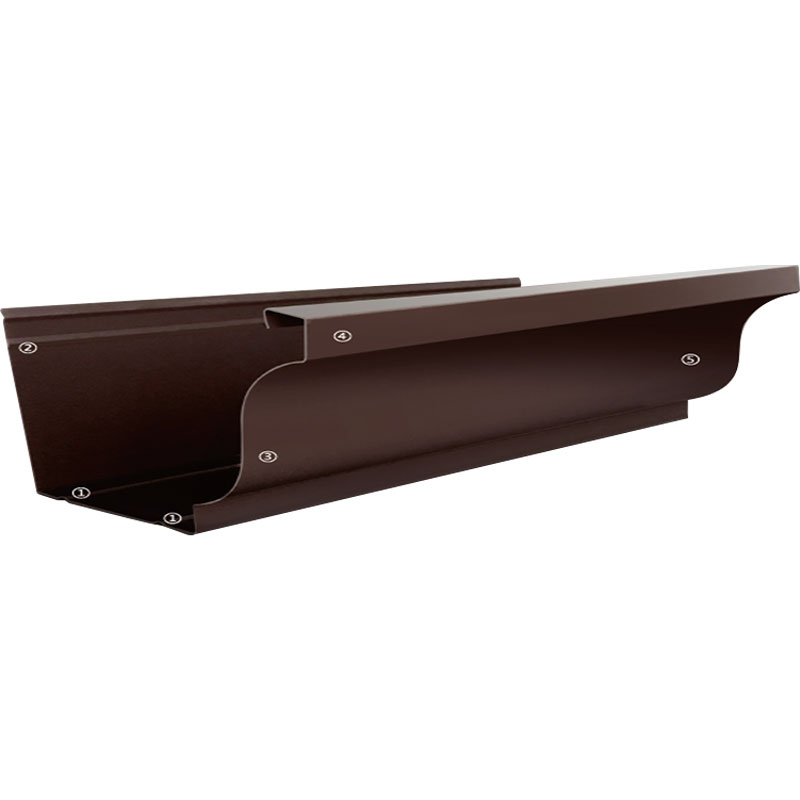
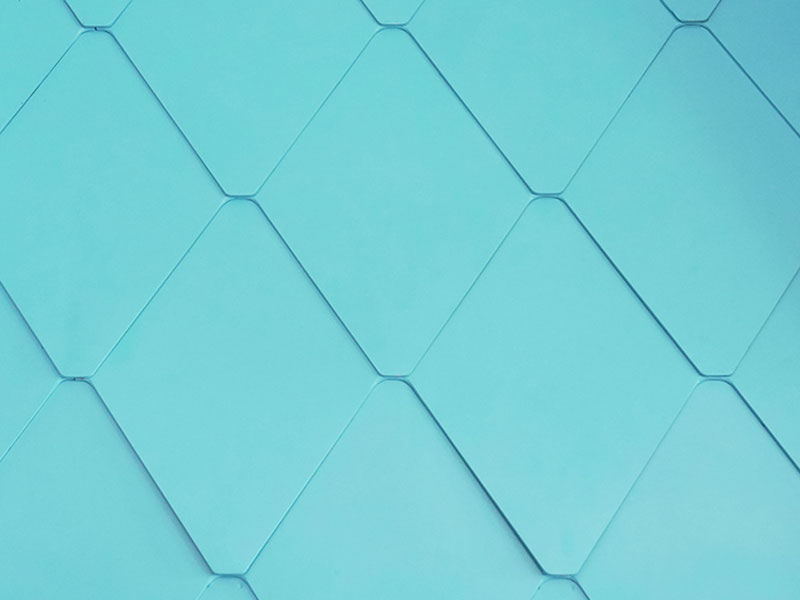
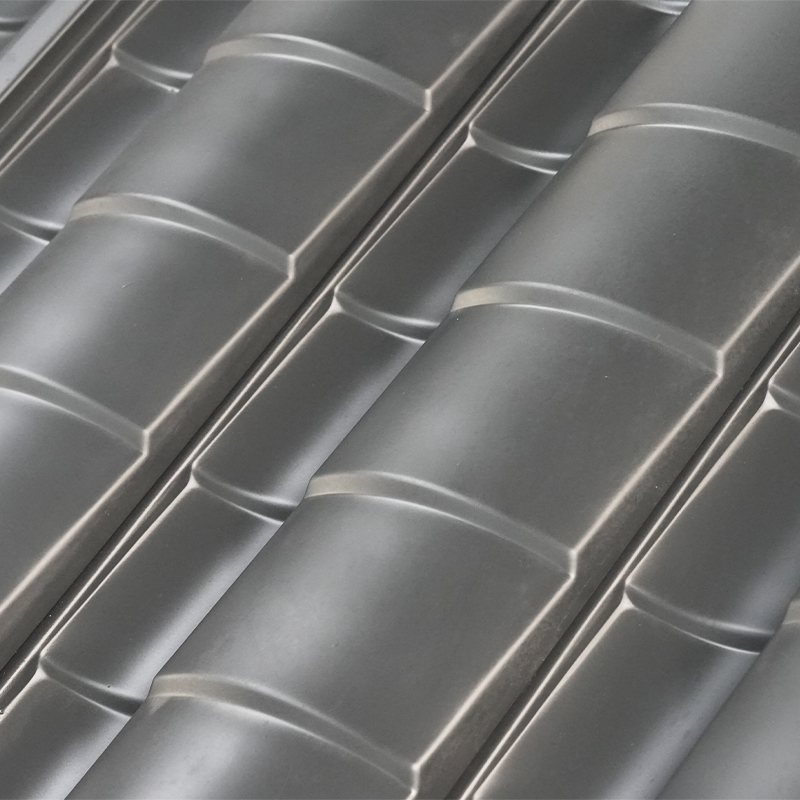
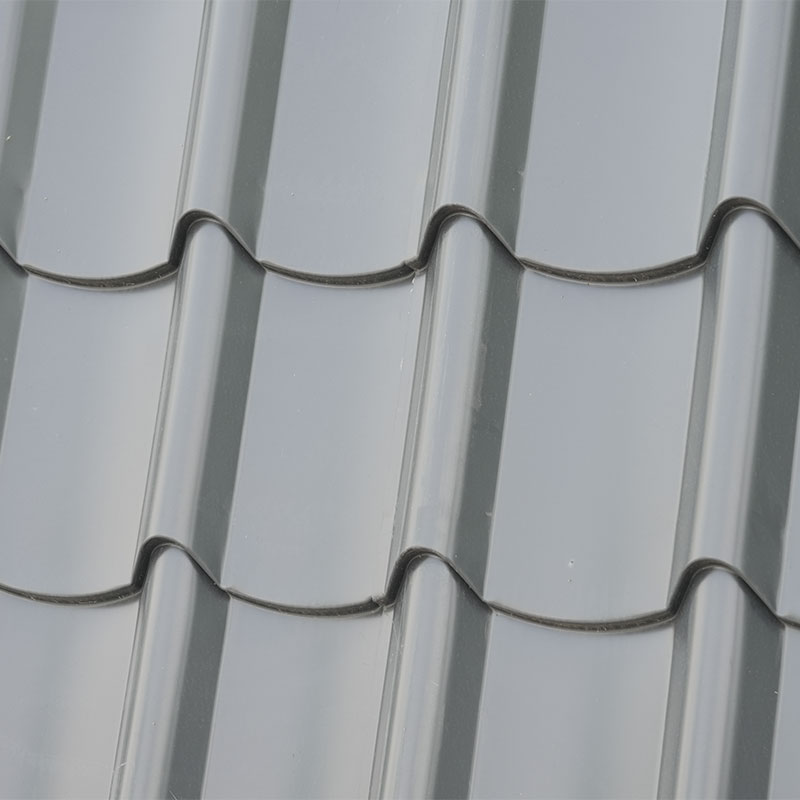
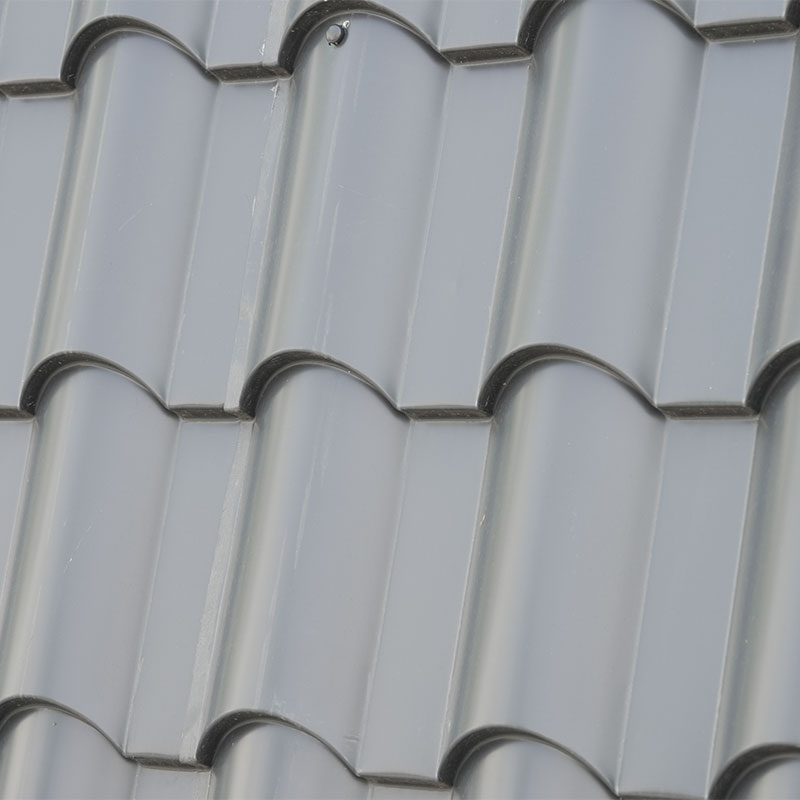
A composite aluminum panel for roofing is a multilayered engineering material that harnesses the natural corrosion resistance of aluminum and the waterproofing strength of modified asphalt. Its 0.45 mm 3003 aluminum-manganese alloy skin, protected by a 25 μm fluorocarbon coating and backed by a self-healing oxide film, delivers verified weather resistance for over 30 years without fading, chalking, or structural degradation. This combination provides a lightweight, long-life roofing solution that outperforms conventional steel tiles and asphalt shingles in both aesthetics and durability.
Content
- 1 Material Makeup: The Synergy of Metal and Modified Asphalt
- 2 Self-Healing Oxide Film: Invisible and Persistent Protection
- 3 Fluorocarbon Roller Coating: Verified Decades of Color Stability
- 4 Surface Design Options Including Copper Lamination
- 5 Lightweight Strength and Installation Efficiency
- 6 Real-World Longevity Backed by Independent Testing
- 7 Environmental and Economic Benefits Over the Roof's Life
Material Makeup: The Synergy of Metal and Modified Asphalt
Composite aluminum roofing panels are formed under high temperature and pressure, fusing a top layer of 3003 series aluminum-manganese alloy with a modified asphalt base. The alloy contains manganese as its primary alloying element, which increases strength over pure aluminum while retaining excellent formability and corrosion resistance. The aluminum sheet is 0.45 mm thick, providing an ideal balance of structural rigidity and low weight. The modified asphalt base offers superior waterproofing, sound dampening, and adhesion, ensuring the panel remains bonded and dimensionally stable across extreme temperature cycles.
Self-Healing Oxide Film: Invisible and Persistent Protection
When exposed to air at room temperature, the 3003 alloy spontaneously forms an extremely hard and dense oxide film of gamma-alumina (γ-Al₂O₃). This layer is only 2.5–3.0 nanometers thick—invisible to the naked eye—yet it acts as a barrier against moisture, salt, and atmospheric pollutants. Crucially, if the surface is scratched, the oxide film regenerates instantly in the presence of oxygen. This natural repair mechanism ensures that the metal substrate never stays exposed, granting the panel a baseline corrosion resistance that no coating alone can provide.
Fluorocarbon Roller Coating: Verified Decades of Color Stability
The aluminum surface is finished with a 25 μm fluorocarbon roller coating, typically based on polyvinylidene fluoride (PVDF) resin. PVDF is renowned for its exceptional resistance to ultraviolet radiation, chemical degradation, and dirt adhesion. This coating system has been subjected to long-term outdoor exposure tests: it maintains color and gloss with no visible fading or pulverizing after 15 years in typical outdoor conditions, and in German weathering tests conducted over 30 years, it showed no chalking or color shift. The 25 μm film thickness ensures that the pigment and resin system remains intact even under intense solar radiation, acid rain, and thermal shock.
Surface Design Options Including Copper Lamination
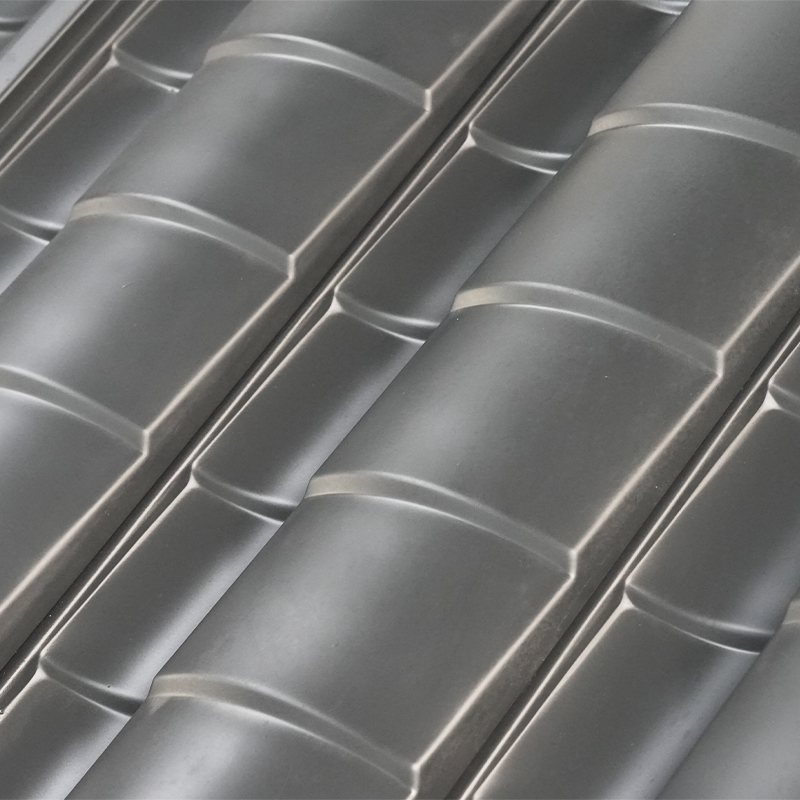
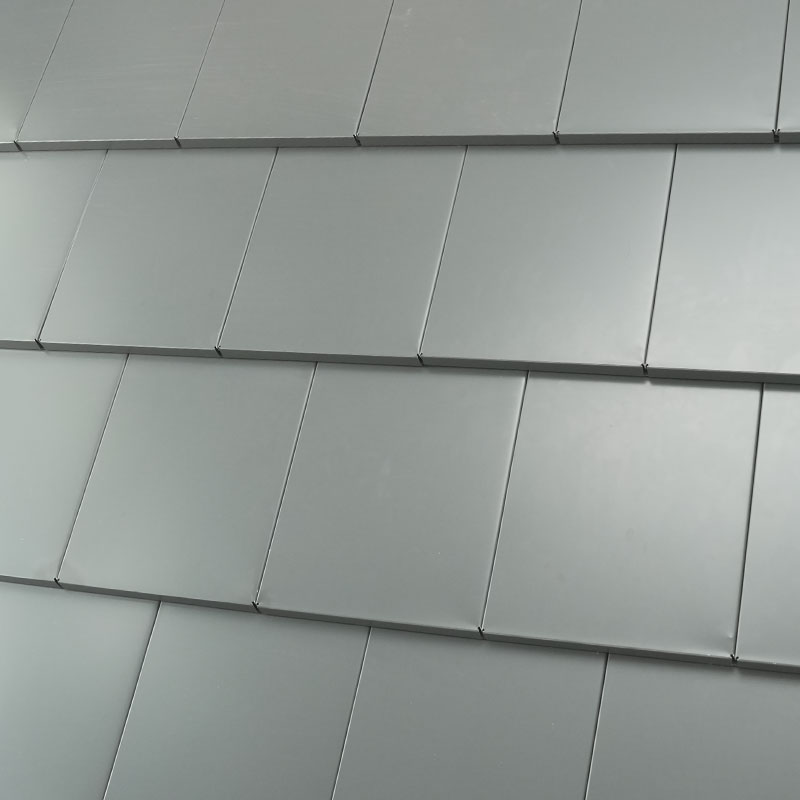
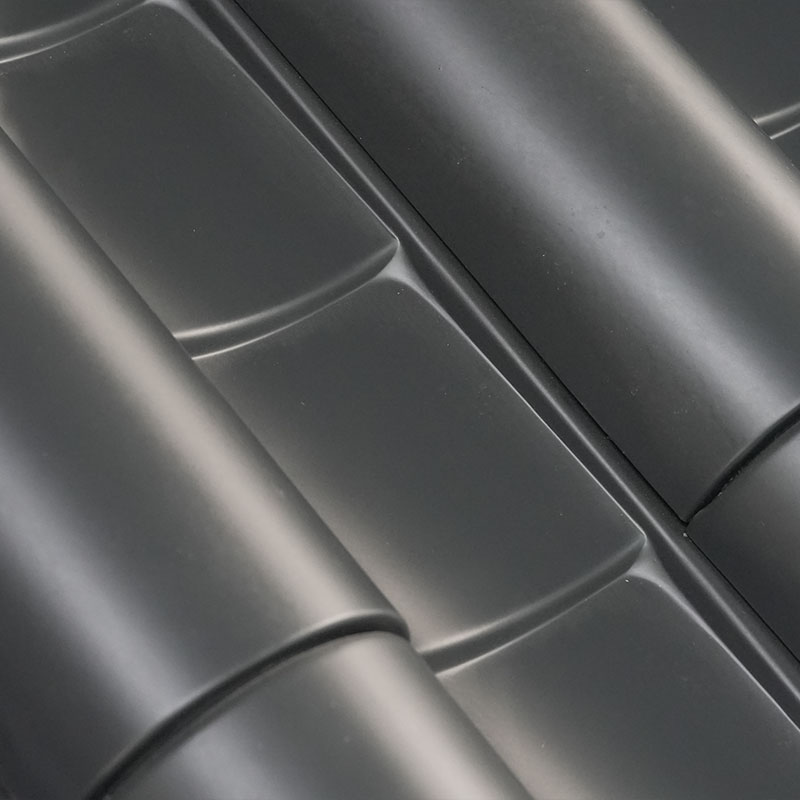
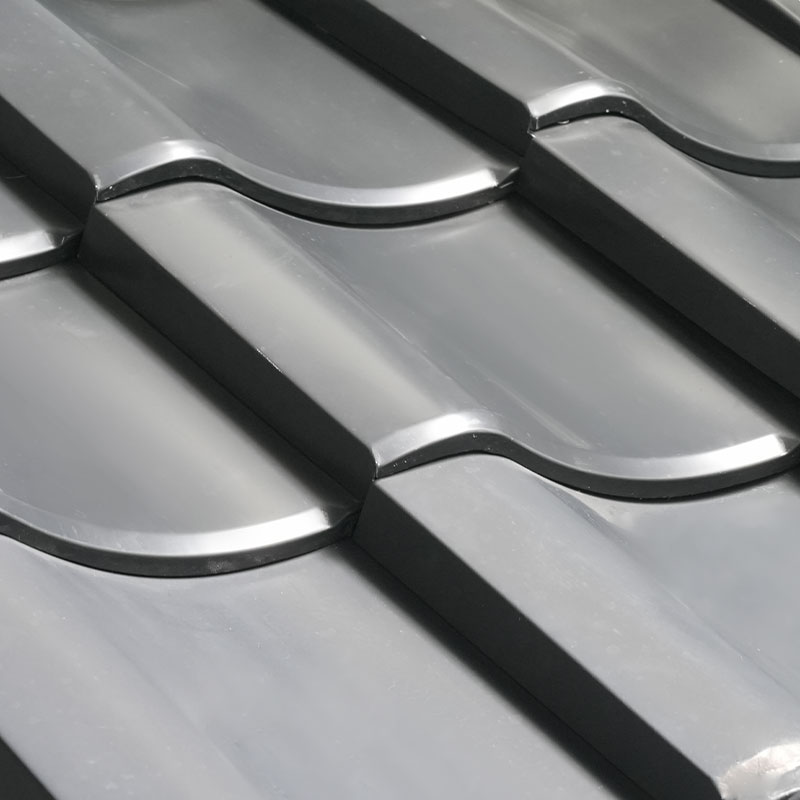
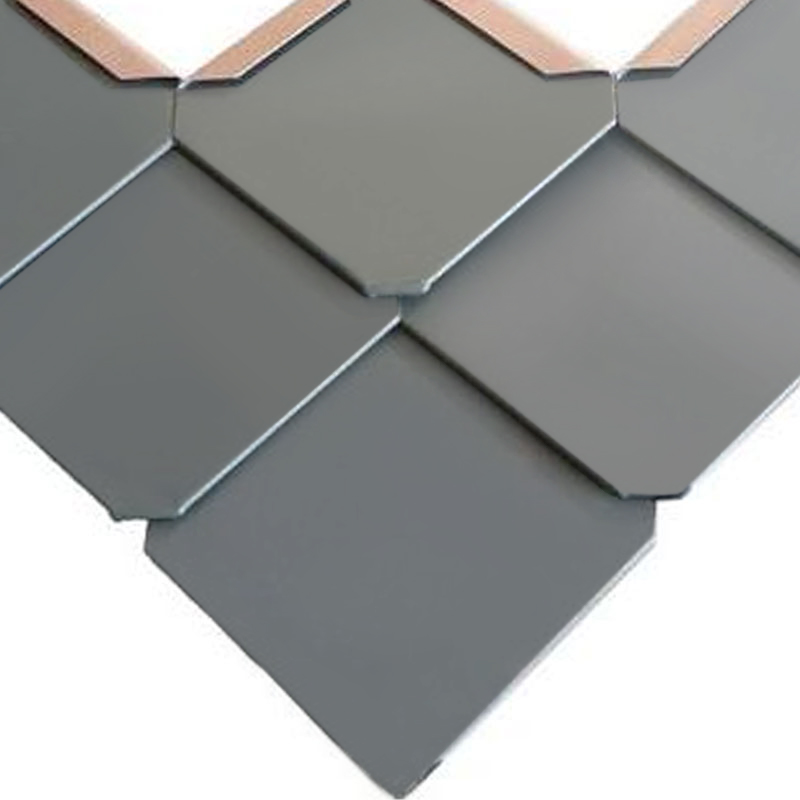
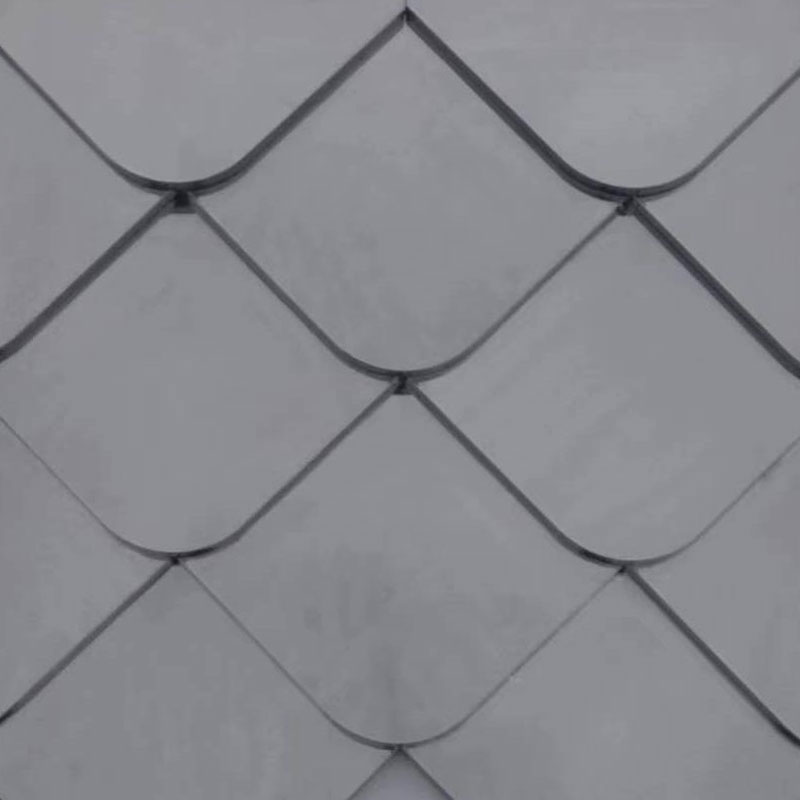
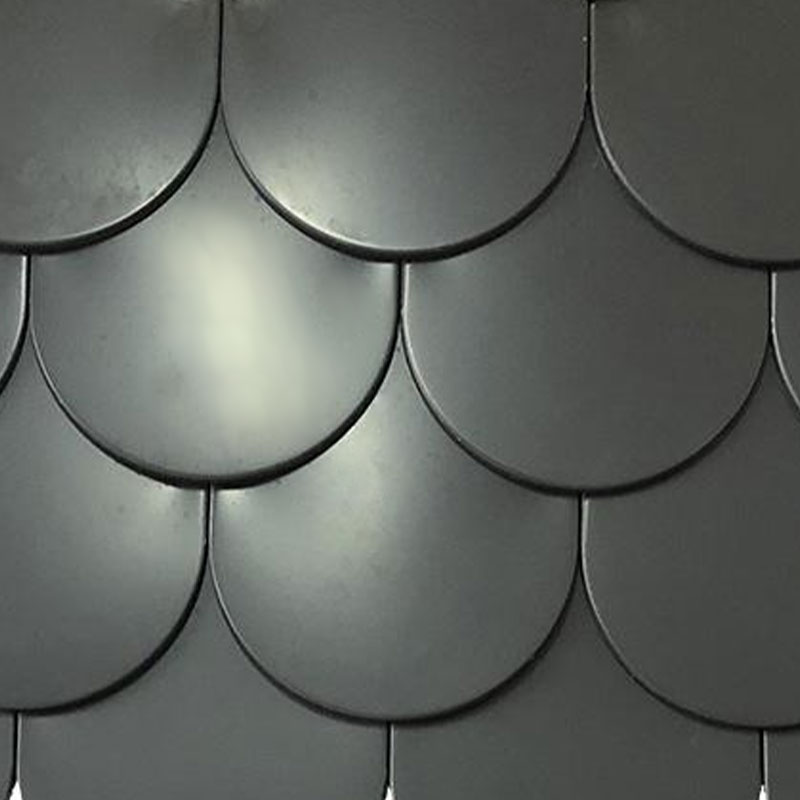
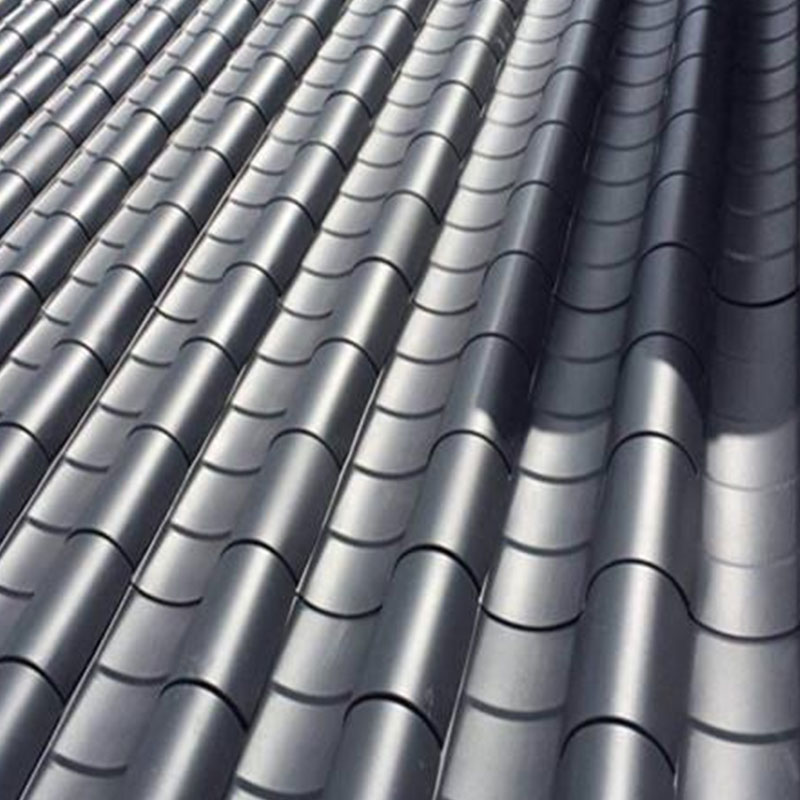
Beyond standard fluorocarbon colors, these composite panels can also be laminated with a 0.2 mm thick copper sheet. This copper layer develops a natural patina over time, offering a living finish that evolves with the building's age while the aluminum substrate beneath maintains structural integrity. Other finishes can mimic stone, wood grain, or classic tile profiles, giving architects broad creative freedom without compromising the material's protective core. The following table summarizes the primary finish options.
| Finish Type | Thickness / Weight | Color Stability | Special Characteristic |
|---|---|---|---|
| Fluorocarbon coating | 25 μm | 30 years no fading | Low maintenance, wide RAL palette |
| Copper lamination | 0.2 mm | Develops natural patina | Authentic aged copper look |
| Stone / wood grain print | Protective clear coat over print | 15+ years UV stability | High realism, lightweight alternative |
Lightweight Strength and Installation Efficiency
Composite aluminum roofing tiles weigh roughly 2.5–3.5 kg per square foot, significantly less than concrete tiles (10–15 kg/sq ft) or even traditional asphalt shingles. This lightweight nature reduces the structural load on the building frame and eliminates the need for heavy-duty support structures. Installation proceeds quickly with standard roofing tools, and the material can be cut, folded, and secured with corrosion-resistant fasteners without special equipment. The modified asphalt base also provides a built-in sound deadening layer, reducing rain impact noise inside the building.
Real-World Longevity Backed by Independent Testing
Long-term field data and accelerated laboratory testing converge on one conclusion: a well-made composite aluminum panel roof can easily last 50 years or more with negligible maintenance. The combination of the self-healing aluminum oxide layer and the PVDF topcoat creates a defense that is both active and passive. While the fluorocarbon coating blocks UV and chemical attack, any microscopic breach is automatically sealed by the oxide film beneath. This dual protection is the reason 30-year German outdoor exposure tests reported zero chalking or fading.
- Corrosion resistance: The 3003 alloy with gamma-alumina layer withstands salt spray tests for 1,500+ hours without red rust.
- Temperature tolerance: Panels remain stable from -40°C to +80°C, easily handling freeze-thaw cycles and peak summer heat.
- Fire rating: The metal face and mineral-laden asphalt core achieve Class A flame spread ratings when tested to ASTM E108.
Environmental and Economic Benefits Over the Roof's Life
Because the aluminum layer is 100% recyclable at end of life, and the modified asphalt can be reclaimed for road construction, composite aluminum roofing fits circular economy principles. The reduced weight lowers transportation fuel consumption, and the exceptional longevity means fewer roof replacements over a building's lifetime. While the initial material cost may be higher than asphalt shingles, the lifecycle cost per year is often lower due to the absence of periodic recoating, replacement, and structural reinforcement expenses.
The composite aluminum roofing panel is more than a surface layer—it is a fully integrated weatherproofing system. With its 3003 aluminum-manganese alloy skin, self-healing oxide film, 25 μm fluorocarbon finish, and modified asphalt core, it provides a roof that stays beautiful and leak-free for decades, withstanding the harshest climates while adding minimal load to the building.