


 English
 русский
 Español
 عربى
عربى
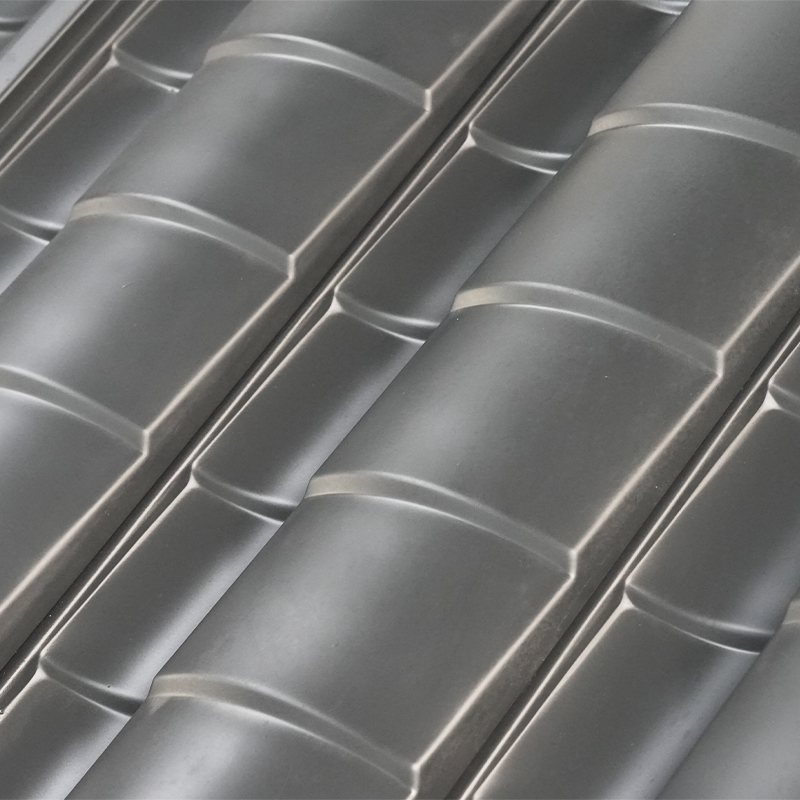
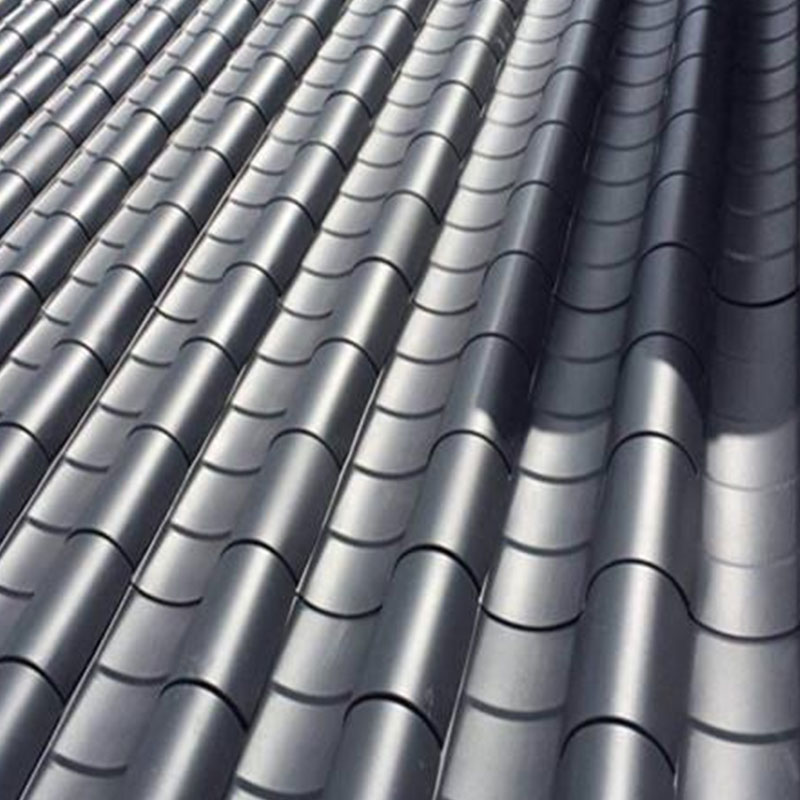
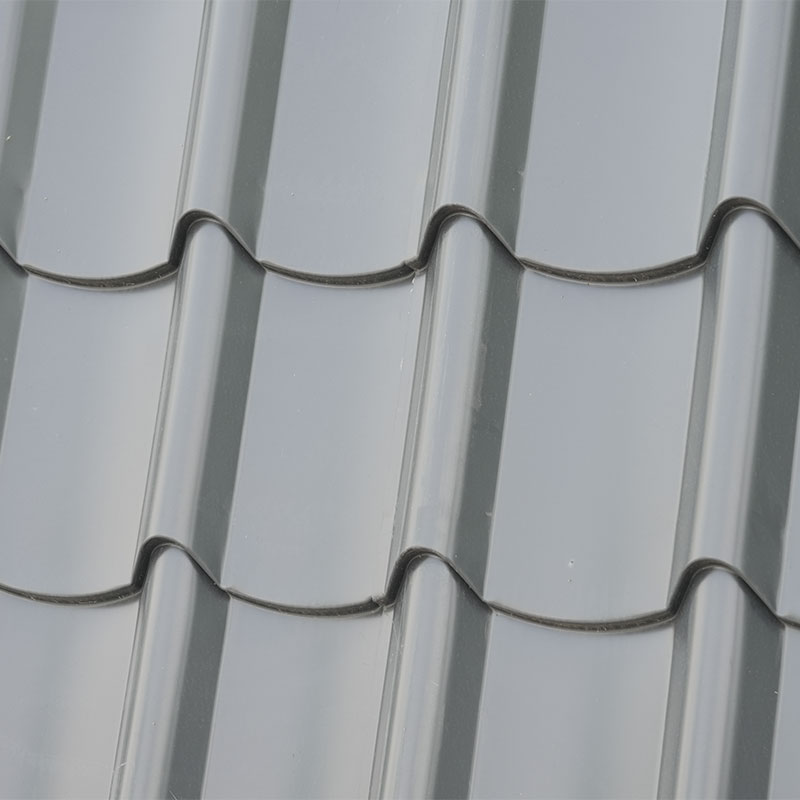
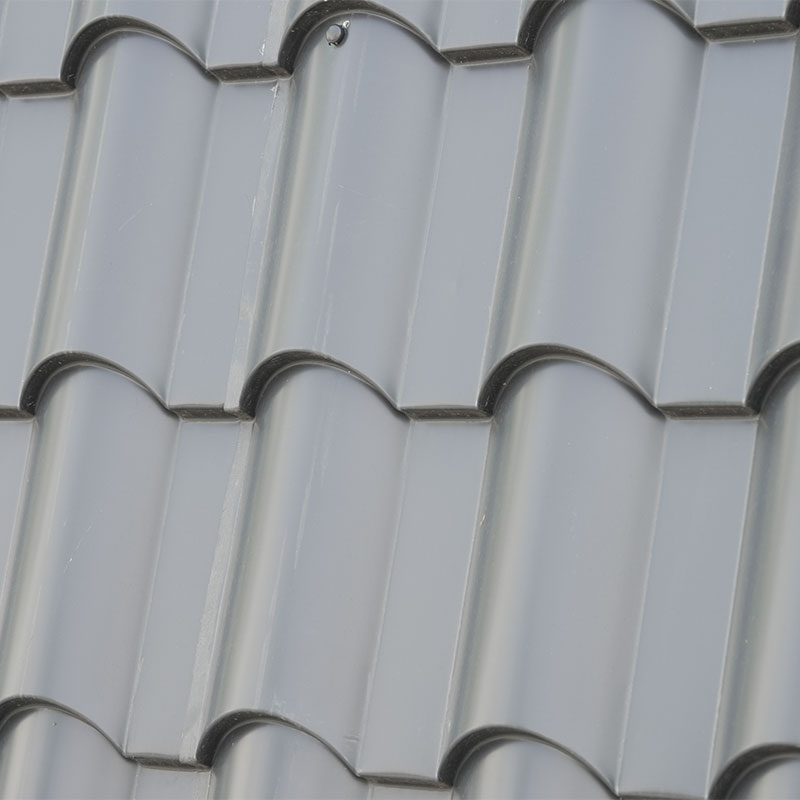
Japanese clay roof tiles, known collectively as kawara, are high-fired earthenware roofing elements that have sheltered Japanese temples, castles, and homes for over 1,400 years. Their defining technical characteristics are a water absorption rate below 3%, a compressive strength that routinely exceeds 20 MPa, and an interlocking geometry that resists both the torrential rainfall of the rainy season and the uplift forces of typhoon winds exceeding 60 meters per second. Unlike the flat clay tiles common in Mediterranean roofing, Japanese kawara are formed into a distinctive three-dimensional profile—a convex curve over a concave pan—that creates a structurally rigid, self-draining surface. The dark silver-gray of a traditional smoked tile roof is not a glaze applied to the surface; it is carbon deposited into the microscopic pores of the clay body during a reduction-firing process that chemically transforms the tile's outer layer into a non-porous, water-shedding ceramic skin.
Content
- 1 The Clay: Raw Material Selection and Preparation
- 2 Tile Types and Their Distinctive Geometries
- 3 The Smoked Finish: Ibushi-gawara and Reduction Firing
- 4 Glazed Tiles: Yusen-gawara and Color Options
- 5 Mechanical Performance: Earthquakes, Typhoons, and the Interlocking System
- 6 Freeze-Thaw Durability and Water Absorption Standards
- 7 Regional Kilns and the Provenance of Clay Tiles
- 8 Installation: The Timber Substrate and Fixing System
- 9 Maintenance, Moss Control, and Service Life
The Clay: Raw Material Selection and Preparation
The foundation of a Japanese roof tile's performance is the clay body, which must satisfy three competing requirements: plasticity for forming, sufficient dry strength for handling in the green state, and vitrification at the firing temperature to achieve low porosity. The clay deposits historically used for kawara production are secondary clays—clays that have been transported from their weathering source and deposited in alluvial basins—rich in both kaolinite for refractoriness and illite or montmorillonite for plasticity. A typical kawara clay body contains 40-50% kaolinite, 20-30% illite, and 15-25% fine quartz, with iron oxide content typically between 2% and 5% that contributes to the fired color ranging from pale buff to deep red depending on the firing atmosphere.
Modern kawara production uses a refined clay body where the raw clay is weathered outdoors for six to twelve months—a process called nerashi in Japanese—during which freeze-thaw cycles and bacterial action break down organic matter and homogenize the moisture content. The weathered clay is then crushed, screened to remove stones and roots, and mixed with water and a small amount of fine grog (pre-fired, crushed tile body) to control drying shrinkage. The grog addition, typically 5% to 10% by weight, reduces the linear drying shrinkage from approximately 8-10% for a pure clay body to a manageable 5-7%, which prevents cracking as the formed tile dries before firing. The plasticity of the prepared body is measured using the Atterberg limits; a plastic limit of 18-25% and a liquid limit of 35-45% provides the workability needed for the extrusion and pressing processes without excessive drying sensitivity.
Tile Types and Their Distinctive Geometries
The Japanese roof is assembled from a system of distinct tile shapes, each with a specific function in the overall weatherproofing and aesthetic composition. The interlocking geometry between these shapes is what gives a kawara roof its ability to shed water while resisting wind uplift without the use of adhesives or mechanical fasteners on every tile. The three primary tile types that form the roof field are as follows.
| Tile Type | Japanese Name | Shape and Function | Typical Weight per Piece | Coverage per Tile |
|---|---|---|---|---|
| Concave pan tile | Hira-gawara | Flat or slightly curved trough that channels water to the eave; laid in overlapping courses from eave to ridge | 2.5-3.2 kg | 0.15-0.20 m² |
| Convex cover tile | Maru-gawara | Semi-cylindrical cap that covers the joint between adjacent pan tiles; prevents water ingress at the lateral seam | 2.8-3.5 kg | Covers seam only, not area |
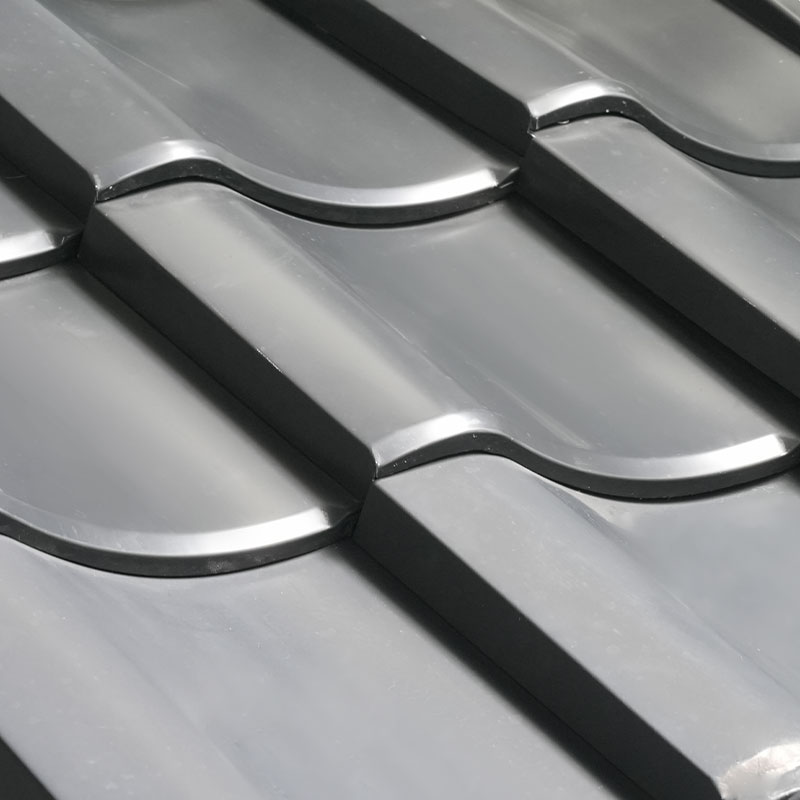
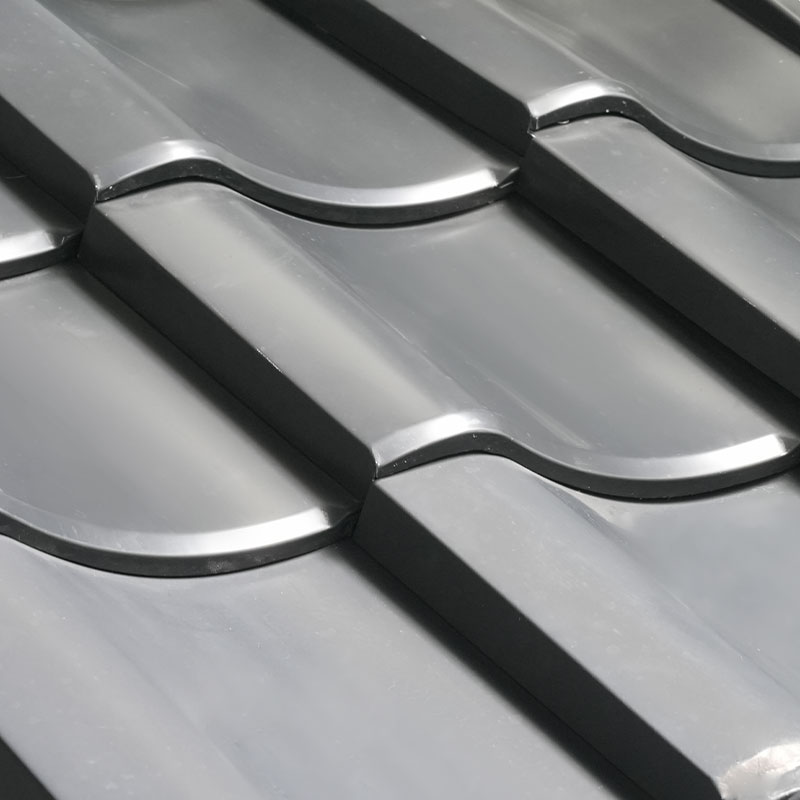
| Integrated S-tile | S-gawara or Spanish-gawara | Modern single-piece tile combining pan and cover profile in an S-shaped cross-section; interlocking side laps eliminate separate cover tiles | 3.0-3.8 kg | 0.18-0.25 m² |
Beyond the field tiles, a complete kawara roof system includes specialized terminal and transition tiles: nokigawara (eave tiles) with a decorative pendant face that carries the roof's water beyond the wall line and often features a raised family crest or temple emblem; onigawara (ridge-end tiles) sculpted into the form of a mythological beast or a floral motif that caps the ridge and protects the gable end from wind-driven rain; sumigawara (corner tiles) that turn the corner at the eave and ridge intersection; and munegawara (ridge tiles) that cap the roof apex. The ridge is further reinforced with a shikkui mortar cap—a traditional lime-based plaster mixed with hemp fiber and seaweed extract—that bonds the ridge tiles into a monolithic weatherproof beam.
The Smoked Finish: Ibushi-gawara and Reduction Firing
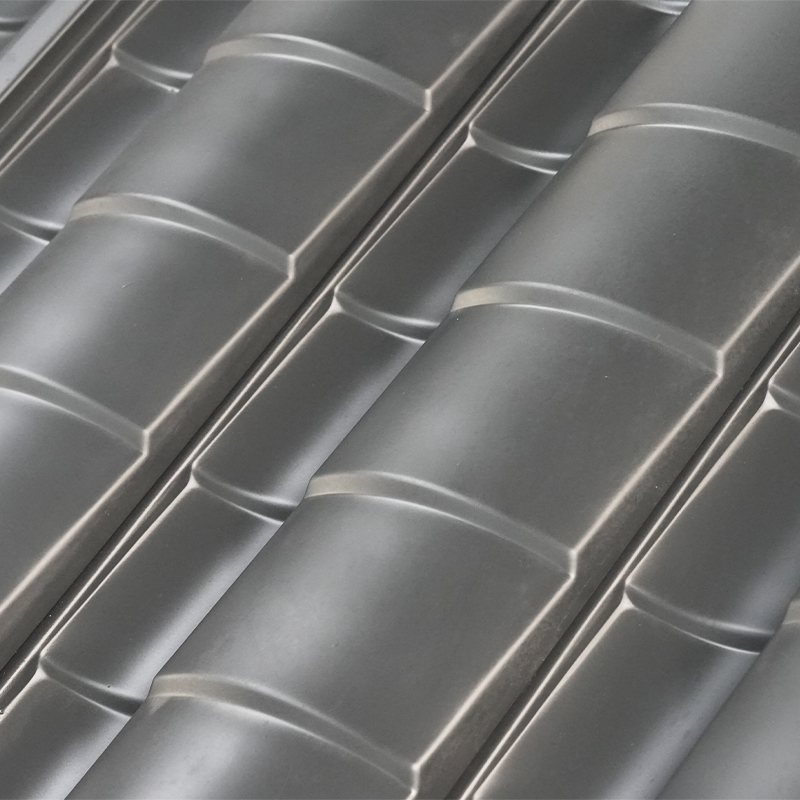
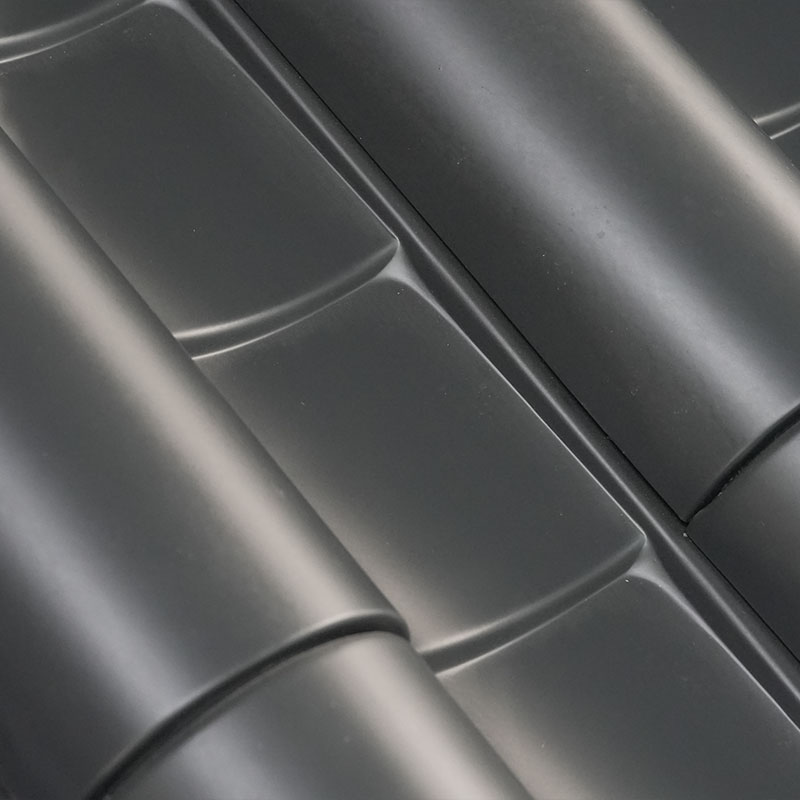
The iconic dark silver-gray color of traditional Japanese roof tiles is the result of a specialized firing technique called ibushi (smoking), which creates a surface that is simultaneously colored, sealed, and chemically altered. The ibushi process is a controlled reduction firing that occurs in the final stage of the kiln cycle. The tiles are first fired in an oxidizing atmosphere to approximately 1000-1100°C, which sinters the clay body to its final strength and develops the base color from the iron oxide content—typically a warm orange-red in oxidation. At the peak temperature, the kiln burner is adjusted to a fuel-rich mixture, and the air supply is restricted. The oxygen-starved combustion generates carbon monoxide and free carbon particles. The kiln atmosphere shifts from oxidizing to reducing, and carbon is deposited into the still-open pores of the hot tile surface.
Simultaneously, the reducing atmosphere chemically converts the red iron oxide (Fe₂O₃, hematite) on the tile surface to black iron oxide (Fe₃O₄, magnetite) and further reduces some of the iron to metallic iron in a finely dispersed form. The combined effect is a dense, carbon-saturated surface layer approximately 0.1 to 0.3 mm thick that is non-porous and hydrophobic. Water beads on an ibushi tile surface rather than wetting it, and the water absorption of the smoked face is reduced to below 1%, even if the tile body underneath has an absorption of 2-3%. The smoking process is terminated by sealing the kiln and allowing it to cool in the reducing atmosphere, which prevents the re-oxidation of the carbon and iron compounds. The resulting surface has a subtle, luminous quality—not a flat black but a deep charcoal with a faint metallic luster—that weathers gracefully over decades, developing a soft, muted patina.
Glazed Tiles: Yusen-gawara and Color Options
Alongside the smoked ibushi tile, Japanese kilns produce yusen-gawara—glazed ceramic tiles—where a glass-forming slip is applied to the tile surface before firing and melts into a vitreous, impermeable coating during the kiln cycle. The glaze is formulated from a base of feldspar, silica, and clay, with metal oxide additions for color: copper for green, cobalt for blue, iron for brown and amber, and manganese for purple-black. The glaze is applied by spraying or dipping the dried, unfired tile, and it matures during the same firing cycle that sinters the clay body. The glaze layer, typically 0.2 to 0.5 mm thick, has a water absorption of effectively zero and provides the tile with a glossy, light-reflecting surface that is self-cleaning in rain.
The most historically significant glazed tile color is the blue-green copper glaze seen on temple roofs in Kyoto and Nara, achieved with a copper oxide addition of 2% to 5% by weight to the glaze batch. This glaze, fired in oxidation, produces a brilliant turquoise-green that has come to symbolize sacred architecture in Japan. Modern residential glazed tiles are available in a wide palette—matte black, chocolate brown, terracotta orange, moss green, and slate blue—and often feature a semi-matte finish that reduces glare while retaining the low-maintenance benefits of a glazed surface. The glaze also adds a measurable increment to the tile's flexural strength; the compressive pre-stress that the glaze exerts on the underlying clay body as they cool at slightly different rates increases the modulus of rupture by approximately 10-15%.
Mechanical Performance: Earthquakes, Typhoons, and the Interlocking System
A Japanese clay tile roof is a heavy system—a square meter of kawara roofing, including the tiles, the clay bedding mortar, and the timber substrate, imposes a dead load of 50 to 70 kg per square meter. This weight, which might seem disadvantageous in seismic design, actually contributes to the roof's earthquake resistance through the principle of tuned mass damping. The heavy roof lowers the building's fundamental natural frequency and, when the roof is properly tied to the wall structure, the inertial mass helps resist the lateral forces of an earthquake by increasing the structure's overall stiffness. Traditional timber-frame buildings with heavy kawara roofs have survived centuries of seismic events in Japan, though modern building codes now require positive mechanical fastening of every tile in addition to the traditional gravity and friction-based installation.
Typhoon resistance is the more demanding design case for roof tiles. Wind flowing over a roof creates negative pressure (suction) on the leeward slope and at the eaves and ridge, and the uplift force on a clay tile can exceed its self-weight at wind speeds above 35 meters per second. Traditional kawara resisted uplift through the interlocking geometry of the pan and cover tiles and the substantial weight of the tiles themselves, with eave tiles additionally secured by copper wire ties to the roof sheathing. Modern installation per the Japanese Building Standard Law requires that every tile be mechanically fixed with a corrosion-resistant metal clip or a stainless steel wire tie that positively engages the tile's interlock and is fastened to the roof batten. The fixing system must withstand an uplift force of at least 1.2 kN per square meter for buildings in high-wind exposure zones. Full-scale wind tunnel testing at the Japanese Building Research Institute has validated that a properly installed kawara roof with mechanical fixings can survive wind speeds in excess of 60 m/s, equivalent to a Category 4 typhoon.
Freeze-Thaw Durability and Water Absorption Standards
Clay roof tiles in regions with winter freezing are susceptible to frost damage if their water absorption exceeds a critical threshold. Water that has penetrated the tile body expands by approximately 9% upon freezing, and the resulting hydraulic pressure can spall the tile surface or fracture the tile entirely. Japanese Industrial Standard JIS A 5208 for clay roof tiles specifies a maximum water absorption of 3% for glazed tiles and 5% for unglazed (smoked) tiles when tested by 24-hour immersion in boiling water. These thresholds are deliberately conservative relative to the European standard EN 1304, which permits up to 6% for low-duty tiles and 10% for medium-duty tiles in moderate climates.
The Japanese standard's stringency reflects the climate reality: much of Japan, including the historic tile-producing regions of Awaji Island and the San'in coast, experiences significant snowfall and freeze-thaw cycling in winter. A tile with a water absorption above 5% will accumulate damage over successive winter seasons, with the failure mode typically beginning as surface spalling on the convex cover tiles where snow meltwater pools and refreezes. The smoked surface of an ibushi tile provides additional freeze-thaw resistance because the carbon-filled, low-porosity surface layer prevents liquid water from entering the tile body at the exposed face, effectively creating a graded material with a dense, hydrophobic exterior and a more porous but protected interior.
Regional Kilns and the Provenance of Clay Tiles
Japanese clay roof tile production is concentrated in several historic kiln regions, each associated with a distinctive clay body, a particular tile profile, and a recognizable aesthetic character. The three most significant production centers are:
- Awaji Island (Hyogo Prefecture): The largest and most famous kawara production region, accounting for roughly 60% of Japanese domestic tile production. Awaji clay is a fine-grained marine alluvial deposit with excellent plasticity and a low iron content that produces a pale buff body ideal for the ibushi smoking process. Awaji's ibushi-gawara are considered the standard against which other smoked tiles are judged.
- Sanshu (Aichi Prefecture): The second-largest production region, known for the Sanshu-gawara brand. Sanshu clay is higher in iron, producing a deeper red body, and the region specializes in glazed tiles. The Mitsubishi company town of Takahama within the Sanshu region was the birthplace of the integrated S-profile tile that is now the most common residential roofing material in Japan.
- Sekishu (Shimane Prefecture): A historic production region on the Japan Sea coast known for Sekishu-gawara, which are fired from a clay containing a naturally high proportion of fine silica sand. The sandy texture gives Sekishu tiles a distinctive surface grain and exceptional frost resistance, making them the preferred choice for the heavy-snow regions of the Japan Sea coast.
The kiln of origin is typically stamped or embossed on the underside of each tile, along with the JIS certification mark and the production date. For restoration projects on historic buildings, matching the original kiln's tile profile and surface finish is essential for both aesthetic continuity and technical compatibility with the existing roof structure.
Installation: The Timber Substrate and Fixing System
A Japanese clay tile roof is installed over a timber substructure consisting of rafters, horizontal battens, and a continuous roof sheathing of cedar planks or, in modern construction, structural plywood. The roof pitch for a kawara roof is typically between 4/10 and 6/10 (approximately 22 to 31 degrees). Shallower pitches risk water ingress under wind-driven conditions; steeper pitches require additional mechanical restraint to prevent the tiles from sliding. The tiles are laid in horizontal courses starting from the eave and working upward to the ridge. Each pan tile is hooked over the batten with a molded nib on its underside, and each cover tile is bedded in a small amount of clay mortar or, in modern practice, secured with a stainless steel spring clip that engages the batten.
The eave tiles are the first course installed, and they set the alignment for the entire roof. A copper or stainless steel drip edge is fastened to the fascia board, and the eave tiles are wired to the sheathing through pre-formed holes in the tile body. The ridge is the final assembly: a raised timber ridge board is covered with a continuous bed of shikkui lime mortar, the ridge tiles are set into the mortar with copper wire ties, and a final cap of mortar is shaped over the tiles to create a smooth, aerodynamic transition that prevents wind from getting under the ridge tiles. The ridge assembly is the part of the roof most vulnerable to storm damage, and modern practice reinforces it with a stainless steel ridge strap that ties the ridge tiles mechanically to the roof structure.
Maintenance, Moss Control, and Service Life
A well-manufactured and properly installed Japanese clay tile roof has a service life that can exceed 50 to 100 years for the tile body itself, though the underlayment, flashings, and ridge mortar have shorter service intervals. The primary maintenance concern is moss and lichen growth, which is particularly aggressive in Japan's humid, shaded environments. Moss rhizoids penetrate the microscopic surface pores of unglazed smoked tiles and, over decades, can cause surface spalling as the roots expand and contract with moisture cycles. Traditional maintenance involved periodic hand-scraping of moss, a labor-intensive practice that is increasingly replaced by the application of a copper sulfate or benzalkonium chloride biocide treatment that inhibits moss regrowth for several years.
The ridge mortar, exposed to the most severe wetting and drying cycles, requires repointing approximately every 20 to 30 years. The copper wire ties at the eave and ridge have a similar service life before corrosion, particularly in coastal environments with salt-laden air, and should be inspected and replaced when the ridge is repointed. Cracked or spalled individual tiles can be replaced without disturbing the surrounding roof by sliding the damaged tile out and a new tile in, provided the tile profile is still in production. For historic tiles that are no longer manufactured, salvage tiles from demolished buildings are the primary source of replacement material, and a stock of spare tiles should be retained from the original installation for this purpose.