

 English
 русский
 Español
 عربى
عربى
A single 200 square metre pitched roof in a region with 1,200 mm of annual rainfall sheds close to 240,000 litres of water every year. The tiles take the credit in the brochure photographs. The gutter system decides whether that water reaches the storm drain or sits against the foundation. On a 40 metre run, that decision usually comes down to one line in a bill of quantities, and aluminum is the material most specifiers write there.
It is worth being precise about why, because "aluminum" on its own is not a specification.
The conclusion first: for most residential and light commercial roofs, aluminum gutters deliver the lowest total cost of ownership because the metal does not rust, weighs roughly a third of steel, carries a factory-baked finish that holds color for two decades, and can be formed seamless on site.
- No red rust: the aluminum oxide film rebuilds within seconds of a scratch, while a galvanized coating is consumed permanently.
- About 1.6 kg per 3 metre length in a 5 inch profile, against 4.1 kg for steel, which changes fascia load and hanger spacing.
- Seamless forming removes the joint every 3 metres that sectional systems depend on.
- Color is applied and cured in a factory, not brushed over a substrate that is already corroding.
None of that makes every aluminum gutter equal. Alloy, temper, wall thickness and coating decide whether a system lasts 12 years or 30.
Content
- 1 Why Aluminum Behaves Differently: The Material Case
- 2 Aluminum Against Steel, Vinyl, Copper and Wood
- 3 The Hidden Load Number Behind the Quote
- 4 Where Aluminum Gutters Are Actually Used
- 5 Specifying an Aluminum Gutter: Eight Decisions, In Order
- 6 The Twenty-Year Arithmetic
- 7 Maintenance, Metal Contact and Compliance
Why Aluminum Behaves Differently: The Material Case
Four properties separate aluminum from the materials it competes with, and each one reappears later as either a cost or a failure mode.
The oxide film does the corrosion work
Aluminum exposed to air forms an oxide layer a few nanometres thick within milliseconds. That film is stable across roughly pH 4 to pH 9, and when the surface is scratched it rebuilds almost immediately. Galvanized steel works on a different principle: the zinc sacrifices itself to protect the steel, and once the zinc is consumed at a cut edge or a scratch, red rust starts and does not stop.
Two conditions sit outside the oxide film's comfort range. Acidic runoff from cedar shingles or heavy moss, and alkaline runoff from fresh mortar and concrete, both attack bare aluminum. Chloride in coastal air and sulphur compounds near industrial sites do the same. That is why 1100 series pure aluminum is a poor gutter choice, and why 3003, 3105 or 5052 alloys with a protective coating are specified instead.
Density changes the support design, not just the handling
Aluminum's density is about 2.7 grams per cubic centimetre, against 7.85 for steel and 8.96 for copper. A 40 metre aluminum run weighs roughly 33 kg less than the same run in steel. Hangers can be spaced further apart, fascia boards and their fixings carry less load, and a two-person crew can position a long seamless length without lifting equipment. The trade-off is stiffness: aluminum's modulus of elasticity is about 69 GPa against 200 GPa for steel, so deflection rather than yield strength governs the design. Thin walls and long bracket spans produce the sagging gutter lines that get blamed on the material itself.
Thermal movement has to be designed in
Aluminum expands at about 23 parts per million per degree Celsius, steel at 12 and copper at 17. A 12 metre run grows roughly 7 mm across a 25 degree temperature swing. Locking both ends with two screws and no relief causes oil-canning, loosened fasteners and split sealant within a few seasons. Hangers that let the gutter slide, or a purpose-made expansion joint on long runs, solve the problem for the price of a handful of small components.
The coating, not the alloy, sets the visible service life
Entry-level polyester coatings at 20 to 25 microns perform acceptably inland but chalk and fade faster under strong ultraviolet exposure. Multi-layer fluorocarbon systems at 25 to 30 microns over a primer hold color and gloss noticeably longer, resist chalking, and stay cleaner in industrial and coastal air. The alloy determines whether the gutter survives at all; the coating determines whether it still looks correct in year fifteen.
Density
2.7 g per cubic centimetre against 7.85 for steel. Lower dead load on fascia and brackets.
Corrosion
Self-repairing oxide film, stable from pH 4 to pH 9. Bare metal only fails under acid, alkali or chloride attack.
Stiffness
69 GPa modulus means deflection governs, so wall thickness and hanger spacing set real performance.
Finish
Polyester for sheltered budget projects, fluorocarbon for coastal, industrial and high-UV sites.
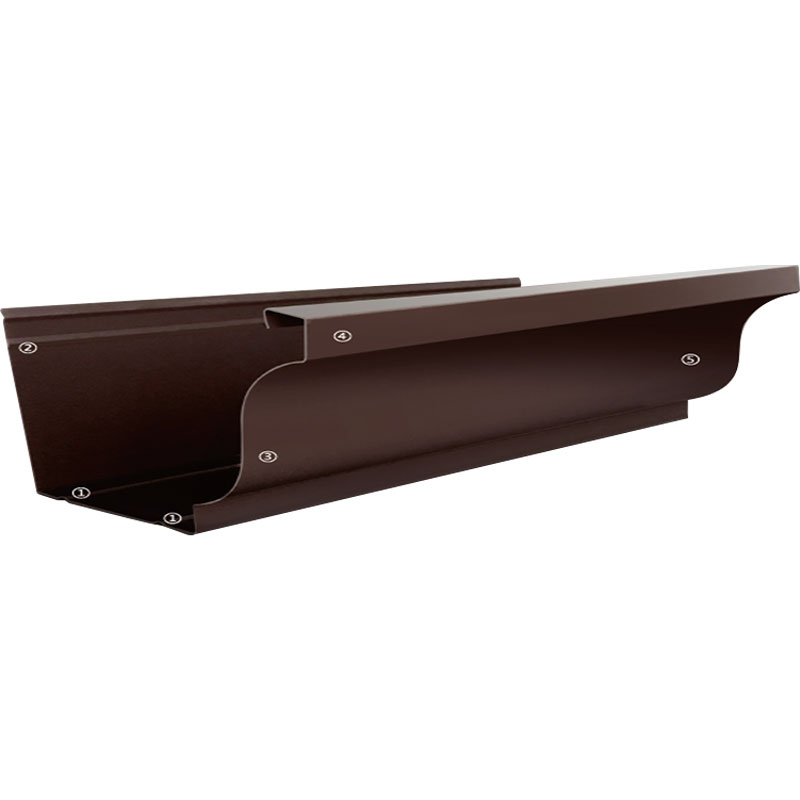 Colored Aluminum Rain Gutter System SuppliersManganese Aluminum Alloy Roof GutterView Product →
Aluminum Against Steel, Vinyl, Copper and Wood
The useful comparison is not which material is strongest. It is which one survives the specific combination of rainfall, coastal air, snow load and repainting budget on a given building.
| Material | Weight per 3 m | Corrosion behavior | Typical service life | Installed cost | Where it fits |
|---|---|---|---|---|---|
| Aluminum (3003 or 3105, 0.7 mm) | 1.6 kg | Self-repairing oxide film, no red rust | 20 to 30 years | Moderate | Most residential and light commercial roofs |
| Galvanized steel (0.6 mm) | 4.1 kg | Zinc sacrifices itself, then the steel rusts | 15 to 25 years | Low to moderate | Cold climates and tightly controlled budgets |
| Vinyl (PVC) | 2.0 kg | Unaffected by water, brittle in hard frost | 10 to 20 years | Low | Mild climates and lightweight structures |
| Copper (0.6 mm) | 5.5 kg | Patina layer protects the surface | 60 years and beyond | High, roughly 3 to 4 times | Heritage buildings and premium facades |
| Wood (lined) | 3.5 kg | Rots without a liner, needs repainting | 10 to 15 years | Moderate | Traditional repairs and conservation work |
The Hidden Load Number Behind the Quote
Weight per length rarely appears on a quotation, yet it drives bracket spacing, fascia reinforcement, freight cost and how many people are needed on the ladder. The chart below compares the same 5 inch K-style profile in five materials.
The gap between aluminum and steel is the one buyers feel. A 40 metre aluminum run saves roughly 33 kg of dead load, which allows wider hanger spacing and lighter fascia detailing. It also means one installer can carry a formed length along a scaffold where two would be needed for steel.
Two other hidden numbers deserve a place in the specification. First, flow area: moving from a 5 inch to a 6 inch K-style profile adds roughly 40 percent of cross-sectional area, which matters on steep roofs where water arrives fast. Second, expansion allowance: on runs beyond about 10 metres, the specification should state whether the hangers permit sliding or whether an expansion joint is included. Omitting that line is the single most common reason a new aluminum gutter develops a rattle or a leaking joint in its third winter.
Where Aluminum Gutters Are Actually Used
Demand is not evenly spread across building types. Replacement work dominates because aluminum is often the material chosen when an existing steel or vinyl system fails, while heritage projects select it for its profile range and color stability.
Replacement projects behave differently from new builds. On a retrofit, the gutter has to match an existing fascia depth, roof pitch and downspout position, so profile templates and site measurement matter more than catalogue choice. Heritage work adds a second constraint: the visible geometry has to read correctly against the original architecture, which is why half-round and custom-formed profiles stay in demand even though K-style moves more water per unit of width.
Specifying an Aluminum Gutter: Eight Decisions, In Order
Working through these in sequence avoids the usual pattern of choosing a color first and discovering a drainage problem later.
1. Size from rainfall intensity and roof area
A 5 inch profile suits most moderate-rainfall houses; steep roofs and high-intensity storms justify 6 inch, which adds roughly 40 percent of flow area.
2. Choose seamless or sectional
Above about 6 metres of continuous run, on-site forming removes joints entirely and eliminates the most common leak path.
3. Fix the alloy and temper
3003-H14 or 3105 are the workhorse choices for gutters; 1100 series should be rejected on a coastal or industrial site.
4. Set the wall thickness
0.7 mm is standard; 0.8 mm is worth the small premium on long spans, snow-load regions and exposed elevations.
5. Select the coating system
Polyester for sheltered inland roofs, multi-layer fluorocarbon where UV, salt or industrial fallout will test color stability.
6. Detail hangers and movement
Space hangers at about 600 mm generally, tighten to 300 mm under snow load, and specify sliding fixings on long runs.
7. Size downspouts and outlets
One downspout per 9 to 11 metres of gutter is a reliable starting point; a 6 inch gutter usually needs a larger outlet than a 5 inch one.
8. Separate the warranties
Ask for a material warranty and a finish warranty as two documents, since they fail for different reasons and rarely expire at the same time.
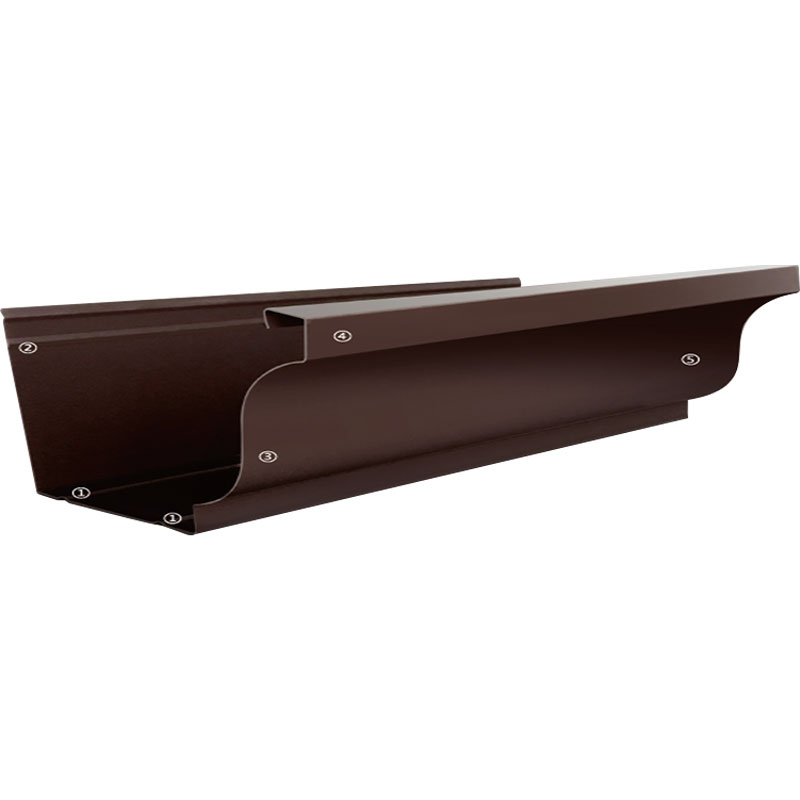
 Manganese Aluminum Alloy Roof Gutter1. Bottom double water stop design A. Effectively prevent rainwater from flowing from the bottom of the gutter to the stable opening, causing water stains on the eaves...View Product →
The Twenty-Year Arithmetic
Purchase price alone misleads, because steel requires repainting and both steel and vinyl are replaced inside the twenty-year window that aluminum usually covers without intervention. The rows below express cost as an index against aluminum set at 1.00.
The pattern is consistent: aluminum is rarely the cheapest first invoice and rarely the most expensive twenty-year figure. Where the calculation changes is on buildings that will be re-roofed within ten years anyway, or on temporary structures where a vinyl system genuinely is the rational choice.
Maintenance, Metal Contact and Compliance
An aluminum gutter system needs little attention, but the small amount it does need is specific.
- Clear debris twice a year, in late spring and late autumn, and again after any storm that strips foliage.
- Inspect sealant at joints, outlets and corners; neutral-cure silicone is the safe choice, and acetic-cure products should be avoided near bare metal.
- Keep copper away from aluminum. Copper runoff and direct copper-to-aluminum contact create galvanic corrosion that destroys the aluminum, not the copper. Use aluminum or stainless steel hangers and isolating washers.
- Clean with mild soap and water. Alkaline detergents and abrasive pads strip the coating and attack the oxide film.
- Use a ladder standoff rather than resting the ladder on the gutter lip, which is the most common cause of a bent profile and a permanently open joint.
Compliance questions arrive from three directions. Stormwater rules in many jurisdictions now require downspout disconnection, rainwater harvesting or on-site attenuation, all of which depend on correctly sized gutters and outlets. Fire regulations in wildland-urban interface zones favor non-combustible metal rainwater goods, since they add no fuel to the roof edge. And end-of-life rules increasingly reward recyclability, where aluminum scores well because the material retains value at the scrap yard rather than becoming landfill.
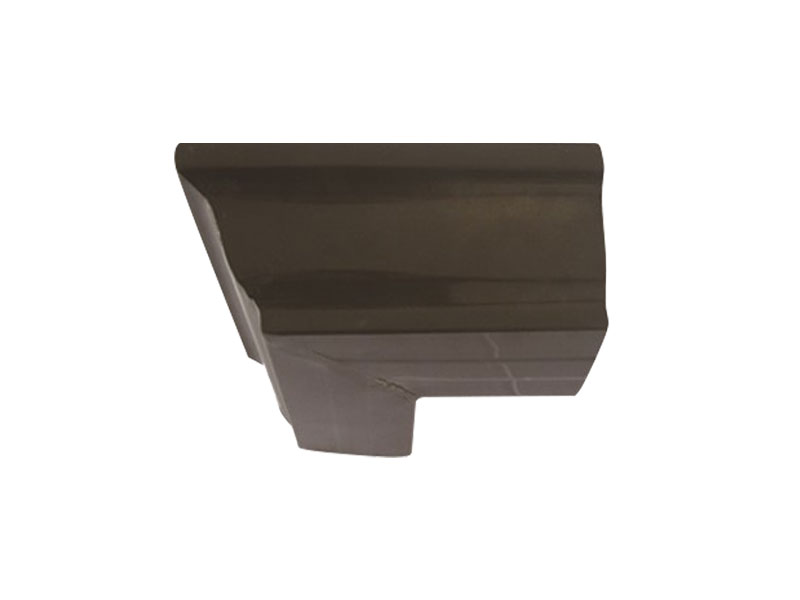 Aluminum Rain Gutter AccessoriesWe can provide aluminum alloy rain gutter accessories to meet various needs How to install the color aluminum rain gutter system: Observe the height and verticality of...View Product →
Detailed guidance on cleaning intervals, sealant selection and restoring color on coated aluminum is covered in this article on preserving colored aluminum gutters, which is worth reading before writing a maintenance clause into a contract.
Aluminum gutters are neither a premium indulgence nor a budget compromise. They sit in the middle of the price range and at the bottom of the twenty-year cost curve for most buildings, because the material removes three recurring expenses at once: rust repair, repainting and premature replacement. The variables that decide whether a specific system reaches thirty years rather than twelve are unglamorous ones, which is why they belong in the specification rather than the showroom conversation.
Get the alloy, the wall thickness, the coating system and the expansion detail right, and the rest of the decision is largely about color. Buyers who start with color and work backwards usually meet one of those four items later, in the form of a repair invoice.