

 English
 русский
 Español
 عربى
عربى
Content
- 1 Understanding the 3003-H24 Manganese Aluminum Alloy Composition
- 2 Structural Integrity and the H24 Temper Designation
- 3 Corrosion Resistance in Harsh Environmental Conditions
- 4 Real-World Performance Against Extreme Weather
- 5 Comparative Lifespan and Maintenance Requirements
- 6 Installation Best Practices for Maximum Longevity
Understanding the 3003-H24 Manganese Aluminum Alloy Composition
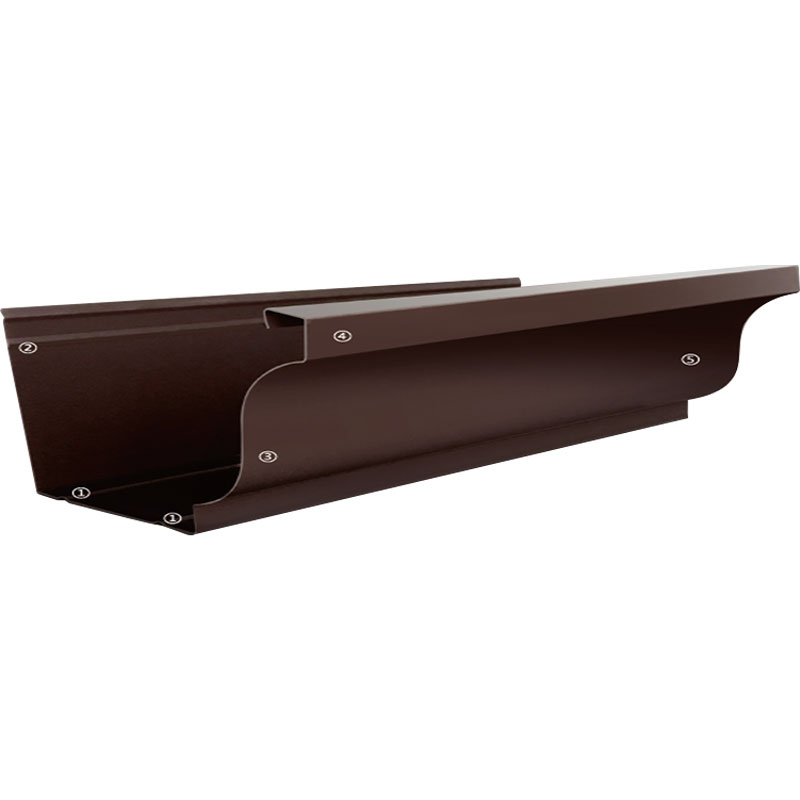
The selection of roofing and drainage materials is a critical decision for any construction project, directly impacting the long-term structural integrity of a building. Among the myriad of options available, 3003-H24 manganese aluminum alloy roof gutters have established themselves as the premier choice for both residential and commercial applications. This specific alloy is not merely a variation of standard aluminum; it is a meticulously engineered material designed to withstand the rigorous demands of exterior building envelopes. The addition of manganese to the aluminum matrix fundamentally alters the physical properties of the metal, increasing its tensile strength by approximately twenty percent compared to pure aluminum alloys. This enhancement is crucial for roof gutters, which must continuously support the dynamic weight of flowing water, accumulated debris, and heavy snow loads without deforming over time.
Furthermore, the 3003 aluminum alloy is renowned for its exceptional workability and formability, allowing manufacturers to seamlessly roll-form the metal into long, continuous gutter profiles. Unlike steel, which requires protective galvanization that can eventually wear away, the manganese aluminum alloy possesses inherent protective qualities. The alloying elements integrate directly into the metal's crystalline structure, ensuring that the protective characteristics are not just a superficial coating but a fundamental property of the material itself. This intrinsic durability is why architects and builders consistently specify 3003-H24 for projects where longevity and minimal maintenance are paramount.
Structural Integrity and the H24 Temper Designation
The "H24" designation in 3003-H24 is not an arbitrary label; it is a precise metallurgical classification that dictates the mechanical temper of the aluminum. The "H" signifies that the alloy has been strain-hardened to increase its strength, while the "24" indicates that it has been strain-hardened and then partially annealed to a quarter-hard temper. This specific thermal and mechanical processing is the secret to the real-world durability of these roof gutters. A quarter-hard temper provides the optimal balance between rigidity and flexibility. If the aluminum were too soft, the gutters would sag under the weight of water or deform when struck by falling branches. Conversely, if it were too hard, the metal would become brittle and prone to cracking during thermal expansion and contraction.
In practical terms, the H24 temper yields a material with a tensile strength of roughly 21,000 psi and a yield strength of about 21,000 psi. This structural rigidity ensures that the gutters maintain their precise geometric profile over decades of service. When heavy autumn rains or rapid spring snowmelts send gallons of water rushing through the system, the 3003-H24 alloy resists the outward bowing and downward sagging that plagues inferior materials. This dimensional stability is equally critical at the seams and corners, where the metal is folded and riveted. The H24 temper allows these joints to remain tight and secure, preventing the leaks that typically compromise gutter systems made from softer, less stable alloys.
Corrosion Resistance in Harsh Environmental Conditions
One of the most significant failure points for traditional metal gutters is corrosion, particularly the relentless oxidation that affects galvanized steel. The 3003-H24 manganese aluminum alloy completely circumvents this issue through its natural and enhanced electrochemical properties. When exposed to the atmosphere, aluminum instantly reacts with oxygen to form a microscopically thin, incredibly dense layer of aluminum oxide. This passivation layer acts as an impenetrable shield, preventing further oxidation from reaching the underlying metal. The addition of manganese in the 3003 alloy further refines this oxide layer, making it even more resistant to environmental degradation.
This exceptional corrosion resistance is particularly evident in challenging environments. In coastal regions where airborne salt spray aggressively attacks standard metals, 3003-H24 roof gutters maintain their structural integrity without the need for heavy protective paints. Similarly, in industrial areas where acid rain and chemical pollutants are prevalent, the manganese aluminum alloy neutralizes these threats effectively. Unlike steel gutters that eventually rust through from the inside out due to constant moisture exposure and debris accumulation, 3003-H24 gutters will not rust. Even if the surface is scratched or abraded by falling twigs or maintenance tools, the aluminum oxide layer immediately reforms, ensuring that the protective barrier is never permanently compromised.
Real-World Performance Against Extreme Weather
The true test of any building material is its performance under extreme and fluctuating weather conditions. Roof gutters are subjected to severe thermal cycling, expanding significantly during hot summer days and contracting during freezing winter nights. Materials like vinyl or PVC become brittle in the cold and can crack or shatter upon impact, while also warping and sagging in extreme heat. The 3003-H24 manganese aluminum alloy, however, exhibits remarkable thermal stability. Its coefficient of thermal expansion is well-managed by the H24 temper, allowing the gutters to expand and contract smoothly without inducing stress fractures or pulling away from the fascia boards.
Furthermore, the impact resistance of the 3003-H24 alloy is a critical factor in regions prone to severe hailstorms. When struck by ice pellets or falling debris, the quarter-hard temper allows the aluminum to absorb the kinetic energy by denting slightly rather than cracking or puncturing. This ductility ensures that the continuous flow channel of the gutter remains intact, preventing catastrophic failures during storms. Additionally, the alloy is completely impervious to ultraviolet (UV) radiation from the sun. Unlike polymer-based gutters that degrade, fade, and become chalky under constant UV exposure, the molecular structure of the manganese aluminum alloy remains entirely unaffected, ensuring that the gutters perform as well in their twentieth year as they did on the day of installation.
Comparative Lifespan and Maintenance Requirements
To fully appreciate the durability of 3003-H24 manganese aluminum alloy roof gutters, it is highly beneficial to compare them directly against other common gutter materials. The following table outlines the expected lifespan and key performance metrics across different materials, highlighting the distinct advantages of the 3003-H24 alloy in real-world applications.
| Material Type | Expected Lifespan | Corrosion Resistance | Impact Resistance |
| Vinyl / PVC | 10 to 20 years | High (but degrades in UV) | Low (cracks in cold) |
| Galvanized Steel | 15 to 20 years | Moderate (rusts eventually) | High |
| Copper | 50+ years | Very High | Moderate (soft metal) |
| 3003-H24 Aluminum | 30 to 50 years | Very High (self-healing oxide) | High (ductile, dents not breaks) |
To ensure that 3003-H24 roof gutters reach their maximum potential lifespan, routine maintenance is still required. While the material itself will not rust, the accumulation of organic debris can trap moisture and cause localized staining or degrade the surrounding fascia. Implementing the following maintenance practices will guarantee optimal performance:
- Clean the gutters at least twice a year, typically in late spring and early autumn, to remove leaves, twigs, and sediment that can obstruct water flow.
- Inspect the internal corners and end caps for any signs of sealant failure, and reapply a high-quality polyurethane gutter sealant if minor leaks are detected.
- Flush the downspouts with a garden hose to ensure that internal obstructions are cleared and water is diverting properly away from the foundation.
- Trim back overhanging tree branches to minimize the amount of debris falling into the system and to prevent physical damage during high winds.
Installation Best Practices for Maximum Longevity
While the 3003-H24 manganese aluminum alloy provides an unparalleled foundation of durability, the real-world lifespan of roof gutters is ultimately dictated by the quality of their installation. Even the strongest alloy will fail prematurely if subjected to improper mounting techniques or galvanic corrosion. To maximize the longevity of these gutters, installers must use concealed aluminum or stainless-steel hangers spaced no more than twenty-four to thirty-two inches apart. This spacing ensures that the structural load of the water and debris is evenly distributed, preventing the localized stress that can lead to metal fatigue.
Crucially, installers must strictly avoid the use of dissimilar metals in direct contact with the 3003-H24 gutters. Using untreated steel screws or connecting the aluminum gutters directly to copper downspouts will trigger galvanic corrosion, a rapid electrochemical reaction that will quickly eat through the aluminum. All fasteners must be aluminum or stainless steel, and if a transition to copper is required, a specialized dielectric union or plastic isolator must be used to break the electrical path. By adhering to these precise installation protocols, the inherent durability of the 3003-H24 manganese aluminum alloy is fully preserved, guaranteeing a high-performance drainage system that will protect the building's foundation and fascia for decades.